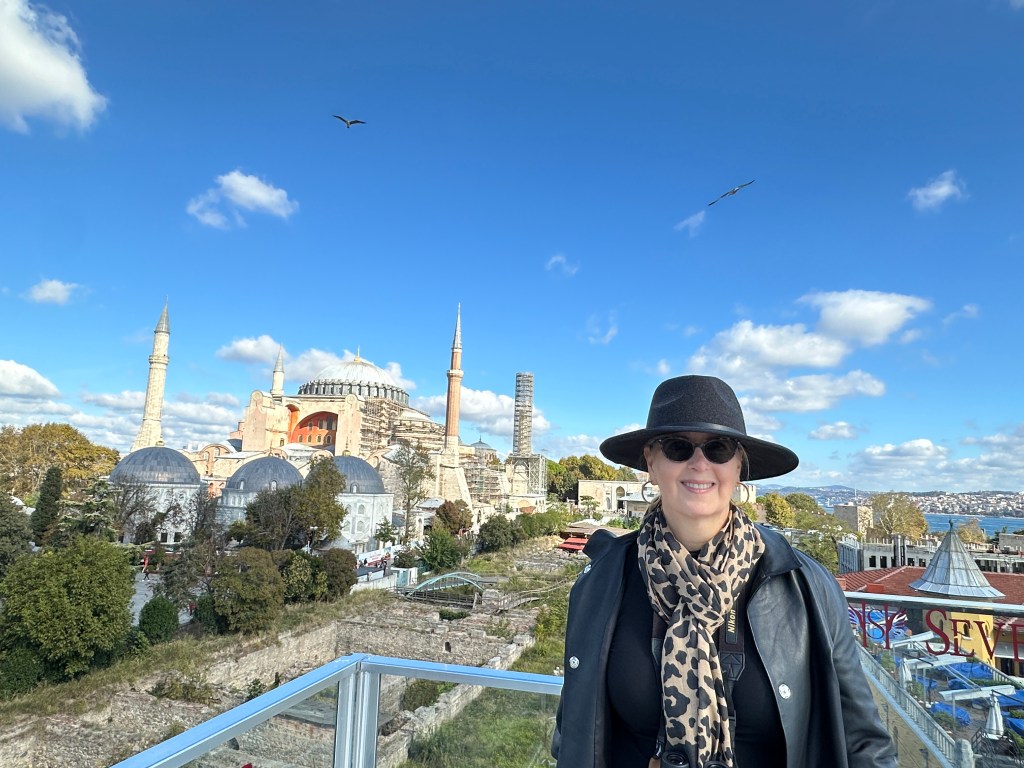
I waited forty-five years to see the Hagia Sophia and was finally able to see it in October 2024. Some might wonder why I’m calling a church built in the reign of Justinian “revolutionary,” but it was! This building launched architecture in a whole new direction.
Previously, large buildings were constructed in the basilica style, which is the style you still see in church architecture today. It’s a large rectangular-shaped building with rows of columns supporting the roof. Since the walls also had to support the roof to some extent, there were not many windows in the walls and those that were there were small.
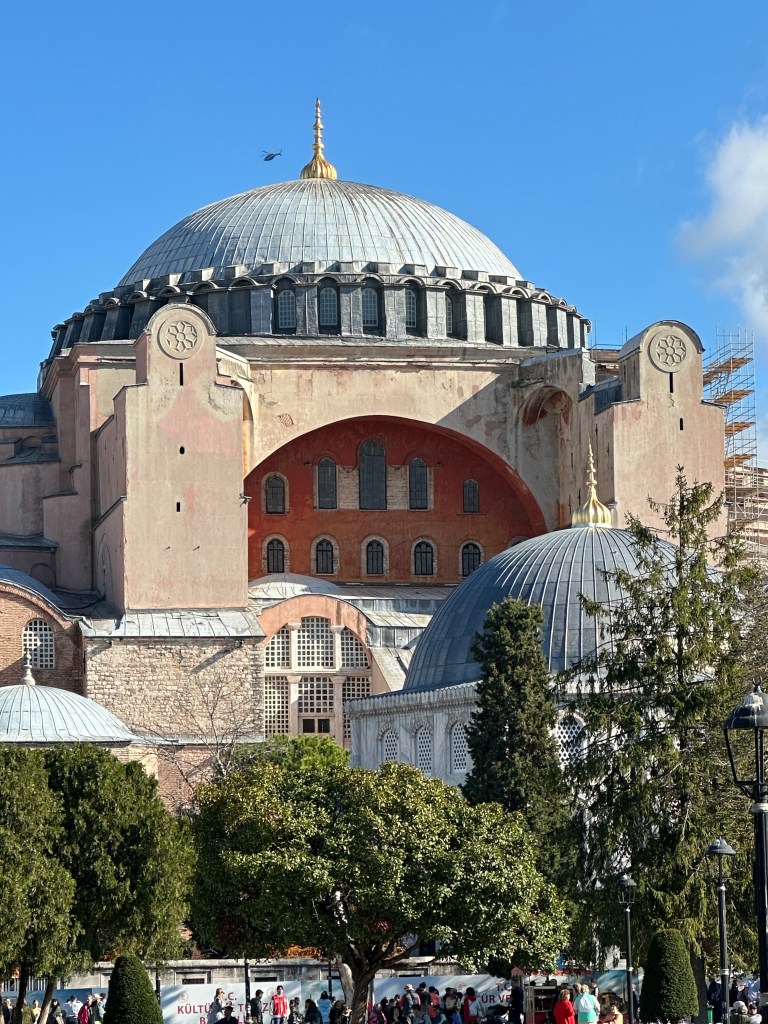
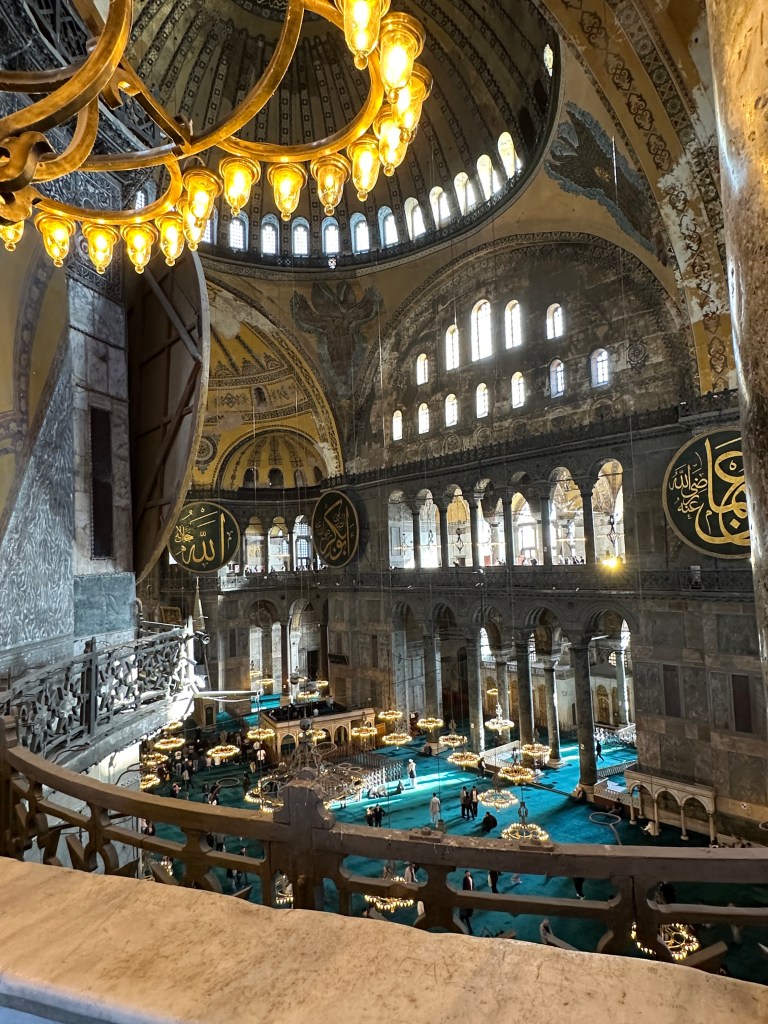
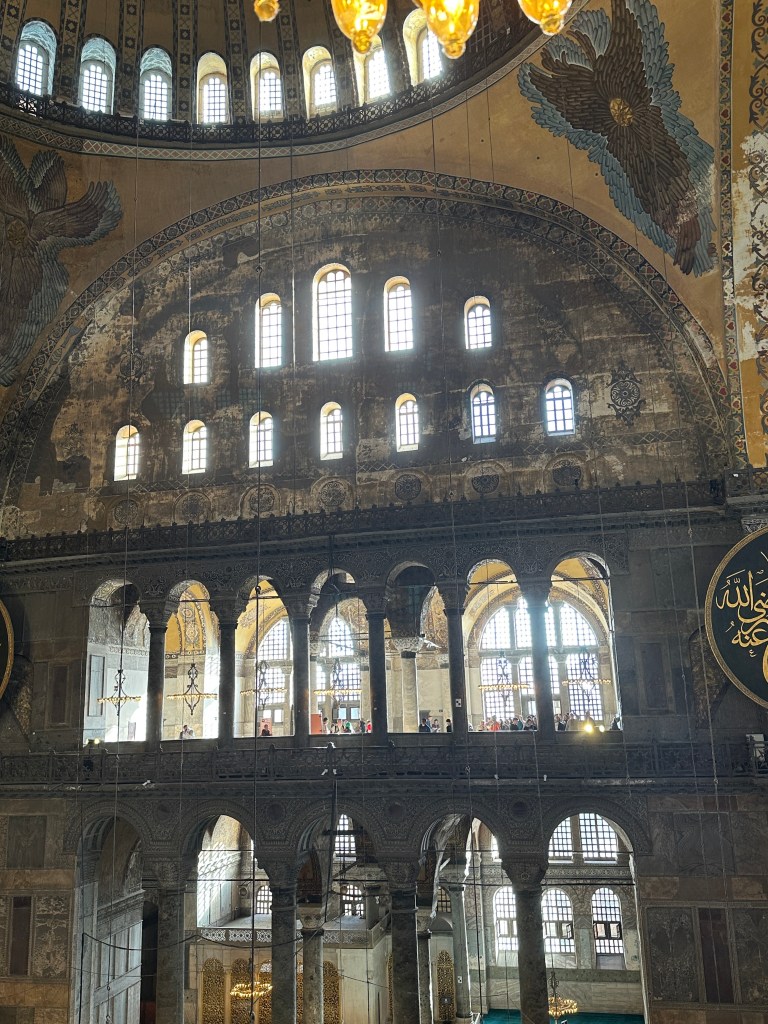
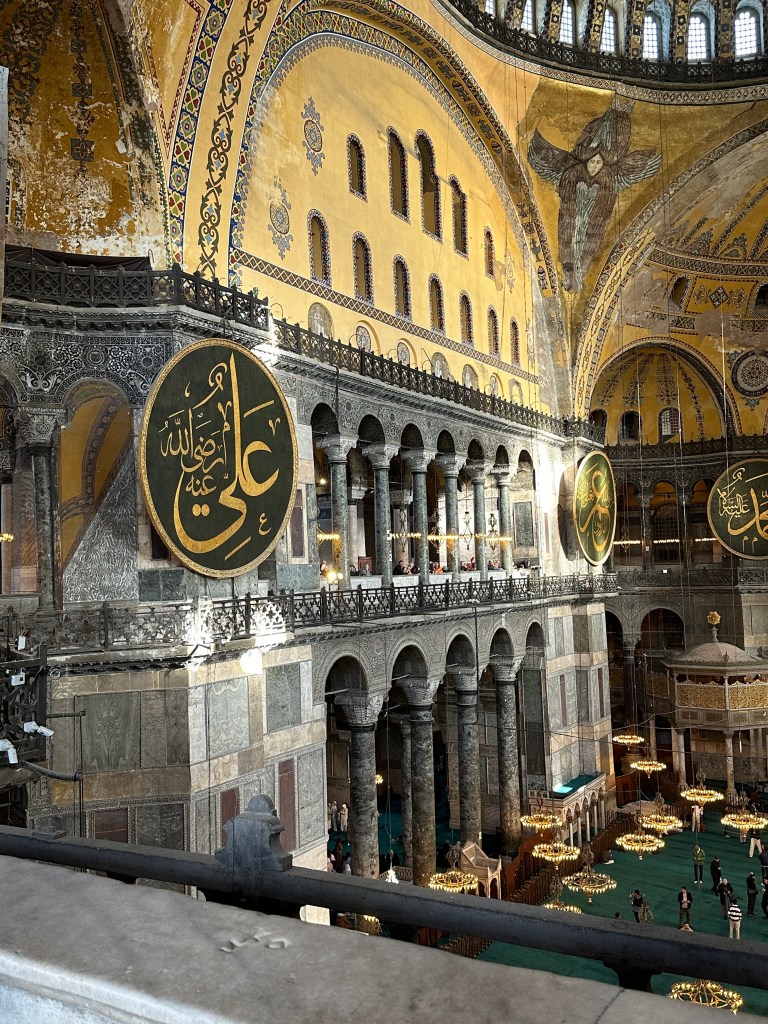
The Hagia Sophia instead consists of a large square center with enormous piers at the corners, that spread out into triangular areas at their head, which are called pendentives. The pendentives and piers are strong enough to support a glorious dome. Although domes were already known, this dome’s size made it unique for the time. I’ve read some descriptions that say the dome appears to float atop the church (I agree.) Another consequence of having weight-bearing piers and pendentives is that they could put large windows in the walls and those in turn lent a beautiful light to the interior. The sense of soaring height and natural light must have been a wonderful spiritual experience at the time. Heck, it’s a wonderful experience today even after all the innovations we’ve seen in architecture.
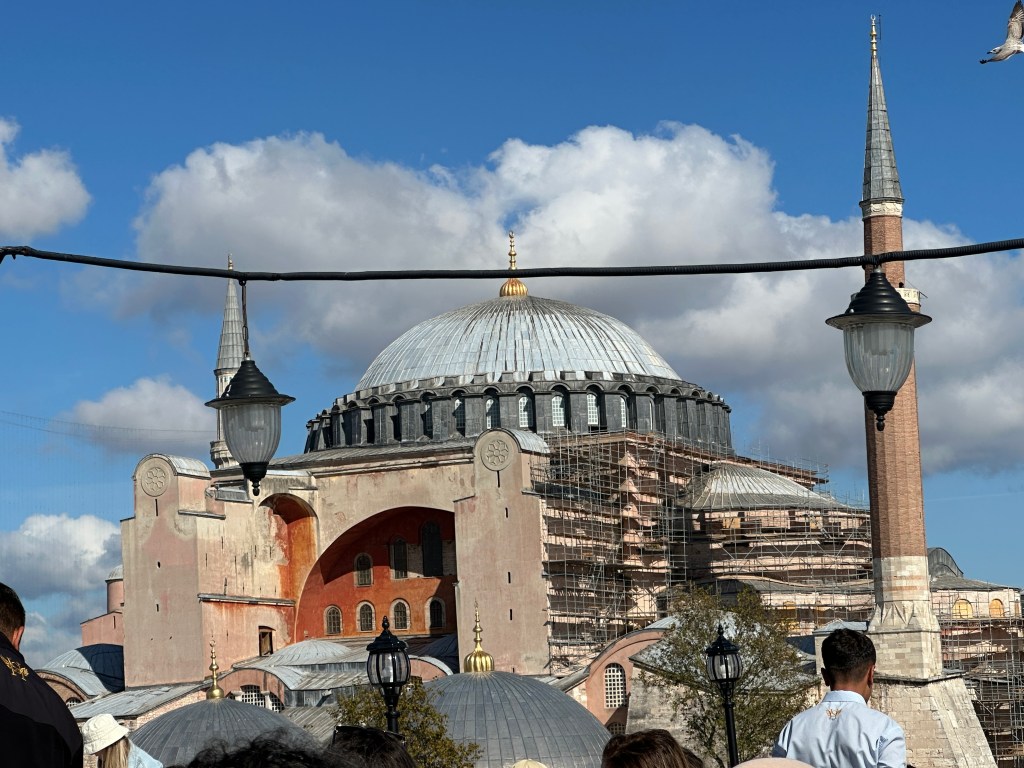
The church has suffered a much damage from earthquakes and war over the fifteen centuries since it was built and today it has a lot of external buttressing to keep it together. Exterior photos can therefore be very clunky-looking but I would argue that the dome is still spectacular!
 We must be soldiers for Art!
Leave a comment