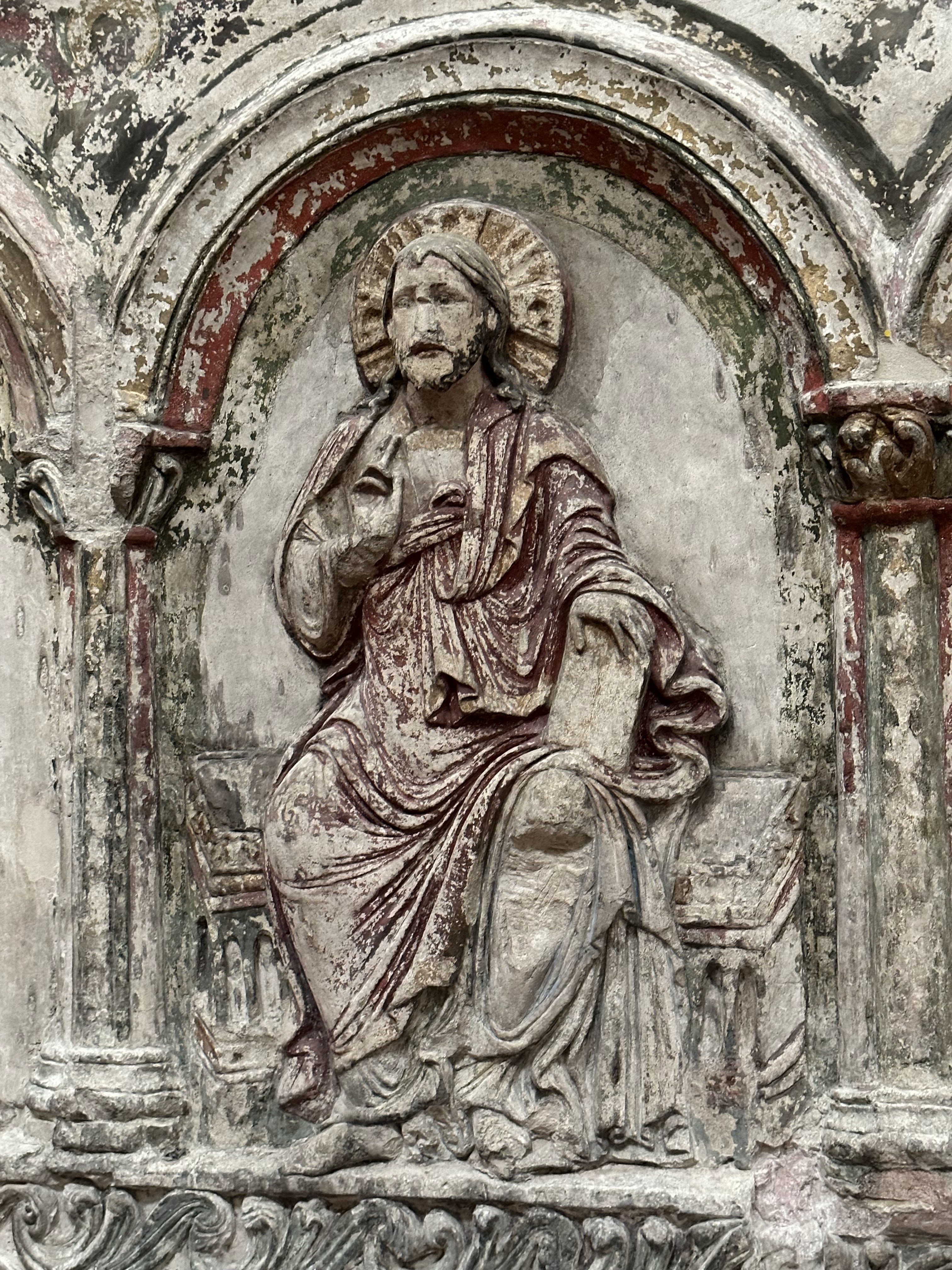
In Halberstadt’s Liebfrauenkirche are some remarkable stone bas-relief carvings. These carvings, depicting Christ, the Virgin Mary, and the twelve apostles, are romanesque masterpieces that date from the early thirteenth century. They are the more remarkable because they arose after a period when the heights achieved by Greek sculpture had been long forgotten.
The sculptures are notable for being full-figured, with a few even stepping outside of their frames. The faces are individual, they have meaningful glances, and the drapery folds are realistic. They were strongly influenced by the Byzantine Art encountered in Constantinople during the crusades.
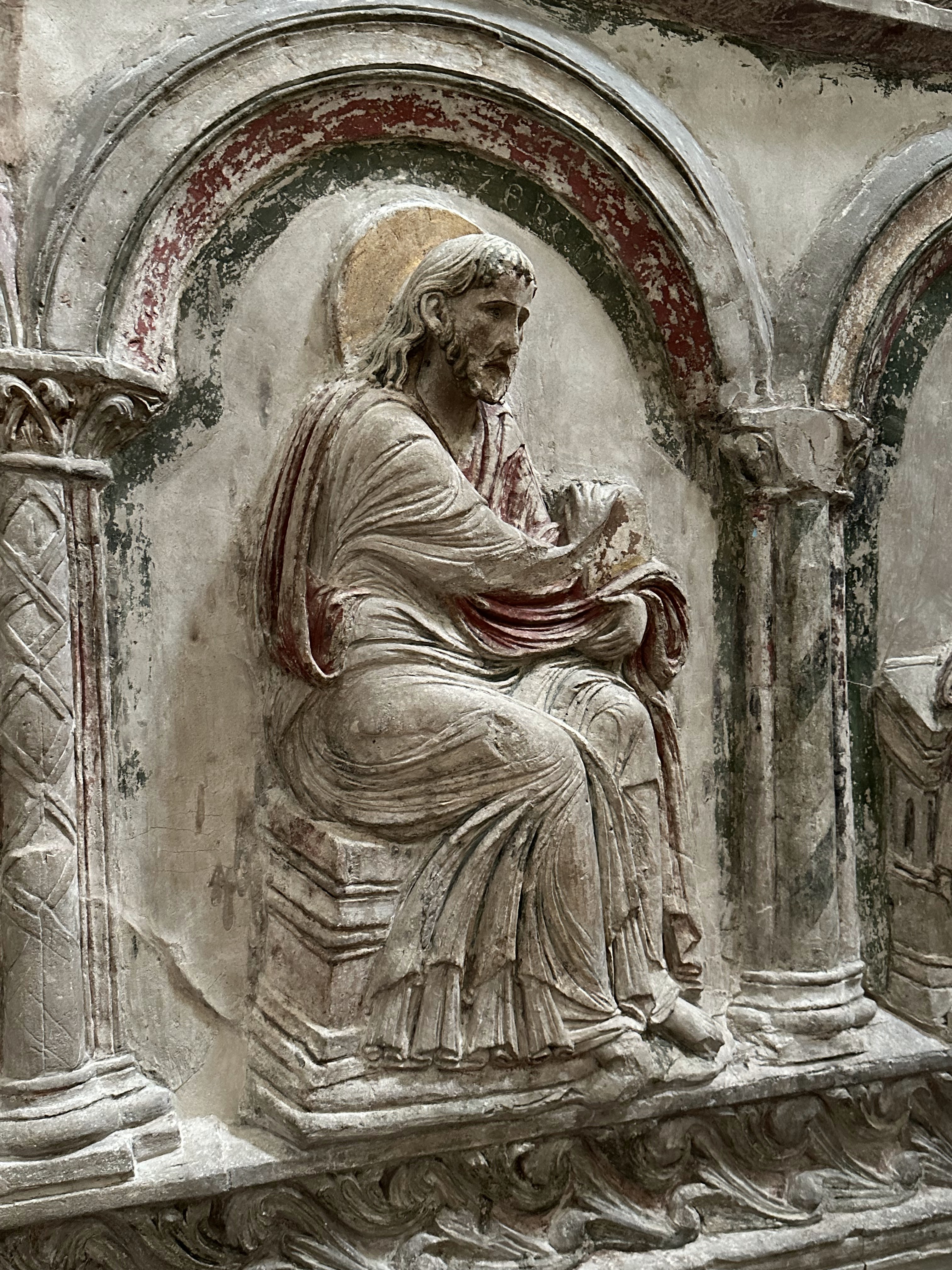
Originally they were highly painted.
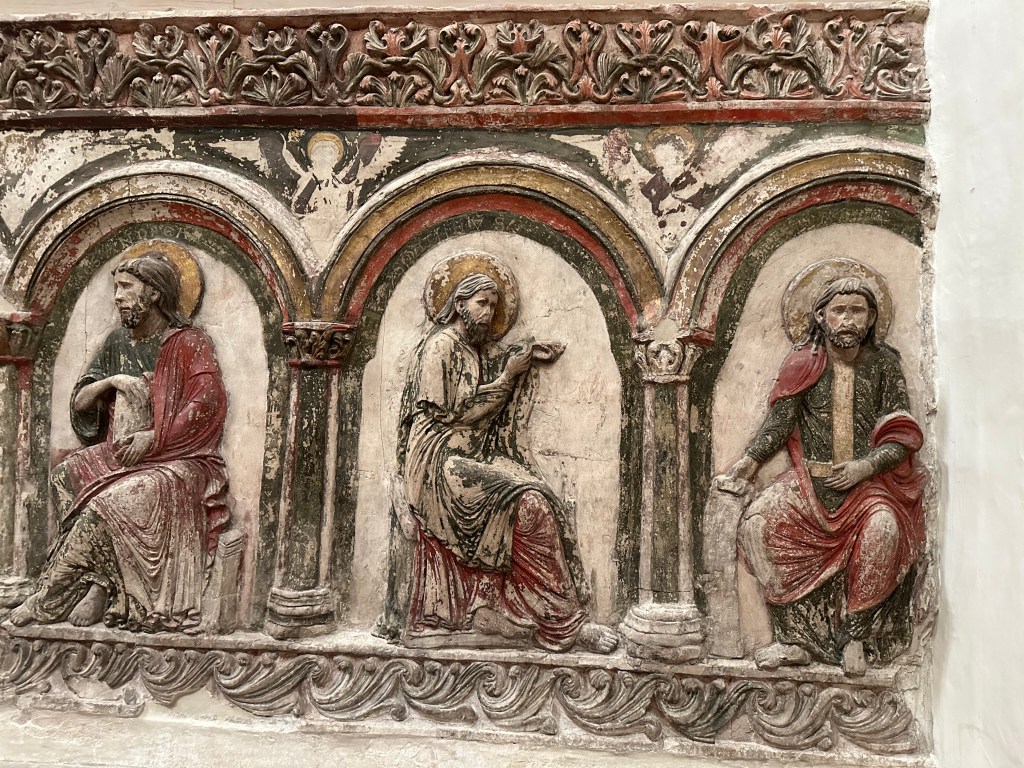
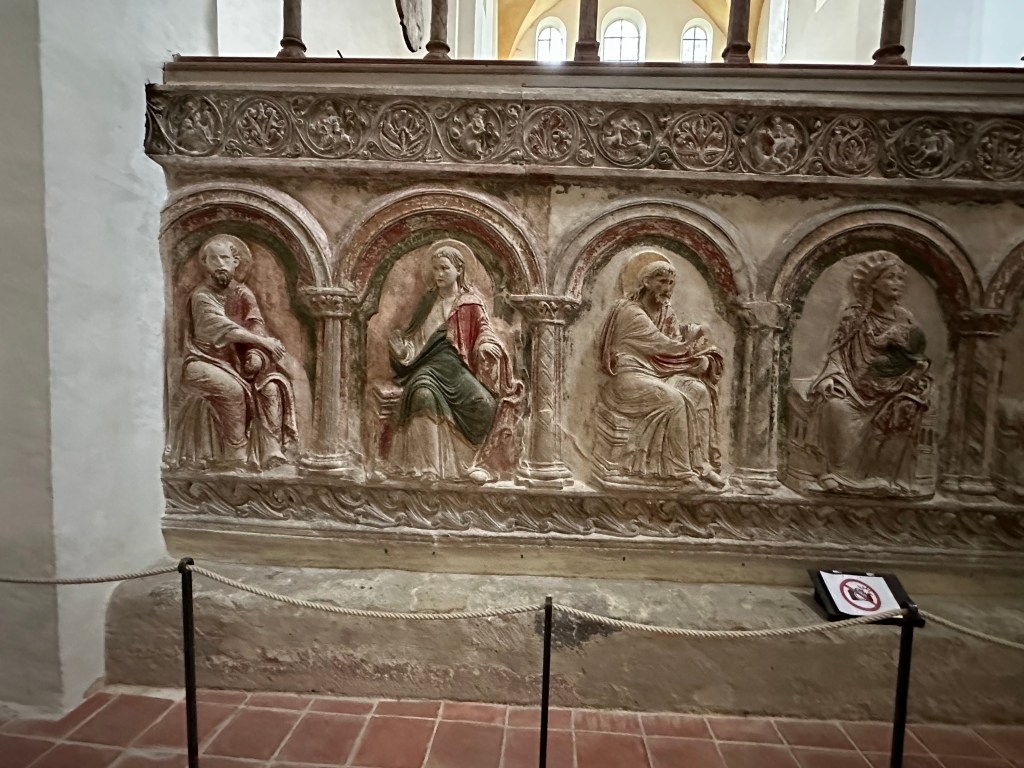
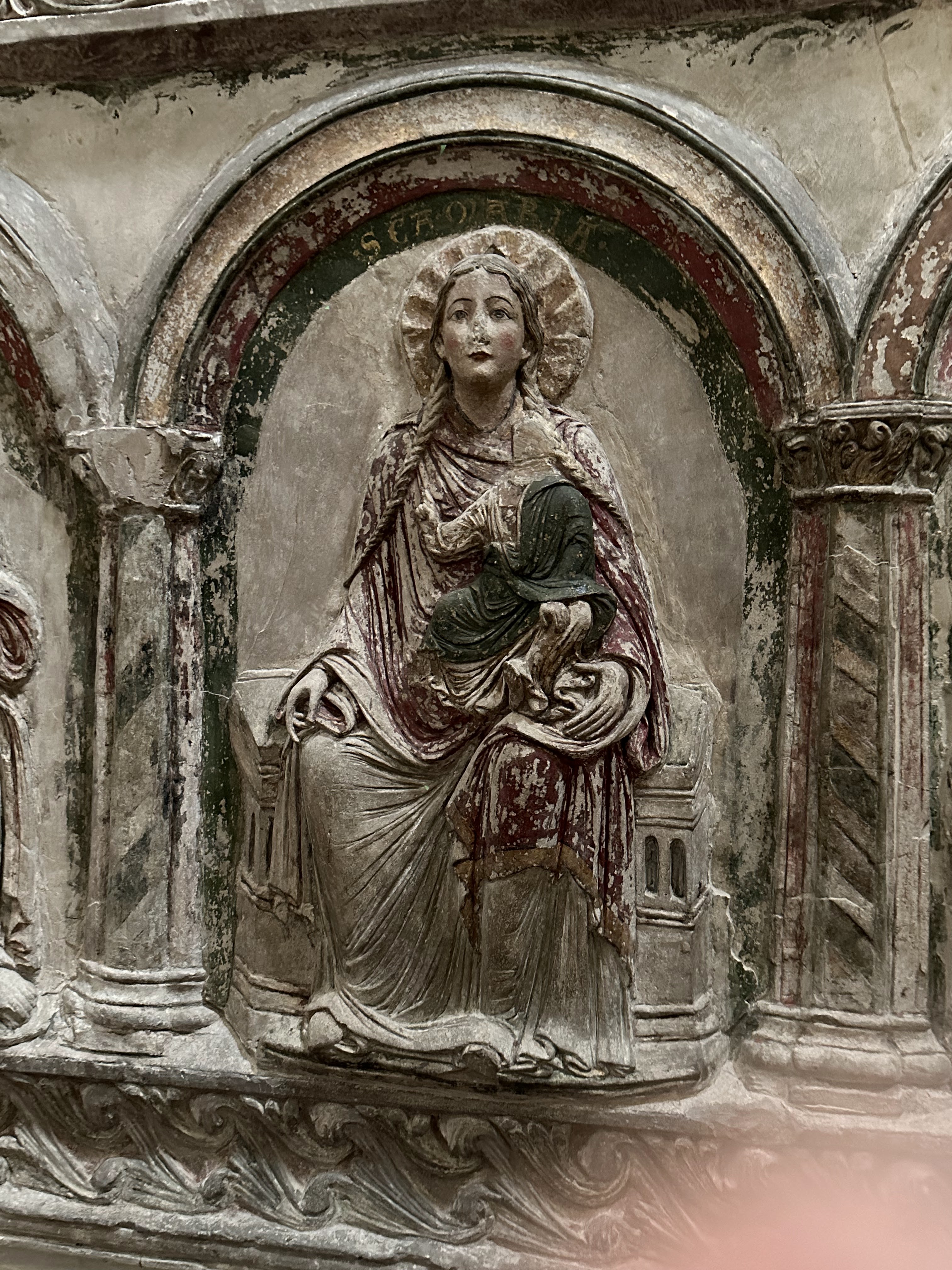
The Virgin Mary here has beautiful hands and is depicted with the braids that were typical for the area.
The Christ sculpture here has been damaged over the years but is still sitting in majesty.
I’m glad to know that these gorgeous works of art exist in the world. Arising when they did led to the continued development of western art, which has given so much to humanity. I celebrate the achievement of the human spirit they represent.
The photos below show the extensive damage to the church from the bombings of World War Two. We are fortunate today that these sculptures somehow survived the destruction that was visited upon the rest of the church.
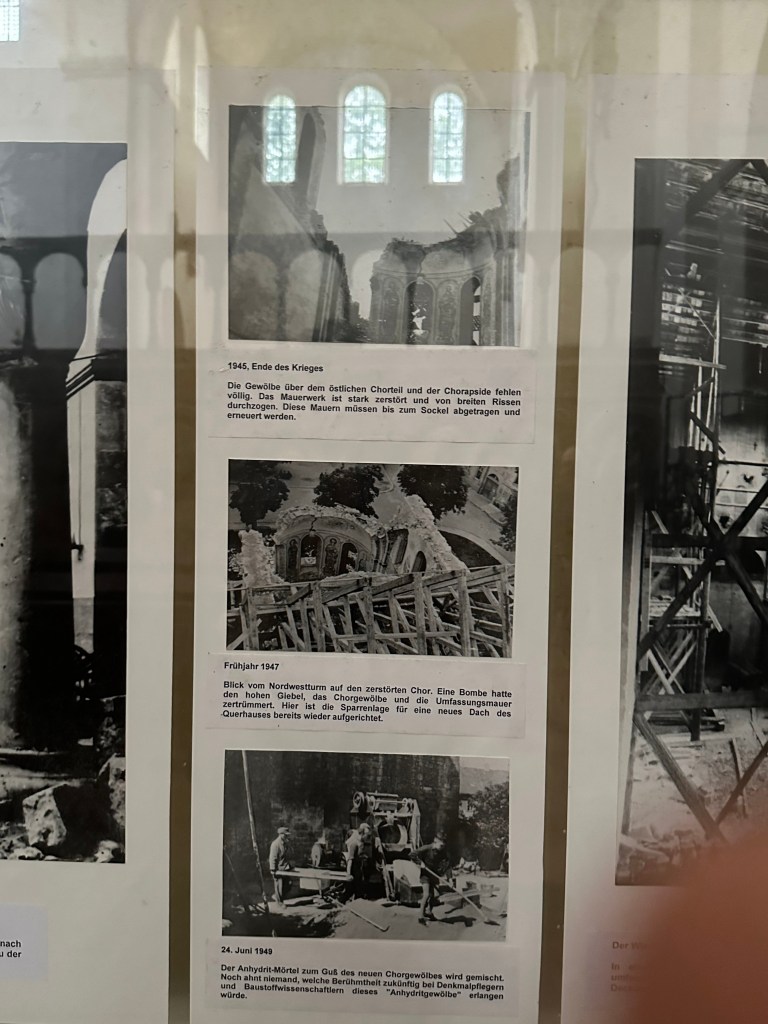
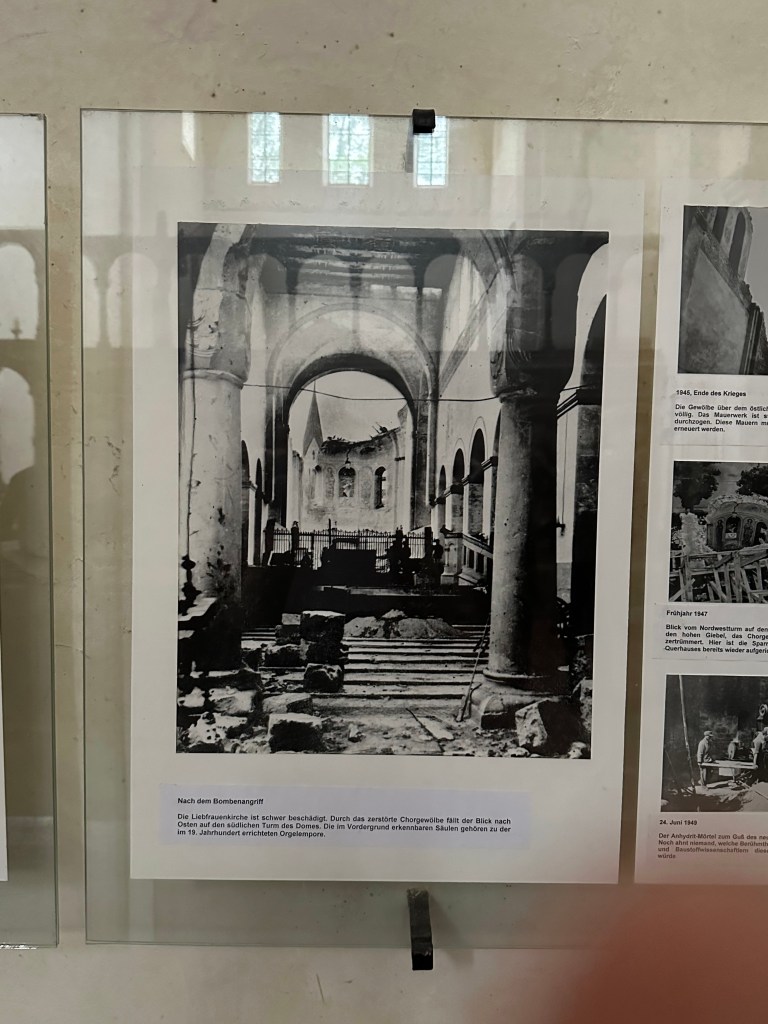
I prayerfully beg you all to not forget how awful war is and how high the costs are in terms of human life and human achievements.
 We must be soldiers for Art!
Leave a comment