Category: Uncategorized

  • Quilting as Art

    The Renwick Gallery has a gorgeous exhibition right now called We Gather at the Edge: Contemporary Quilts by Black Women Artists. I was really struck by the power of the art portrayed there. It was interesting, also, to view art that was created with what might be deemed “non-traditional” media.

    I was particularly intrigued by this quilt. Unfortunately I did not capture the title or the artist. I plan to go back to the exhibition and will update it. This is a work of art on many levels. First, it has an important social message that challenges the status quo. It brings up the tragedy of innocent lives lost due to unnecessary violence.
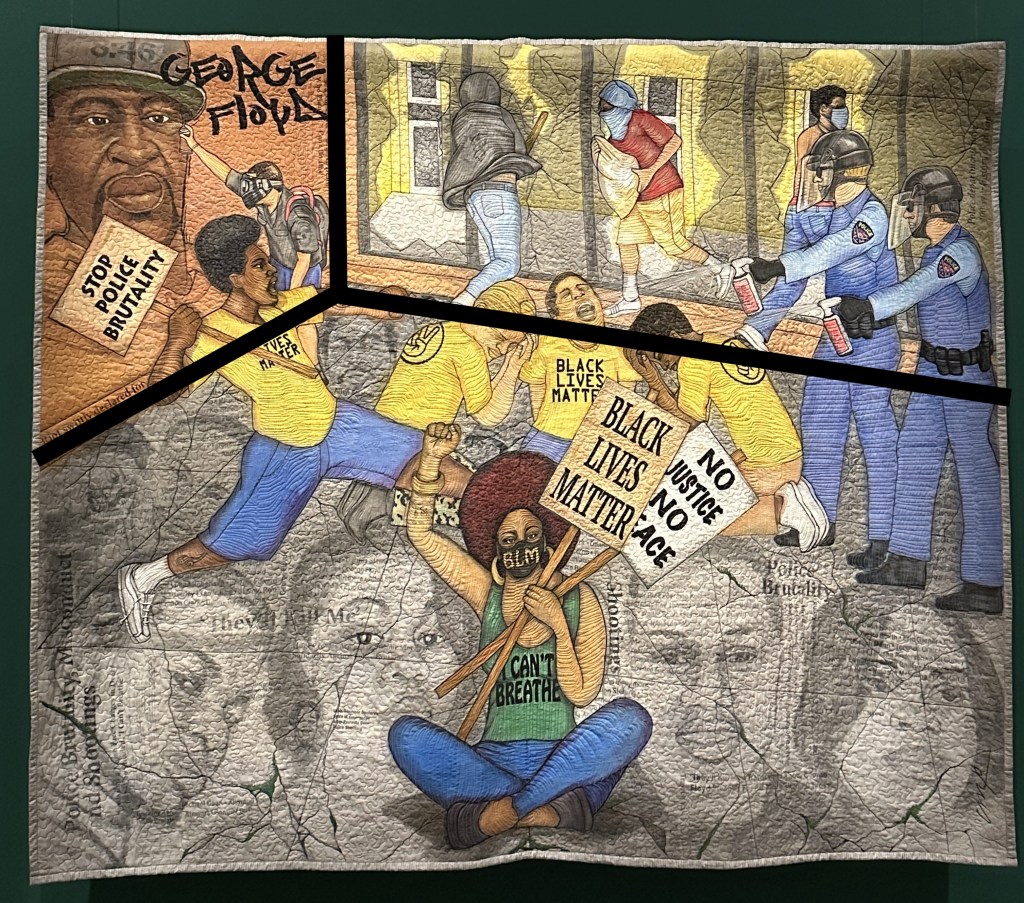
    Second, the artist thought carefully about the construction of the piece. A strong vertical line and two tension-bearing diagonals spilt the quilt into three areas to focus our gaze.

    Third, the artist chose to use black, white, and gray to depict the dead, which creates a poignant contrast to those alive, who are portrayed in bright colors.
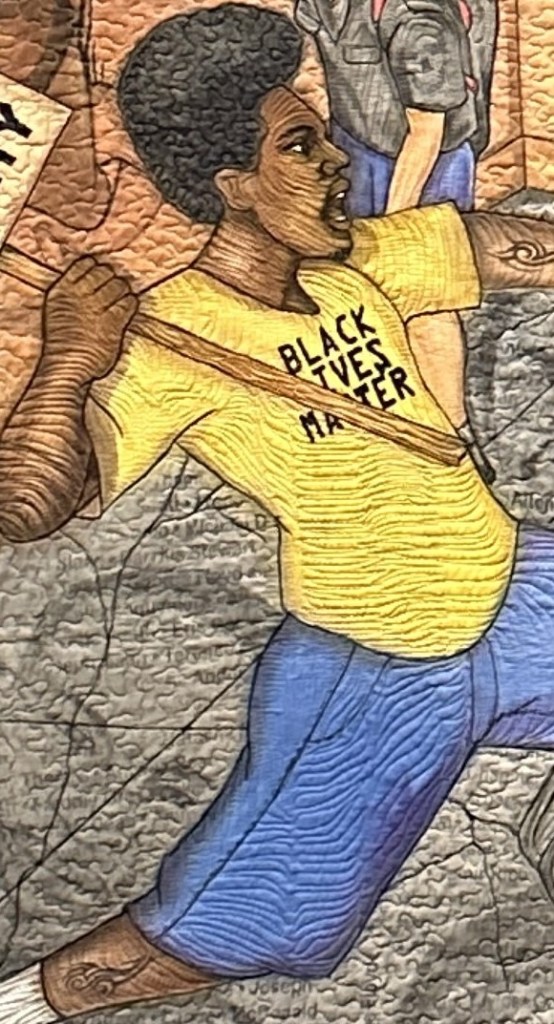

    Fourth, the artist uses sewing techniques that are unique to quilting as art to suggest subtleties in the figures such as clothing (c.f. drapery folds in classical Greek art) and facial expressions. These further emphasize the humanity of the scene.

    I love how artists can take different media and use the elements to create art. I think this piece is exceptional in the amount of meaning it conveys on different levels. The mind of humankind is capable of great things.
  • A Spiritual Experience of the Arts

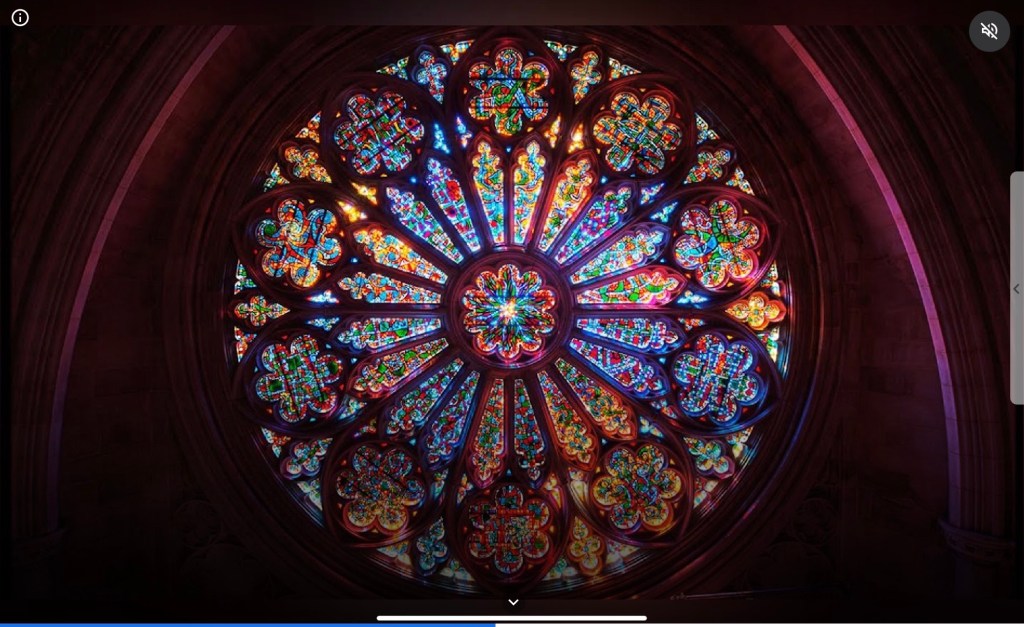
    Creation West Rose Window, National Cathedral, Washington, DC (photo from the Google Arts and Culture, Journeys In Light, Color and Stone.)

    I was sitting on the stage at the National Cathedral in Washington, DC for a dress rehearsal of our concert of the Brahms Requiem. The stage was facing west and it was an evening in June; the sun was still out and the light was streaming through the west window. The west window is a mystical depiction of the creation and it was ablaze with color. The highly abstract design seems to writhe like the biblical account of the face of God moving over the waters.

    The first piece on the program was variation 7 from Elgar’s Enigma Variations, which is usually called the “Nimrod Suite.” (The term “nimrod” became an insult sometime during the 20th century, but Nimrod was actually the name of a mythical hunter.) This suite has the lushness of harmony and composition that characterizes the late romantic period of the closing days of the 19th century.

    As the music swelled and bloomed, I sat staring at the streams of light coming in through the spectacular stained glass of the creation. It was a perfect confluence of visual and aural beauty inside an architecturally magnificent sacred space. This is what the mind of humankind can do; the arts lift us from our humdrum day into an exalted spiritual space.

    When I feel glum or in despair, I remember moments like this in my life. Social and political issues may arise and fade over time, but beauty is eternal.

    (Just a note: I usually like to use my own photos for this blog but I didn’t have one of the window. I found this stunning photo on the Google Arts and Culture website and have provided the link to it in the above caption.)

  • Treasures at The National Gallery of Art, Washington DC

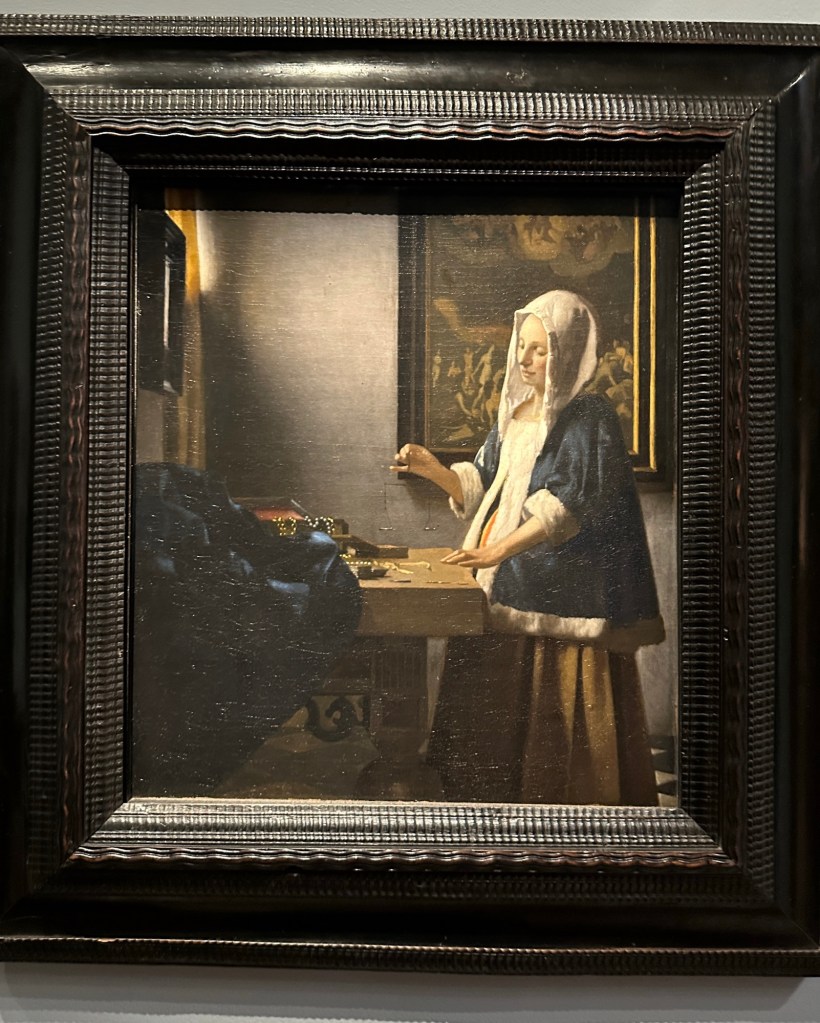
    Some of the most precious paintings in the world are by Vermeer. Each work of art is exquisite on its own and, unfortunately, there are very few of them left in the world.

    So it is a real treasure to have three of them at the National Gallery.

    Woman Holding a Balance, Johannes Vermeer. The National Gallery of Art, Washington DC

    The painting here is my favorite Vermeer. Many people will say that the Art of Painting, which I saw recently in Vienna, is the finest of Vermeer’s extant paintings but this painting of a woman holding a balance is my favorite.

    Vermeer was revolutionary in art because he chose to depict domestic scenes rather than producing religious paintings. I imagine that was driven by his market, which was the prosperous middle class in the Netherlands rather than church patronage as in places like Italy or the Byzantine Empire.
    Nonetheless, what he does with his domestic scenes is magical. First, his brushwork is among the finest in the art world. Second, his use of light coming in through open windows to highlight sections of the painting is exquisite. And in this painting in particular he creates a quiet moment of contemplation and pondering of morals. The wealthy young woman, with pearls and other valuables spread before her, contemplates an empty balance as if weighing up riches in this world vs. riches in the world to come.

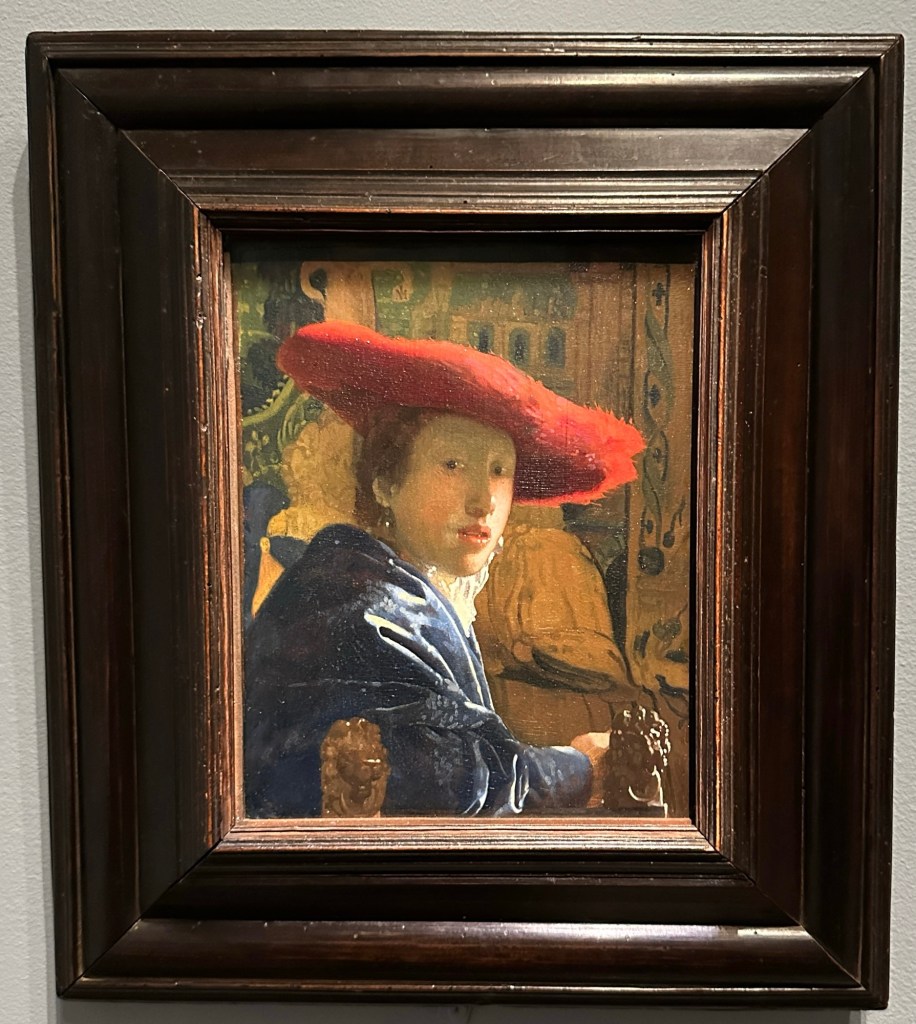
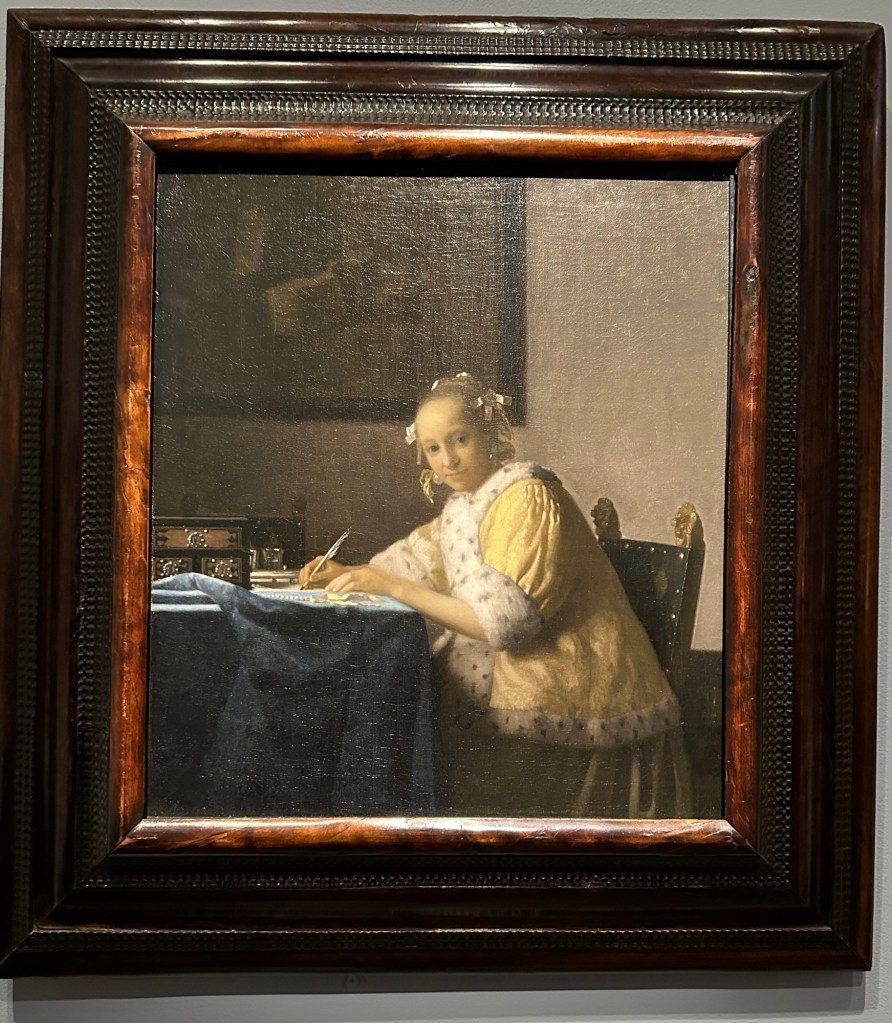
    Here are the other two Vermeers in Washington.

    Girl With the Red Hat, Johannes Vermeer, The National Gallery of Art, Washington DC.
    A Lady Writing, Johannes Vermeer, The National Gallery of Art, Washington DC

    Now a quick, unrelated comment. I want this blog to be about positive and beautiful things and would prefer to refrain from making any political statements, but this seems important:

    USAID has been criticized because voters think we cannot afford to spend money abroad when there are so many people here in the US who are struggling. Voters have said they cannot afford it.

    According to the Pew Research Center, the amount of our budget that goes to USAID is 1.2%.

    If you make $100,000 you pay roughly $17,053 in taxes. 1.2% of that is $205.

    If you make $50,000 you pay roughly $5700. 1.2% of that is $68.

    So are you telling me that you are not willing to pay just $68 to help people who are struggling significantly more than anybody here in the US? Is it not a Christian and moral duty to help those less fortunate than ourselves? I would be interested to know how much any resulting turmoil from NOT helping will cost us in terms of bullets and soldiers’ lives.

  • Saint-Saens and Tchaikovsky at the Kennedy Center

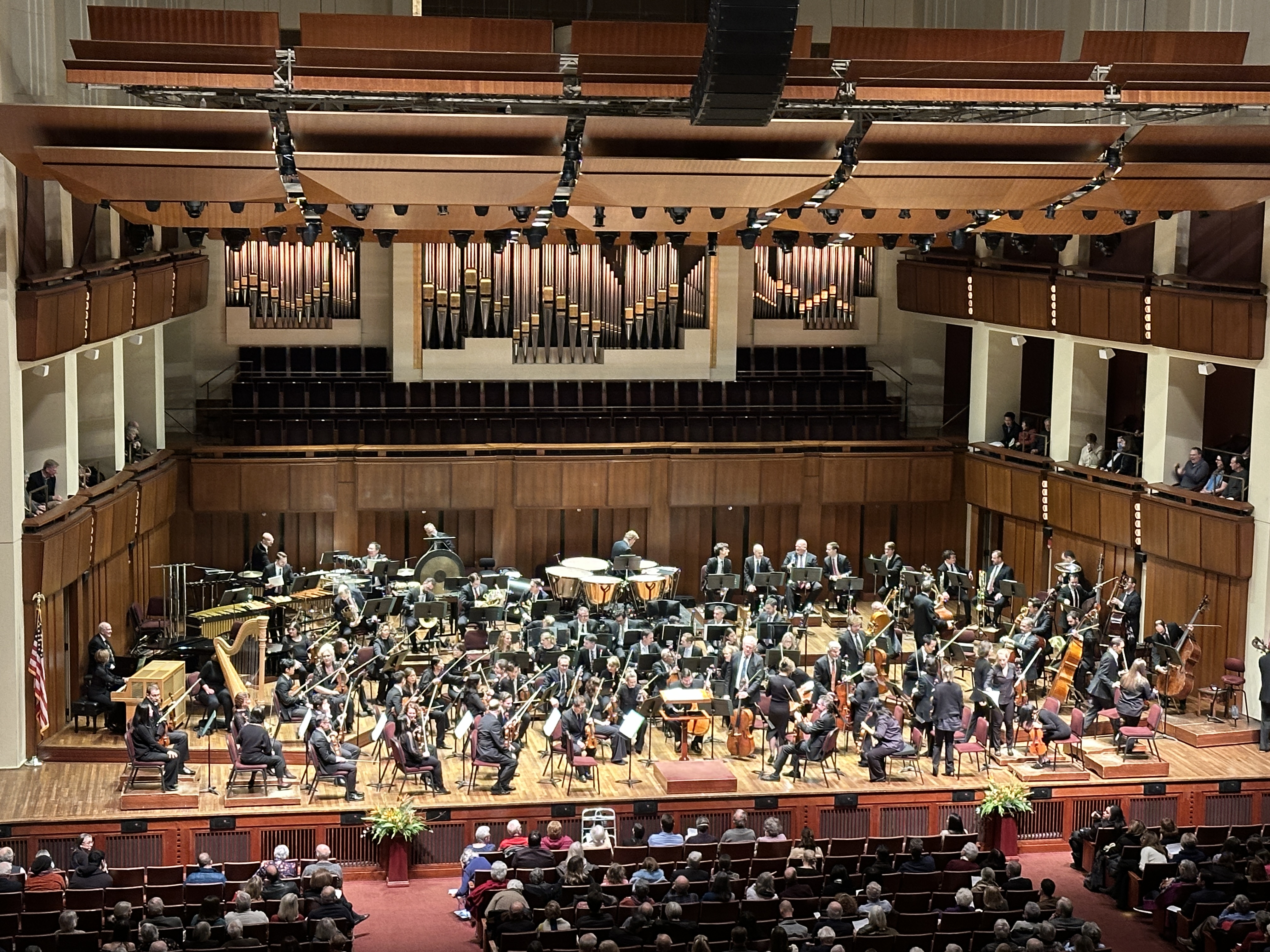
    Saturday night I heard a beautiful concert at The Kennedy Center that was performed by the National Symphony Orchestra (NSO). I’ve said here before how much the NSO has changed with the arrival of Maestro Noseda, becoming one of the best orchestras in the country. I was rapt with the beauty of their playing on Saturday night.

    Saint-Saens is probably best known for The Carnival of the Animals and Danse Macabre, but on Saturday we heard his cello concerto played by Edgar Moreau. As the program notes stated, the main theme on the cello spirals down two octaves, introducing melodic and rhythmic seeds that the composer then works out in the development sections. The searingly beautiful slow passages in a lyrical minor key really haunted my heart.

    The Tchaikovsky piece was his “Manfred” symphony, which was based on the poem by Byron. The opening movement is painted in despairing colors using minor keys and yet contains elements of hope. The second and third movements have elfin sylphlike melodies that make the listener wistful. The powerful fourth movement is the dramatic heart of the piece. What I loved most of all was the fugue played in the string section. Starting in the violas, then second violins, followed by first violins it had gasping beauty when the lower strings (cellos and double basses) came in as the fourth voice. In a bit of fun, the organ comes in near the end with really dramatic chords, first as a solo then with the rest of the orchestra.

    I wasn’t familiar with either piece before going to the concert; now I’m looking for some recordings so I can hear those pieces again in my pursuit of what is beautiful. I want to celebrate that mankind developed fugues, major and minor keys, exquisite compositions, and gifted performing artists.

  • The First Stirrings of Abstract Thought

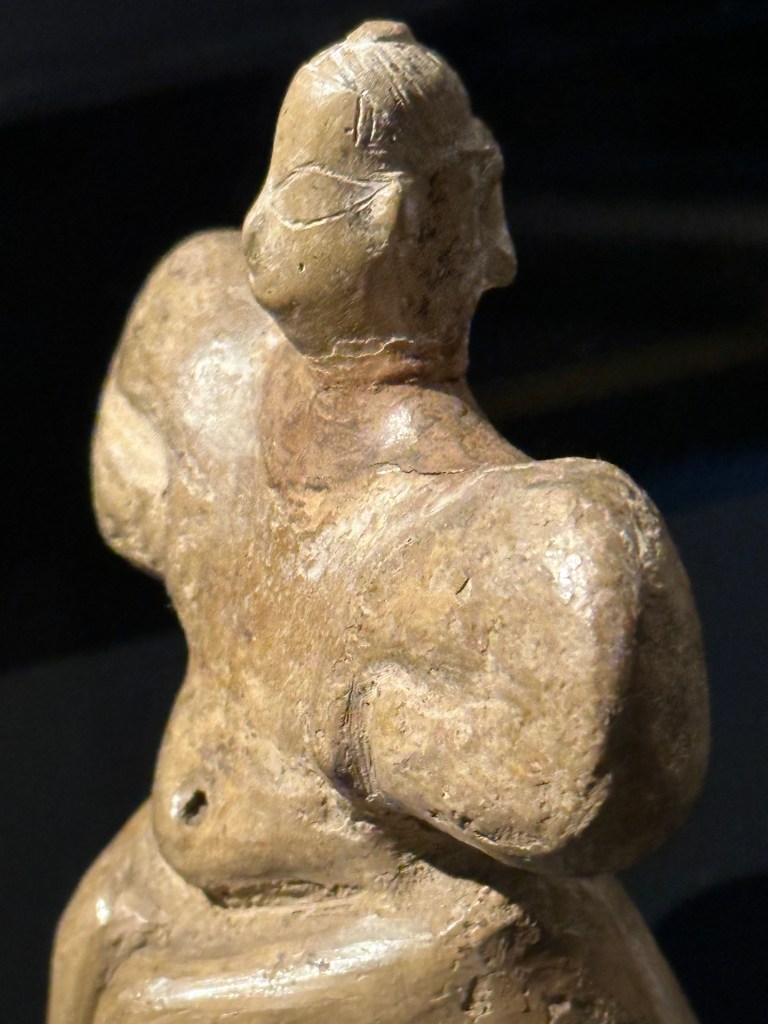
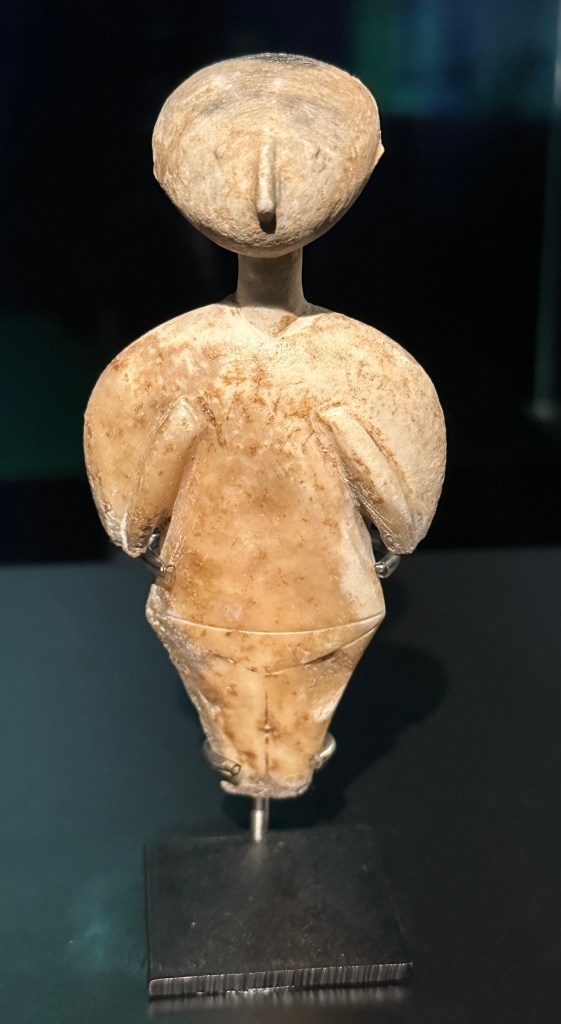
    I’m particularly fascinated by prehistoric cultures as well as cultures from the very, very early days of writing. I’m awed by how they first developed art and abstract thinking. Therefore I was quite excited to be able to see some of the following items at a private museum in Turkey.

    The first two are fertility goddess figures, the first from the late neolithic period about the sixth millennium BCE and the second from the early Iron Age about the third millennium BCE. I love how they capture the female form and how the rounded lushness of the carving portrays beauty and desirability. It’s especially thrilling to me to think about how old these pieces are and that I am looking at the same object that an artist saw in their mind’s eye thousands of years before my existence.

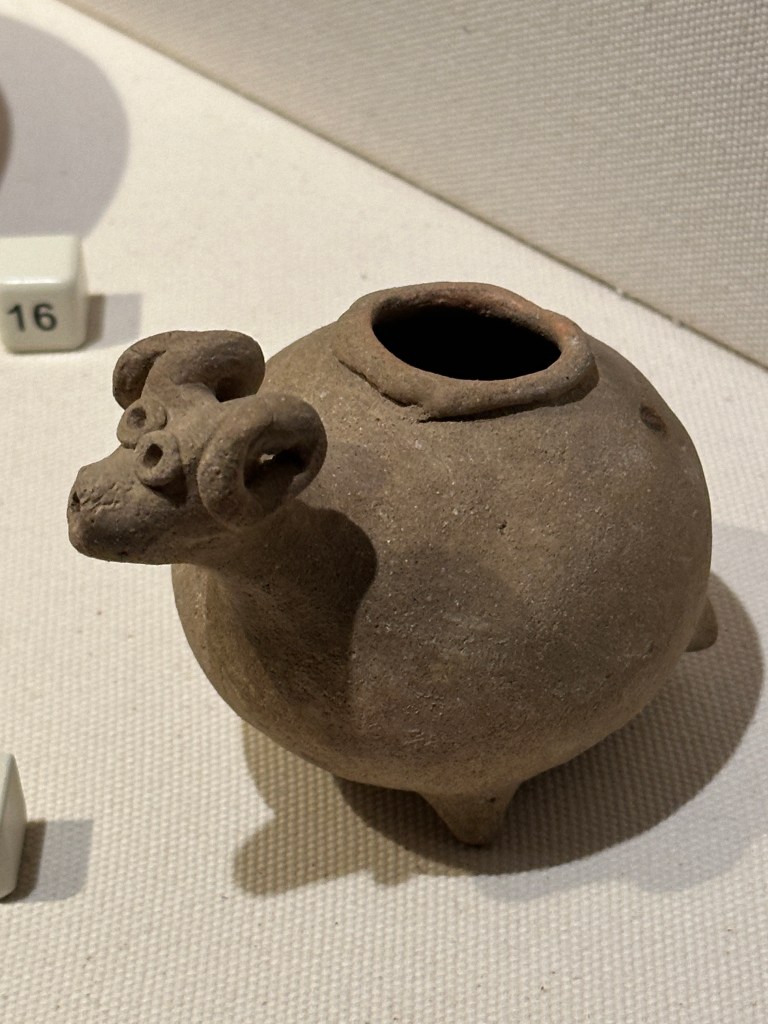
    The third photo just made me laugh, so I had to include this cute little guy. The museum has labeled it as a ram-shaped rhyton, which is a drinking horn or cup. It’s from the second millennium BCE.

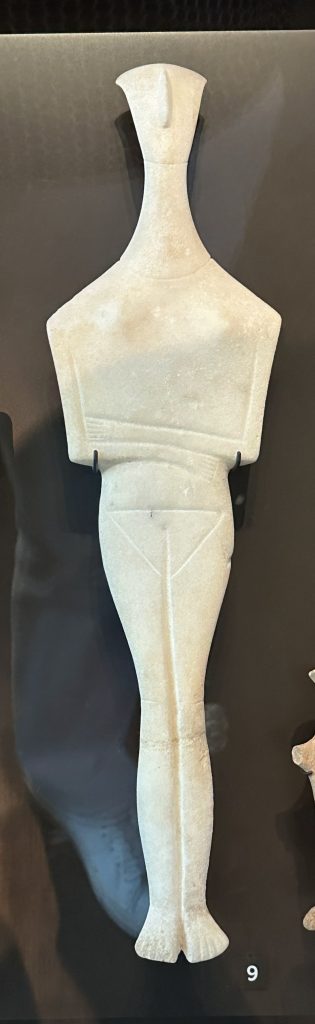
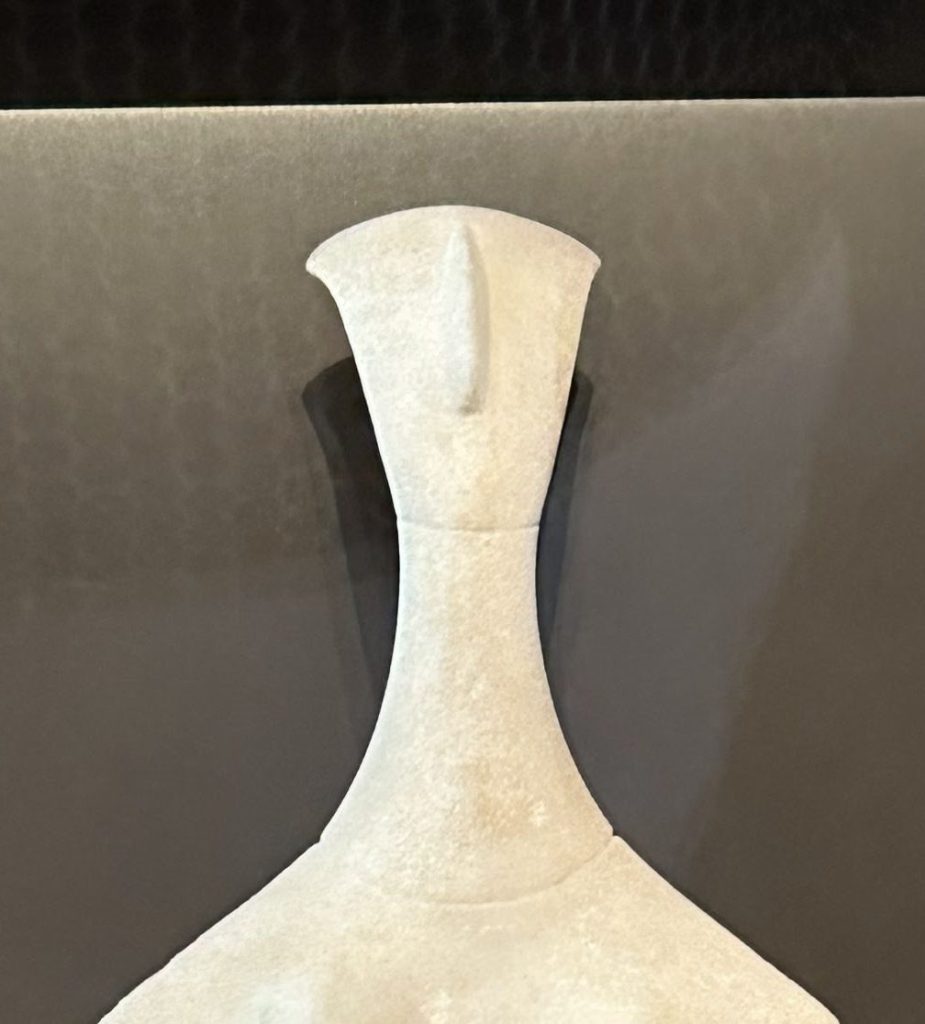
    Below I have some photos of a Cycladic idol from the Neues Museum, Berlin.

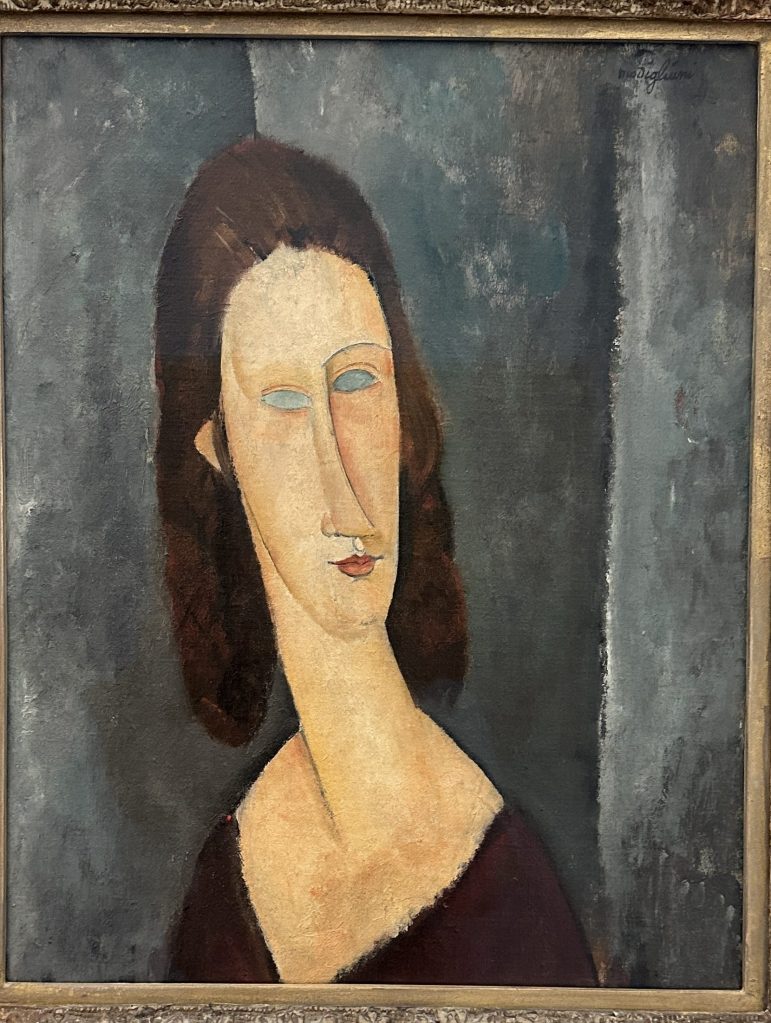
    This piece is from the Cycladic Islands some time between 2600 and 1100 BCE. I love the soaring elegant form of the figure, especially the face. It reminds me of Modigliani and I wonder if he was influenced by Cycladic art.

  • More Greatness!

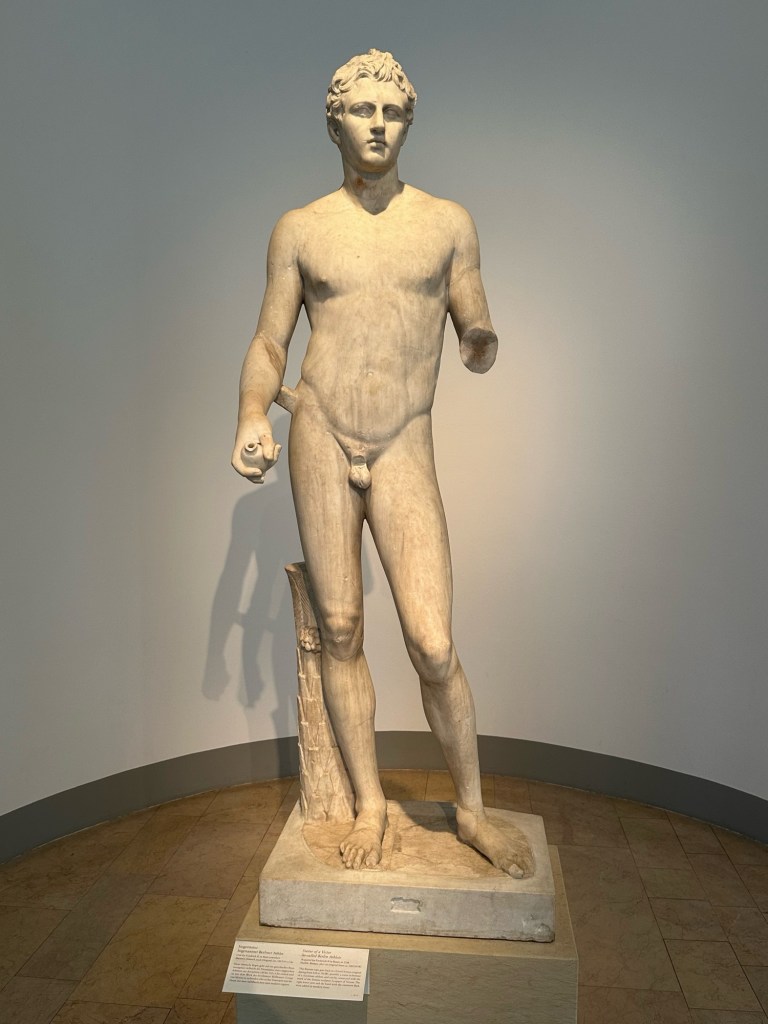
    After discussing the Greek archaic period I wanted to talk about the classical period. During the classical period sculpture soared to rapturous heights of beauty through naturalistic portrayals of the human form.

    Rather than the stiff poses of the archaic period, the classical period had active forms, realistic drapery, and a relaxed S-shaped form.

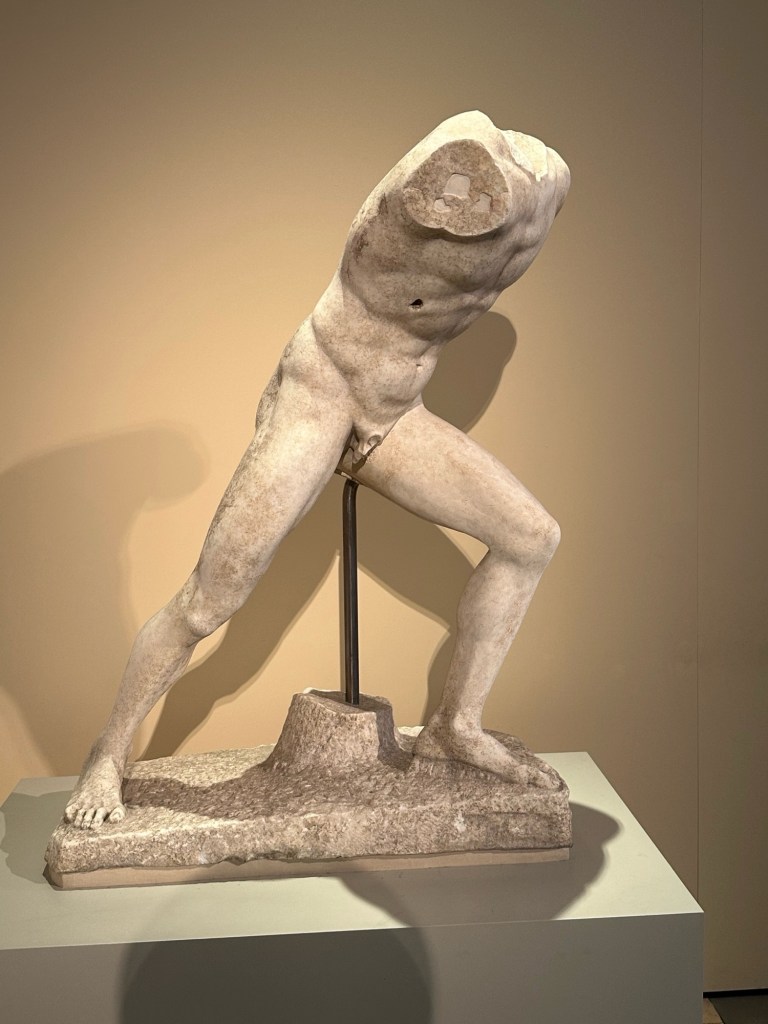
    The “Berlin Athlete,” Neues Museum, Berlin

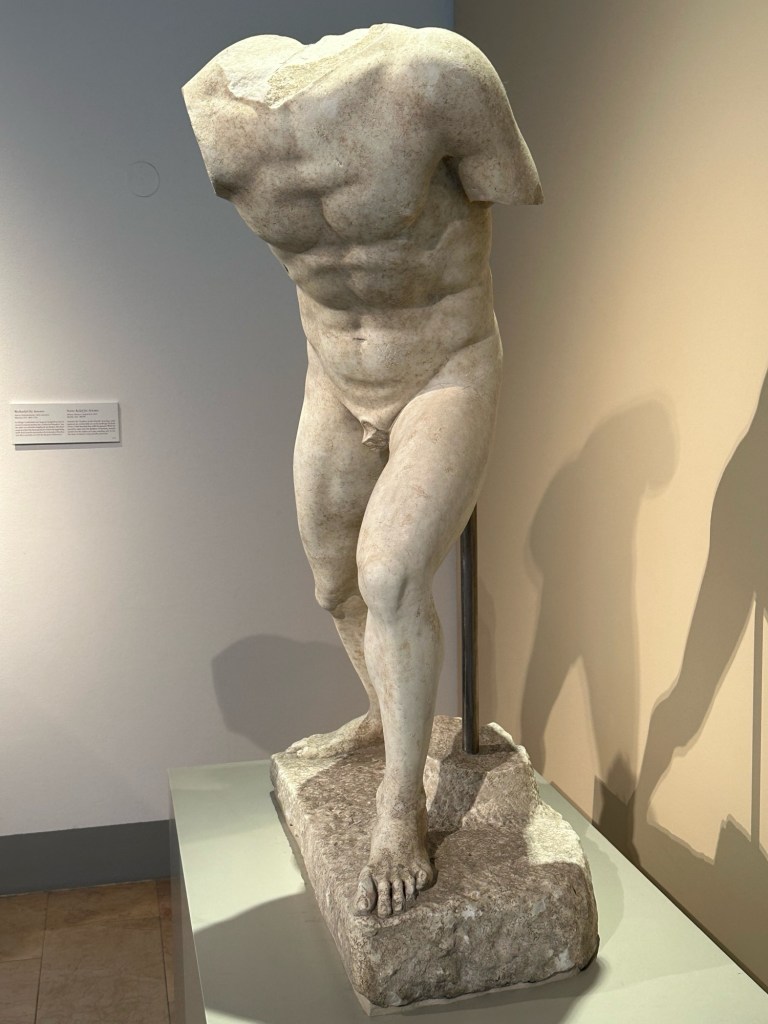
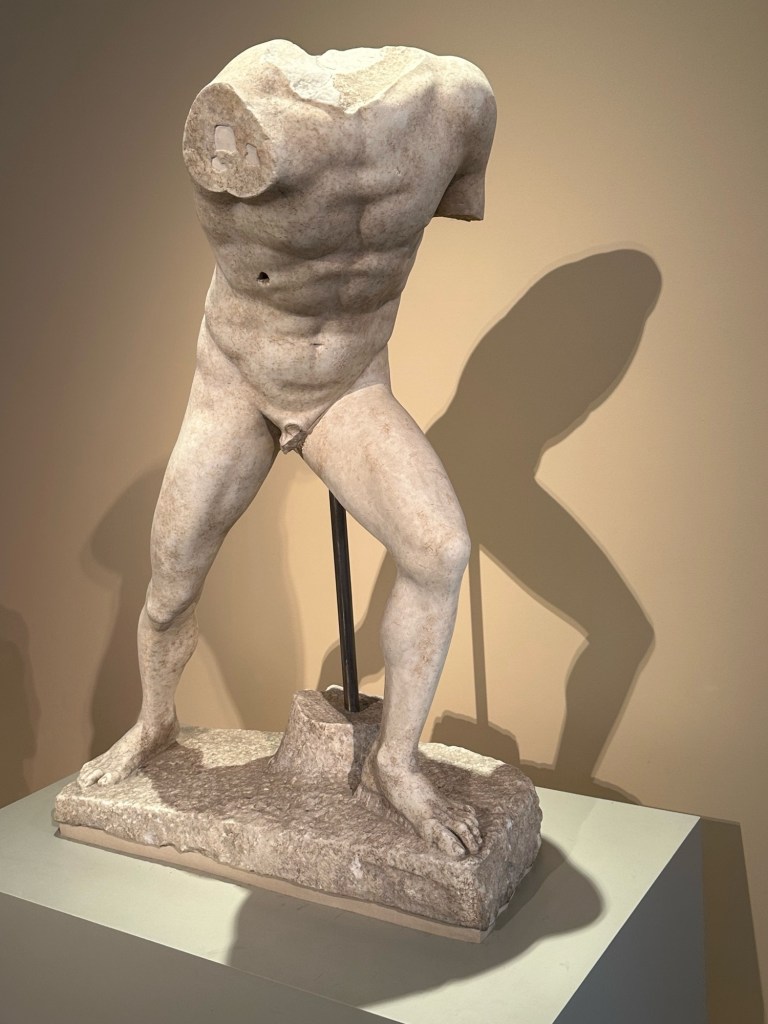
    I found this next sculpture to be very moving. This is a wounded warrior, but this time instead of being in a relaxed pose, he is in motion. The sculptor captured the beauty of the human form and human movement.

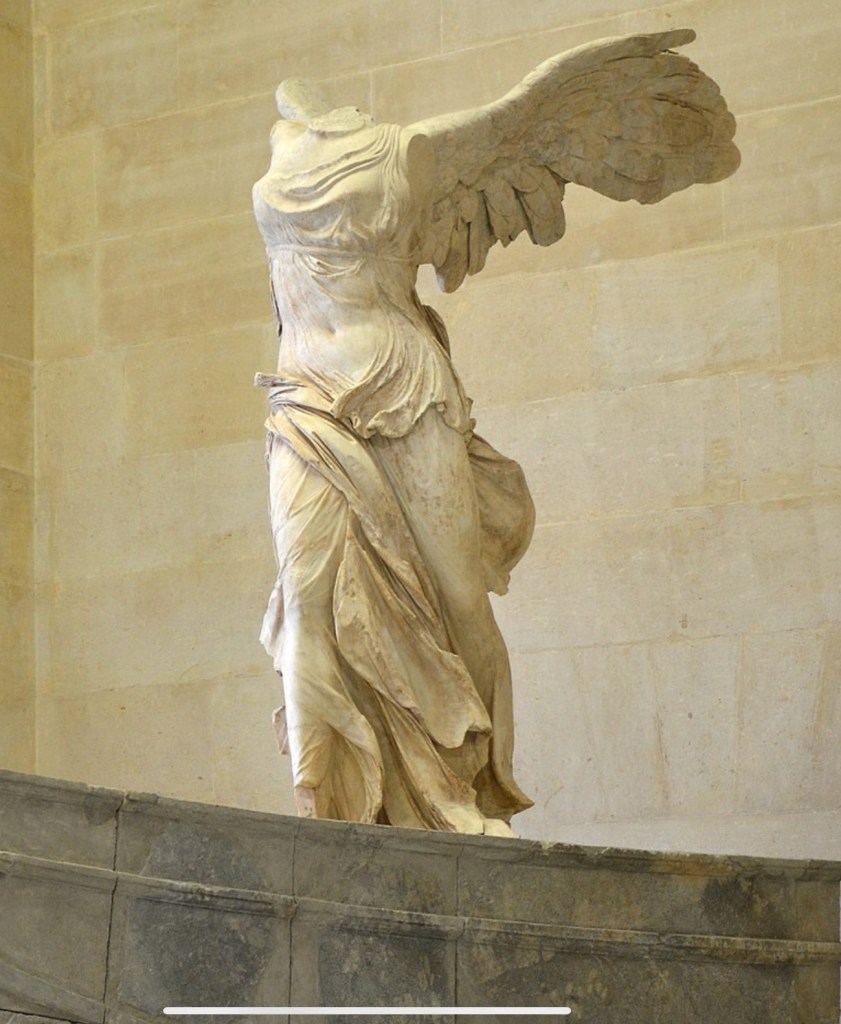
    The classical sculpture, however, I find most astounding of all is something for which I do not have a photo. I saw it in 1985 and hence do not have it in Google Photos. In this blog I don’t like to use photos that I haven’t taken because this is supposed to be about my encounters with art, but I did see it so I am going to cheat a little bit and grab a photo off the internet. I am talking about the Winged Victory of Samothrace.

    Winged Victory of Samothrace, Louvre, Paris

    The sculpture captures that moment she lands on a warship’s prow to announce the Greek’s victory to them. The drapery on this statue is so delicate you can clearly see the form of the woman beneath it. Her torso is slightly twisted as she springs forward to land on the ship and the fabric ripples with the wind. It is an astonishing thing to capture this beautiful moment of action in a medium like stone.

    I celebrate the Greek culture of antiquity for creating something so beautiful that we can still feel its frisson even after 2400 years.

  • The Greatness of Mankind

    This morning in The Washington Post Robin Givhan wrote about the arts “At their best, the arts help people to think more deeply and more broadly. They help people grasp commonalities across expansive divides. Sometimes they highlight the greatness of man, but more often and more powerfully, they remind people of their fallibility.”

    In this blog I primarily want to talk about how the arts highlight the greatness of man because I want to celebrate what we humans can do that is superlative.

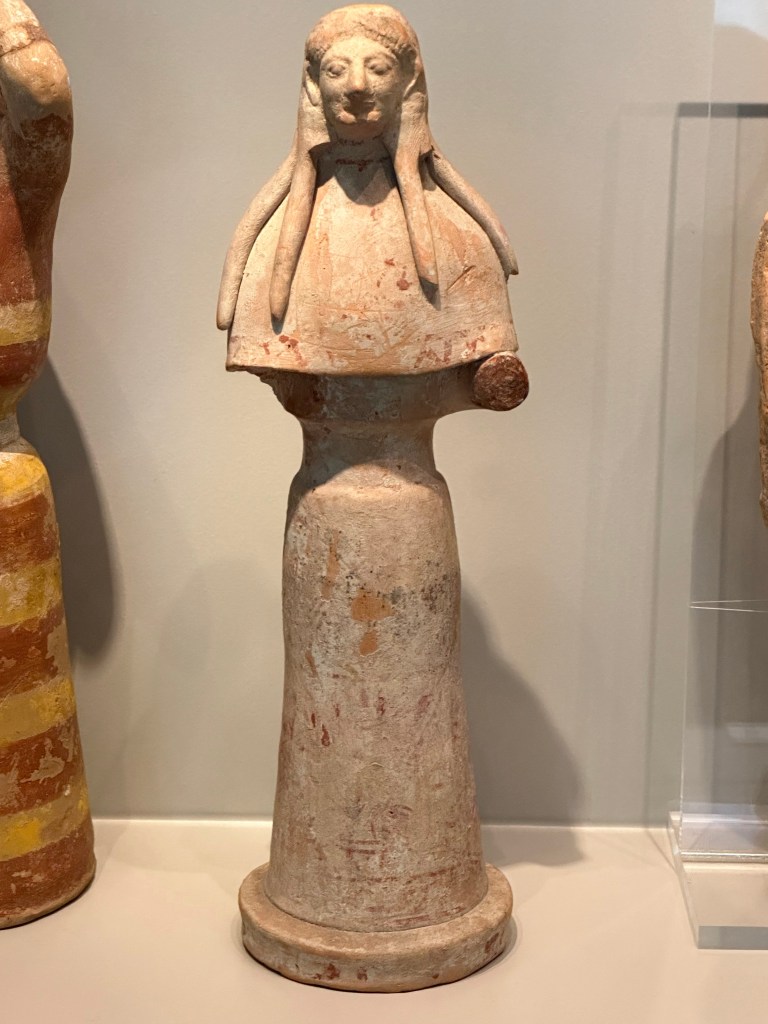
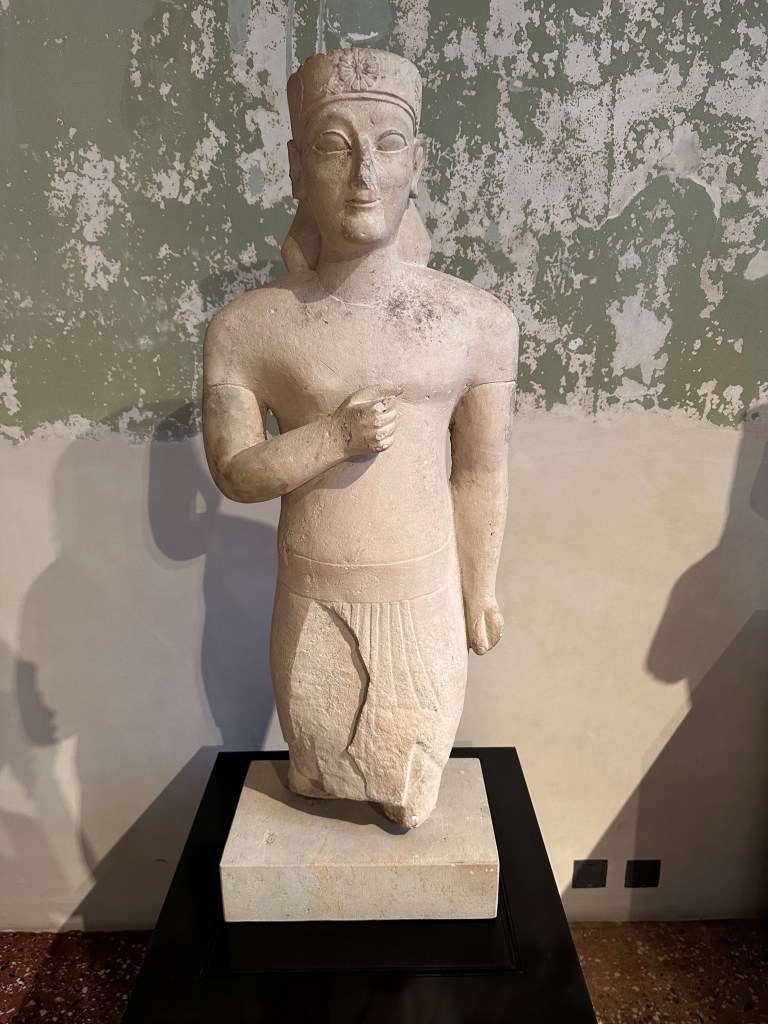
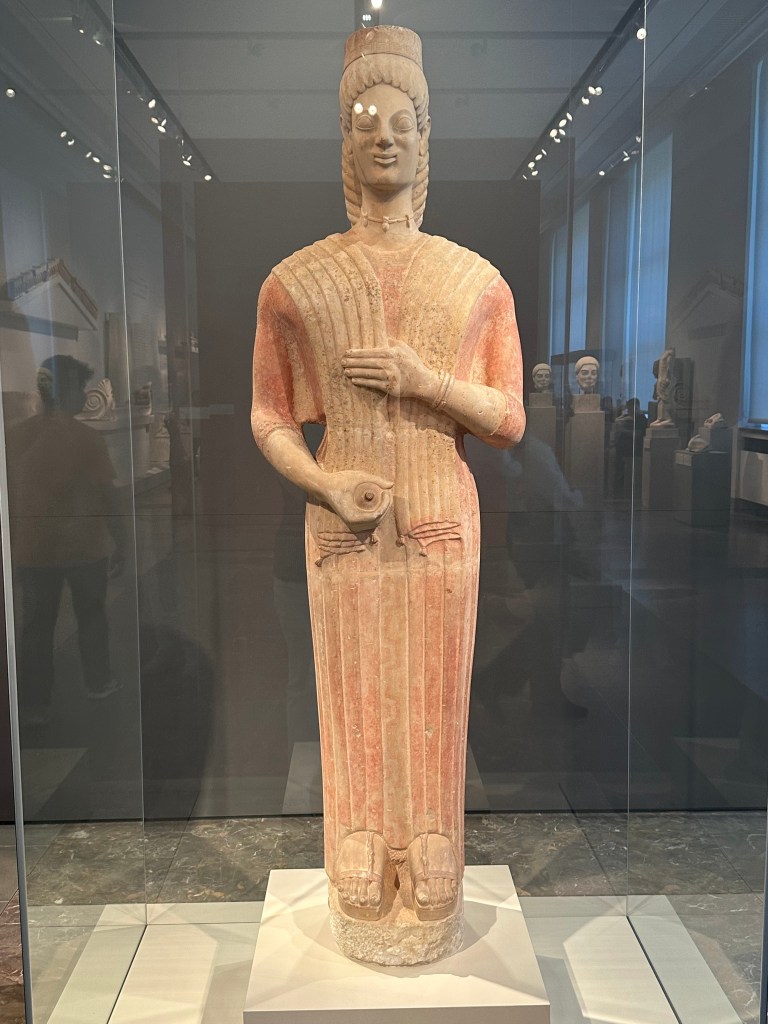
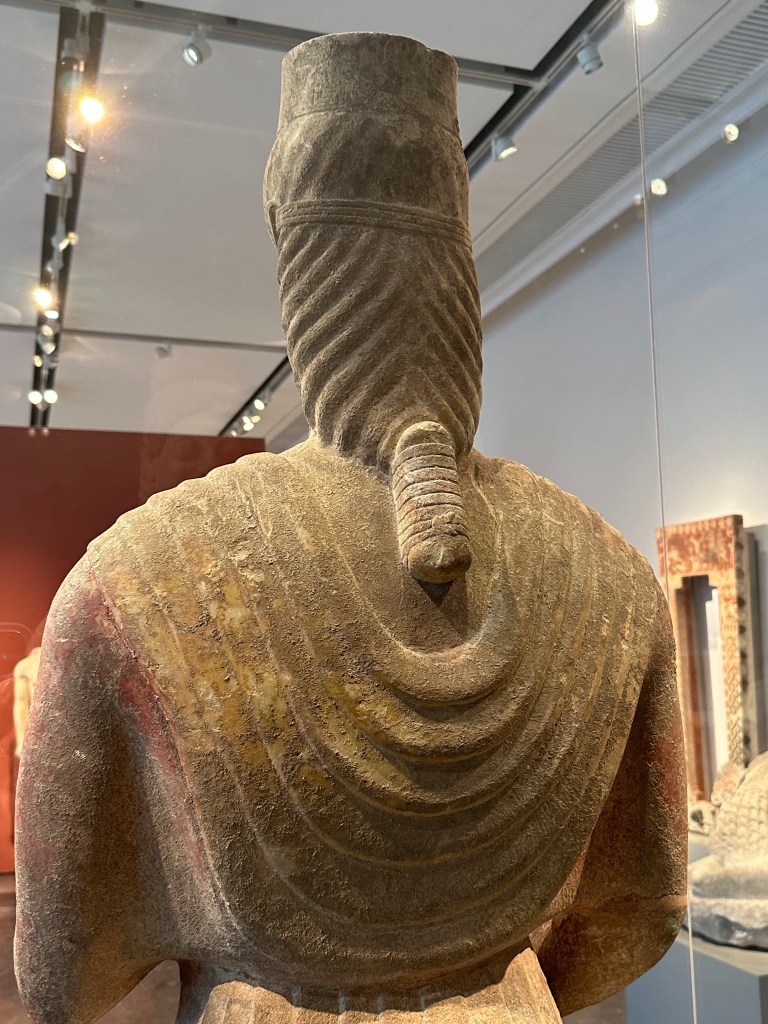
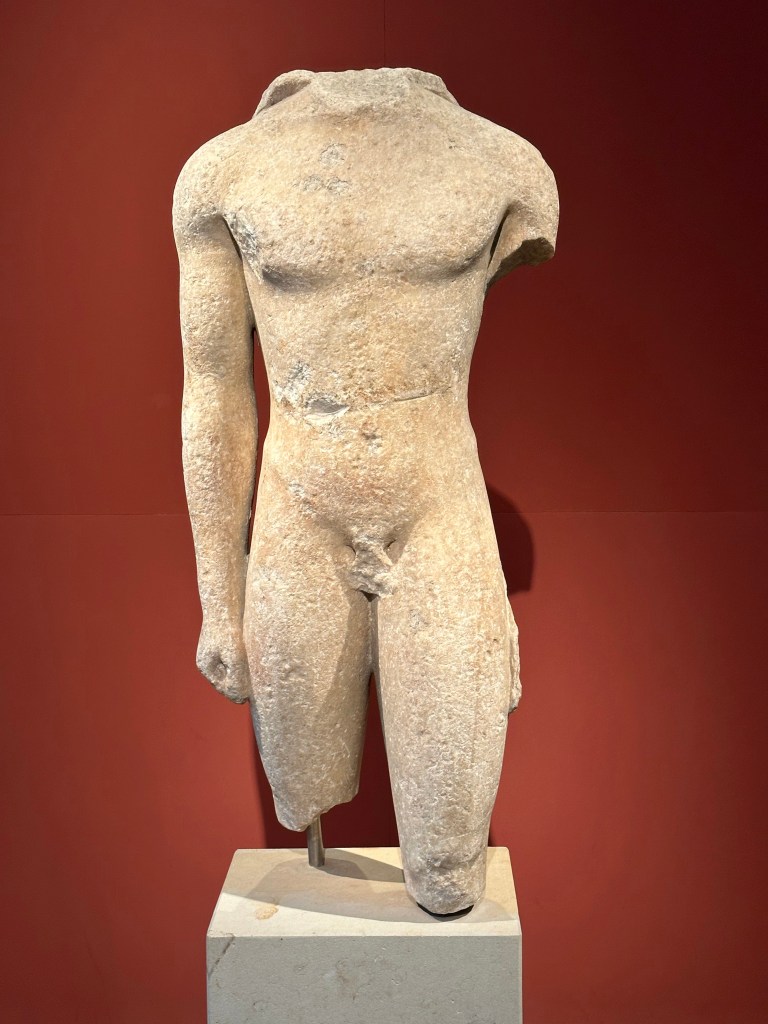
    Today I want to discuss Greek sculpture during the start of the great flowering of the arts in Greek antiquity. Early Greek sculpture, usually called the archaic style, was a highly realistic style that was, however, still rather stiff. Note the beauty of the rendering of the human figure, yet they are still not quite naturalistic. Arms are held stiffly at the side or otherwise close to the body. They nonetheless celebrate the human form.

    So to Ms. Givhan’s point, these help us to realize the commonalities humanity across an expansive divide of time and space.

    Tomorrow I’ll write about the succeeding period in Greek sculpture usually referred to as the classical style.

  • More Thoughts on Rollo Dilworth’s Weather: Stand the Storm

    Professor Rankine wrote a powerful poem that I posted here. As we continue to rehearse Dr. Dilworth’s setting for the poem, I discover more about how the music brings out the further meaning of the poem.

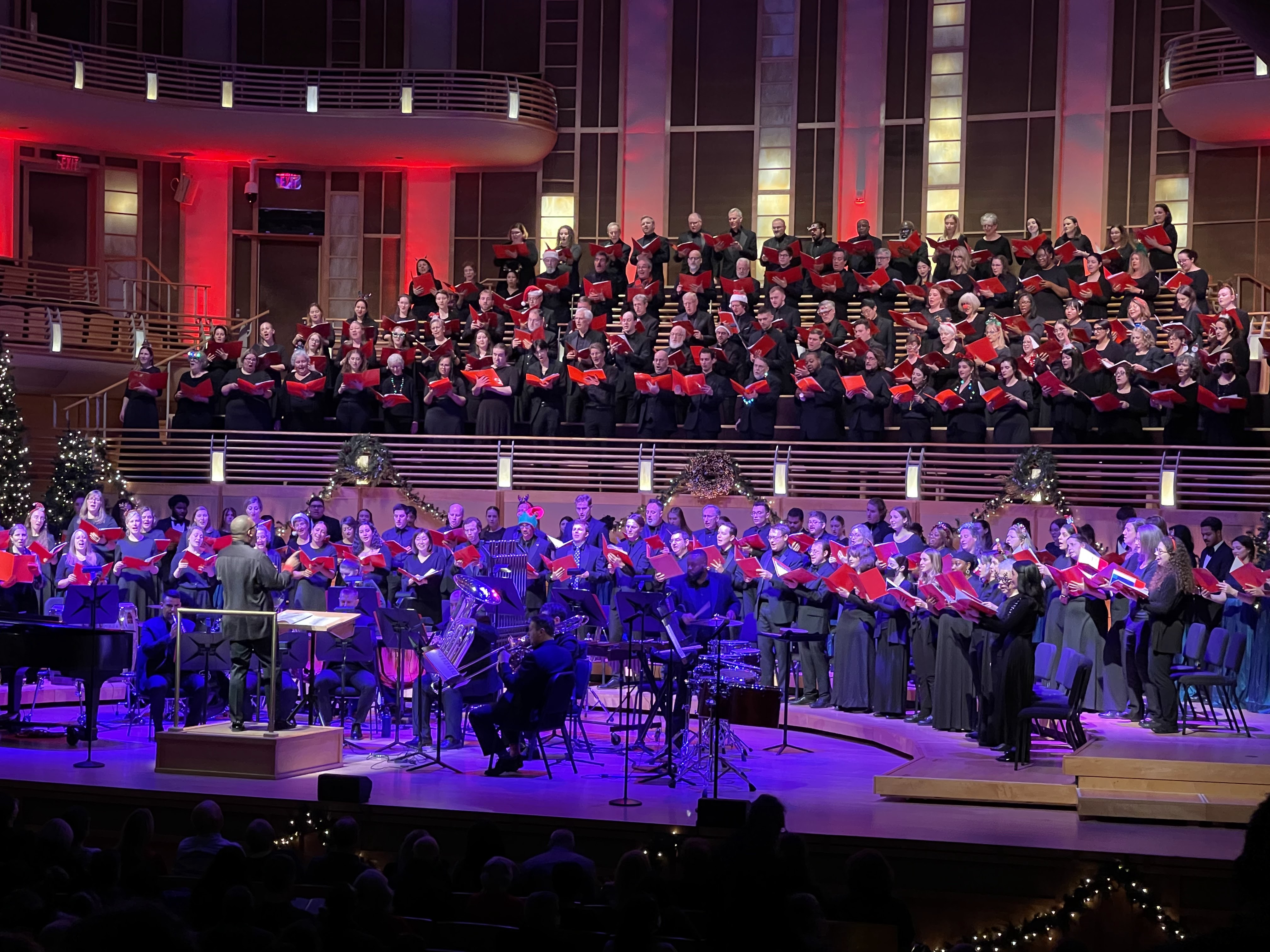
    The Washington Chorus, Dr. Eugene Rogers, artistic director

    The poem starts in the peaceful environment of a university archive (“On a scrap of paper in the archives is written I have forgotten my umbrella.”) and the music is tranquil yet with a surprisingly urgent beat. Next it discusses the confusion of information that accompanied the start of the pandemic and the music takes on swirls and yet is in a persistent twelve-bar blues setting. Then for the devastating stanza “Six feet under for underlying conditions. Black” there is a dark and dissonant chord on the word “Black”.

    The most poignant repetitions are “eight minutes forty-eight seconds” over and over, then leading to “I can’t breathe” over and over. The music drops out of the twelve-bar blues to an urgent, rattling dissonance and confusion the concludes with repetitions of “in extremis.” Was the poet also making a reference to extremism here? That could be a valid interpretation.

    Then the music begins a march to accompany “whatever contracts keep us social compel us now to disorder the disorder,” perhaps inviting us to march in protest.

    The piece concludes with a reinstatement of tranquility as the poet observes “There’s an umbrella by the door, not for yesterday but for the weather that’s here” and builds to the sound of strength as the chorus declaims “We are here for the storm that’s storming because what’s taken matters.”

    This is why I love music so much, and choral singing in particular. It adds a drama to the words that is unmatched.

  • Kandinsky Always Makes Me Happy

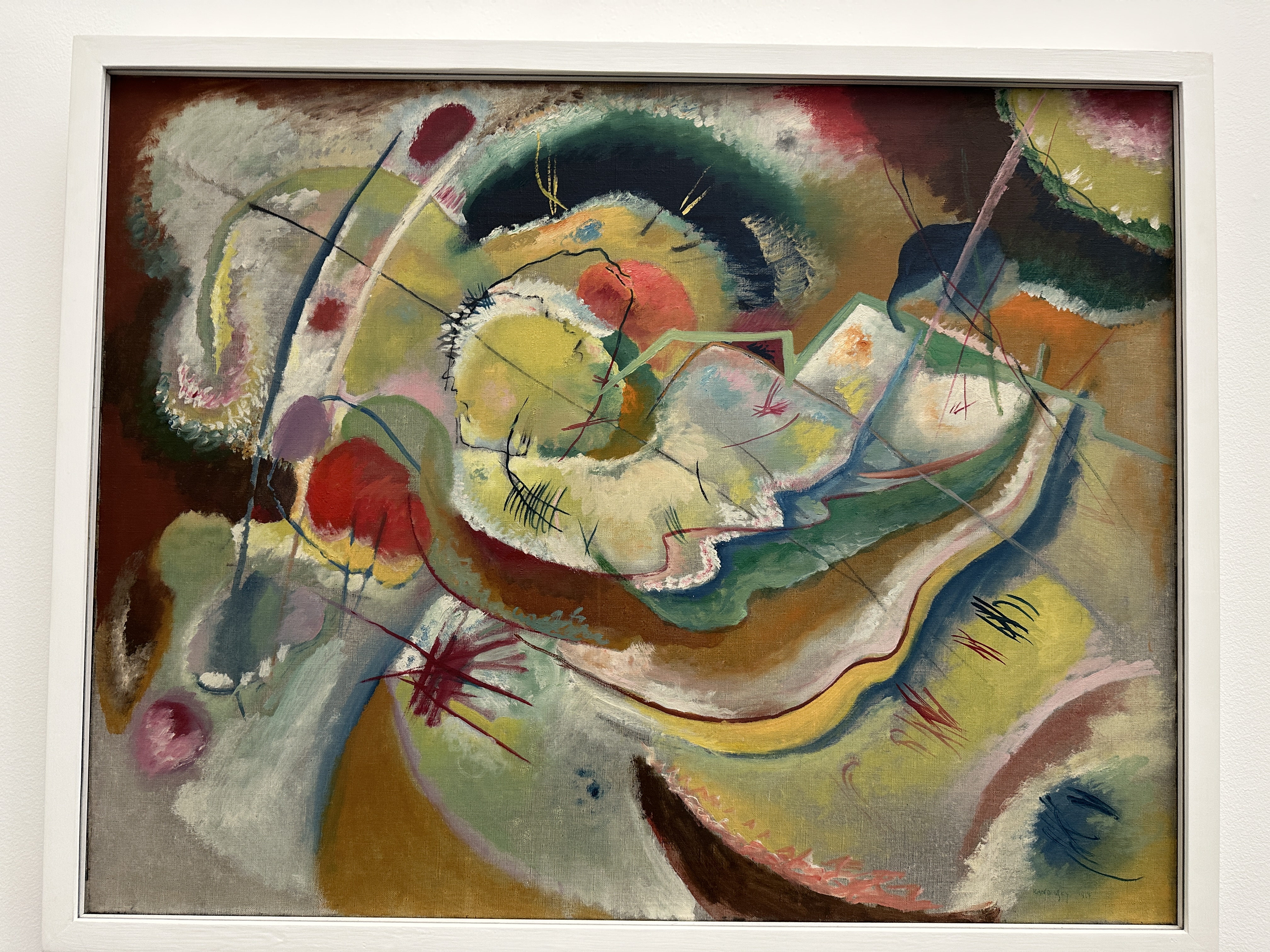
    Kandinsky always makes me happy, even when he may not intend it. This painting at the Philadelphia Museum of Art, called Little Painting with Yellow (Improvisation), has bright colors and lines of motion that together make me happy. An improvisation is something that is made up or created on the spot but is usually done by a highly-skilled artist. Said artist can be a musician, composer, oil painter, sculptor, poet, etc. The distinguished point is that the work was not planned out ahead of time but was executed in a moment from pure artistic vigor.

    Little Painting with Yellow (Improvisation), 1914, Wassily Kandinsky, Philadelphia Museum of Art, Philadelphia, PA.

    The style of the painting resists characterization for several reasons, but I don’t want to go into all that here. I’ll just say that he wanted to create spiritual experiences with completely non-representational shapes. In this instance, Kandinsky seems to have done exactly that and to have done it with an unplanned improvisation.

    I need a little happiness right now, so I’m grateful for Kandinsky’s artistic talent.

  • Medieval Saxons Rediscover Humanist Sculpture

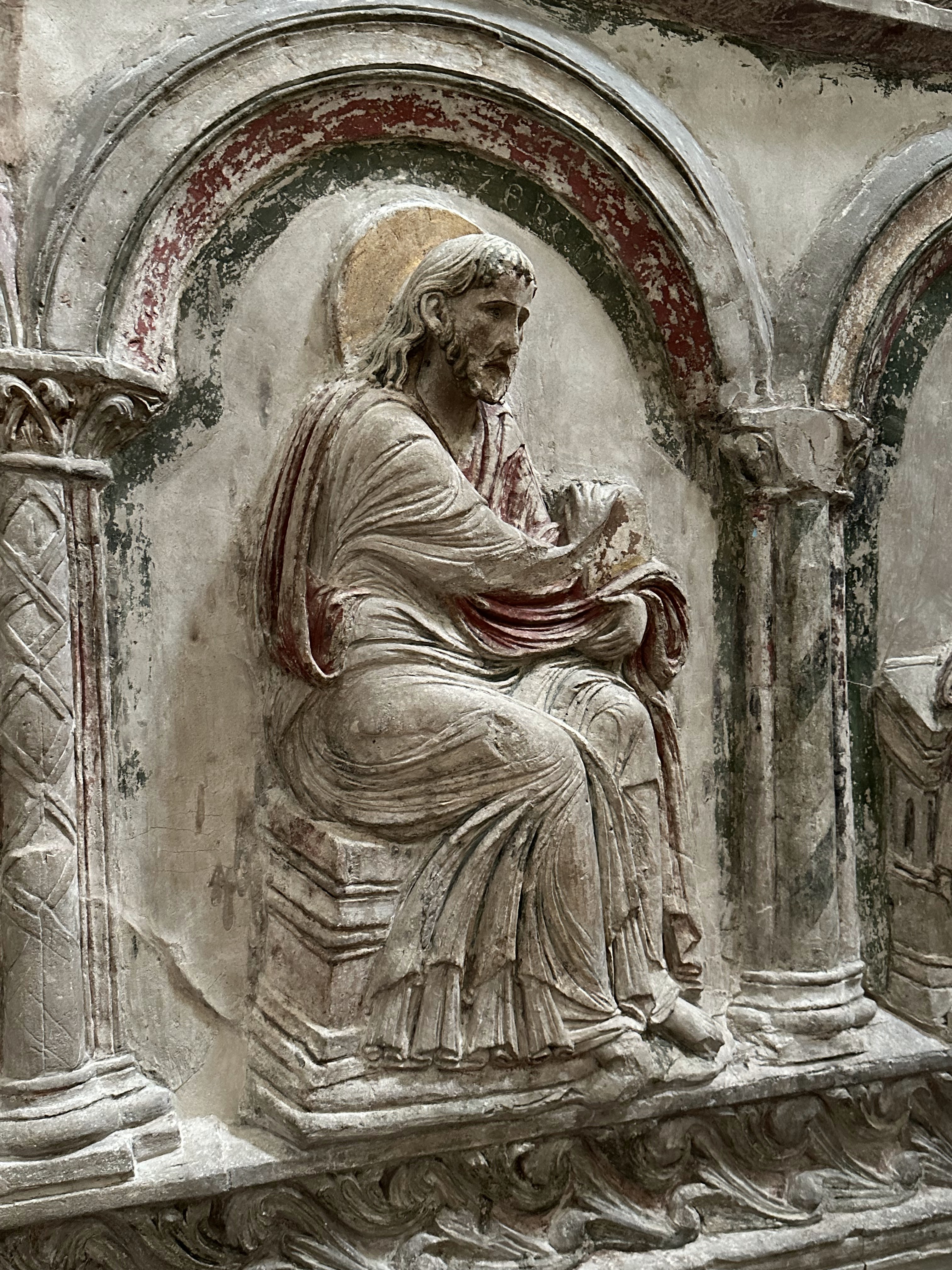
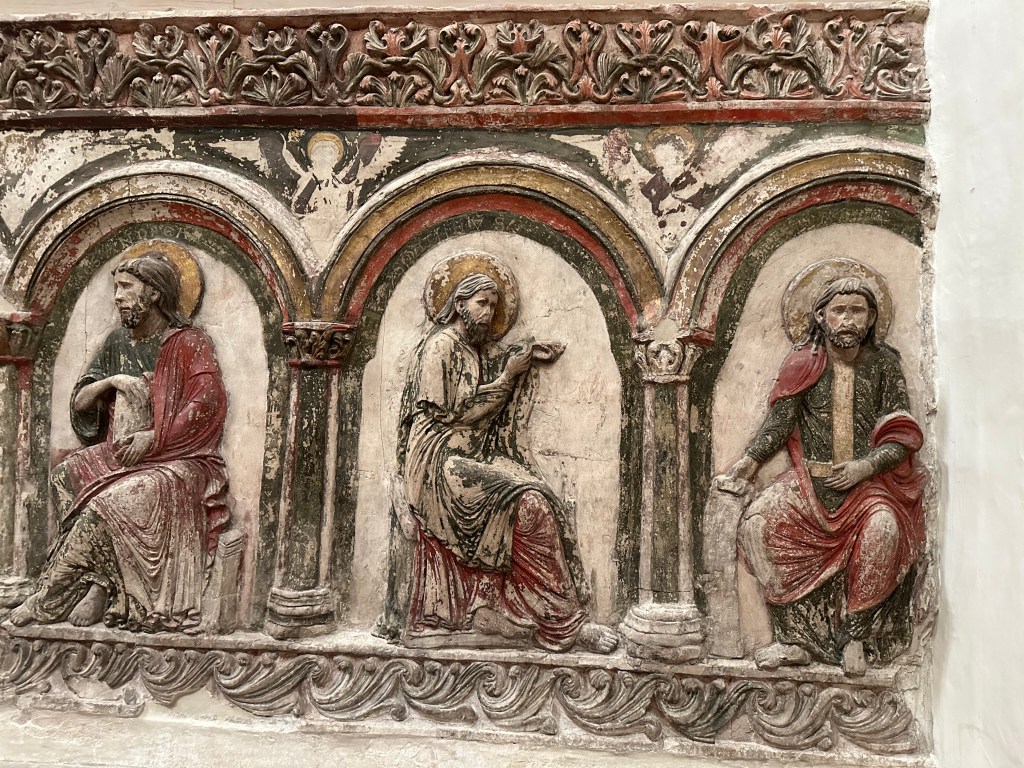
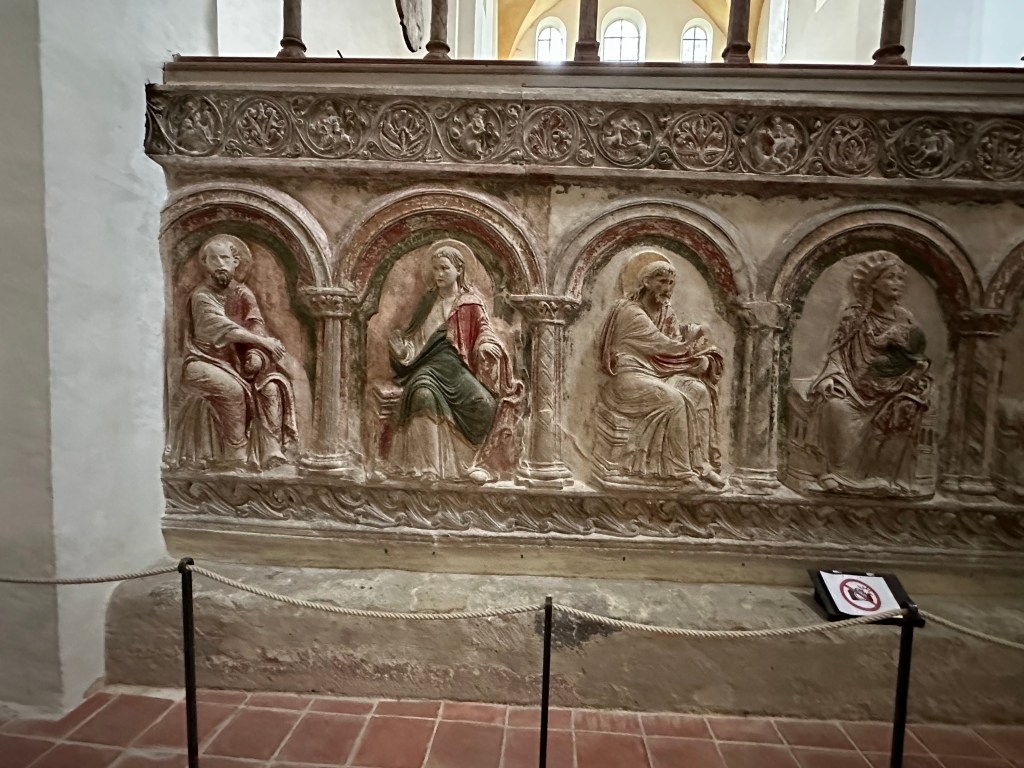
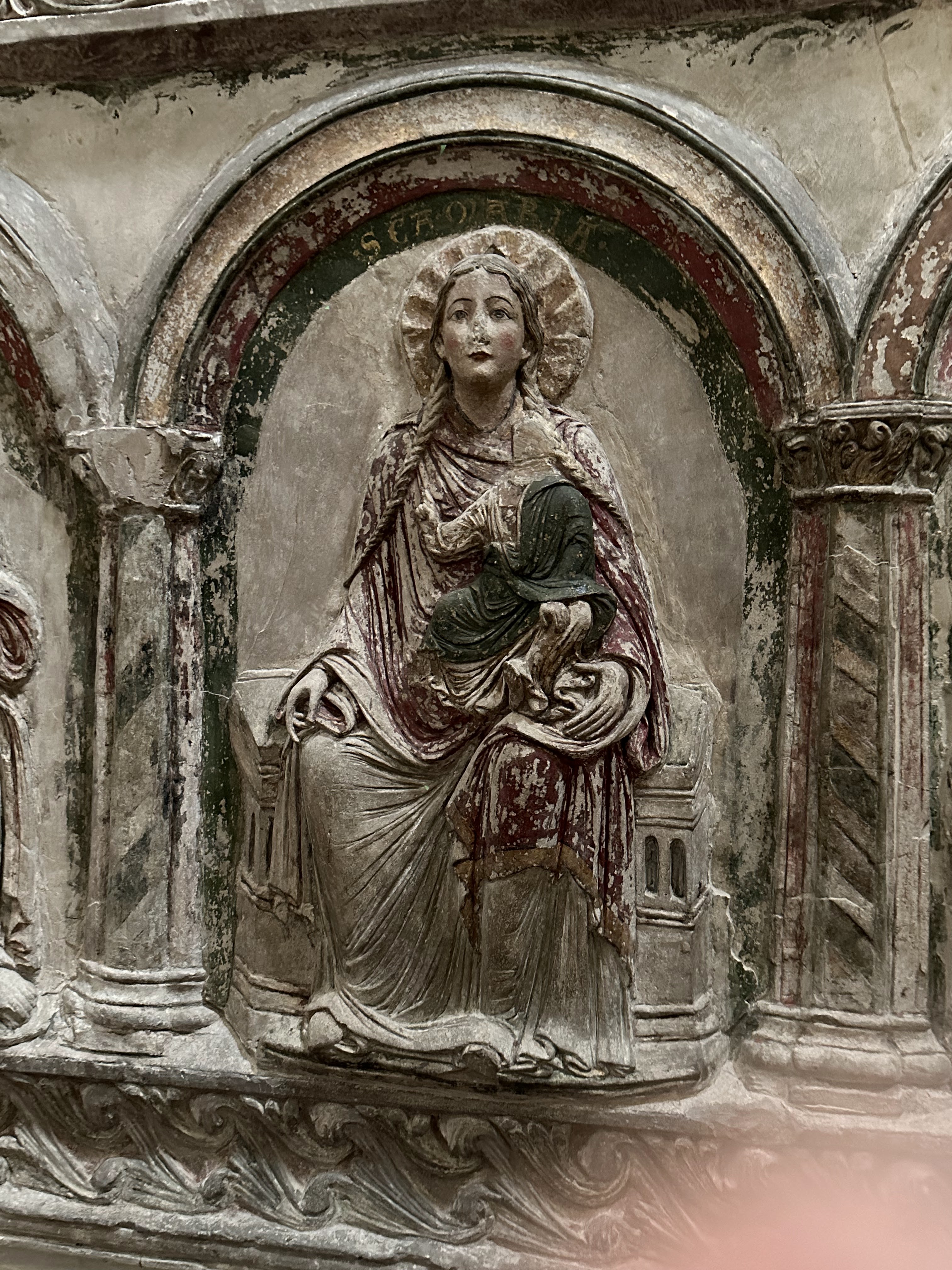
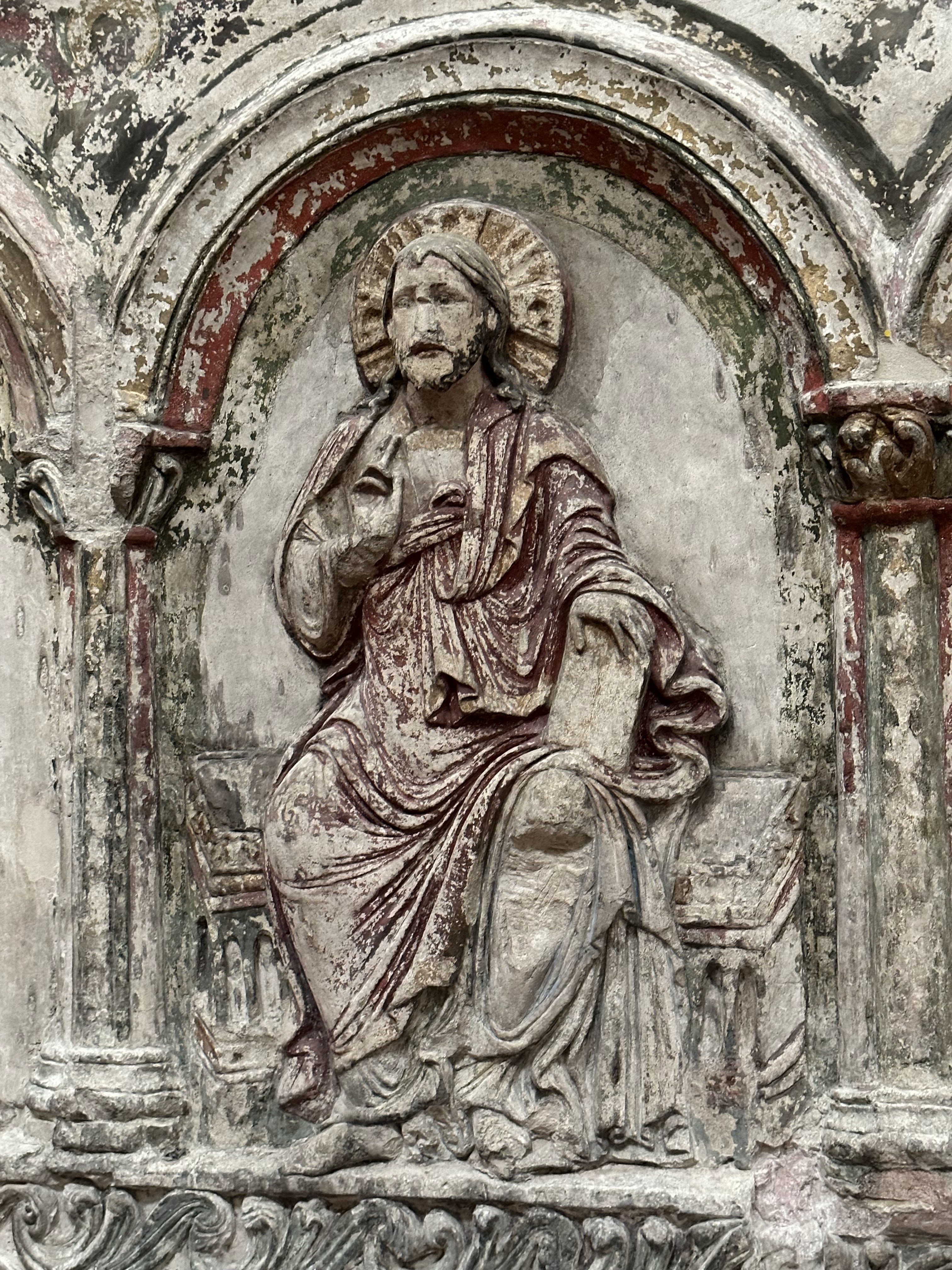
    In Halberstadt’s Liebfrauenkirche are some remarkable stone bas-relief carvings. These carvings, depicting Christ, the Virgin Mary, and the twelve apostles, are romanesque masterpieces that date from the early thirteenth century. They are the more remarkable because they arose after a period when the heights achieved by Greek sculpture had been long forgotten.
    The sculptures are notable for being full-figured, with a few even stepping outside of their frames. The faces are individual, they have meaningful glances, and the drapery folds are realistic. They were strongly influenced by the Byzantine Art encountered in Constantinople during the crusades.
    Outer choir bas-relief sculpture, Liebfrauenkirche, Halberstadt, Germany

    Originally they were highly painted.

    The Virgin Mary here has beautiful hands and is depicted with the braids that were typical for the area.

    The Virgin Mary with the Christ child, Liebfrauenkirche, Halberstadt, Germany

    The Christ sculpture here has been damaged over the years but is still sitting in majesty.

    Christ in Majesty, Liebfrauenkirche, Halberstadt, Germany

    I’m glad to know that these gorgeous works of art exist in the world. Arising when they did led to the continued development of western art, which has given so much to humanity. I celebrate the achievement of the human spirit they represent.

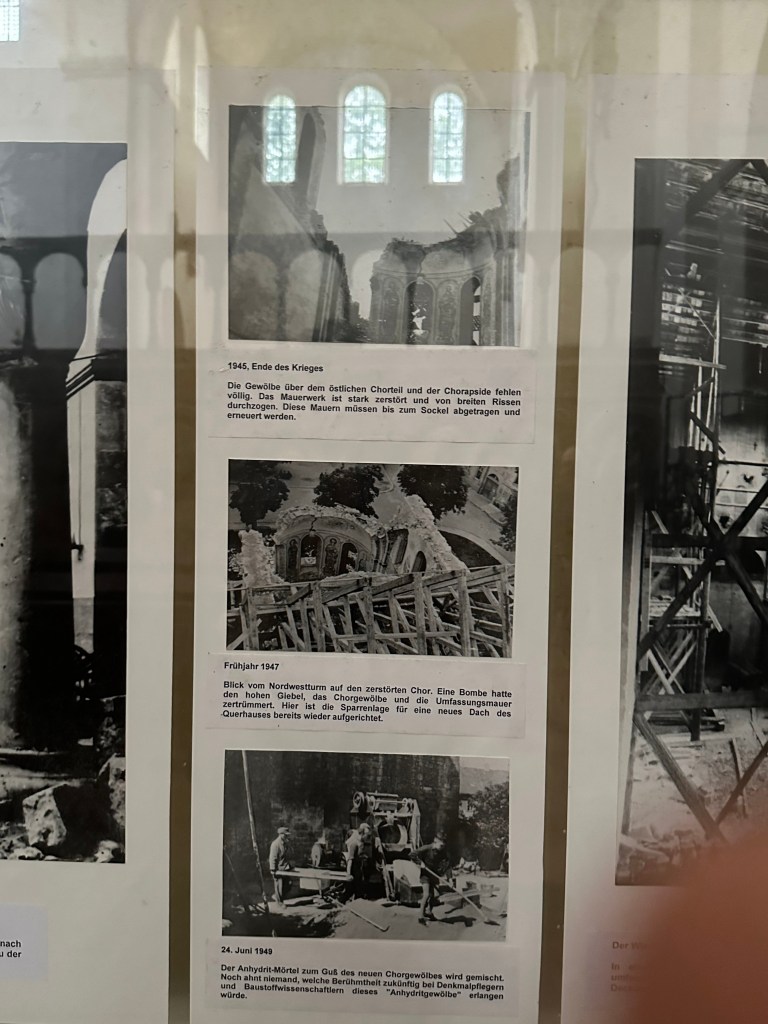
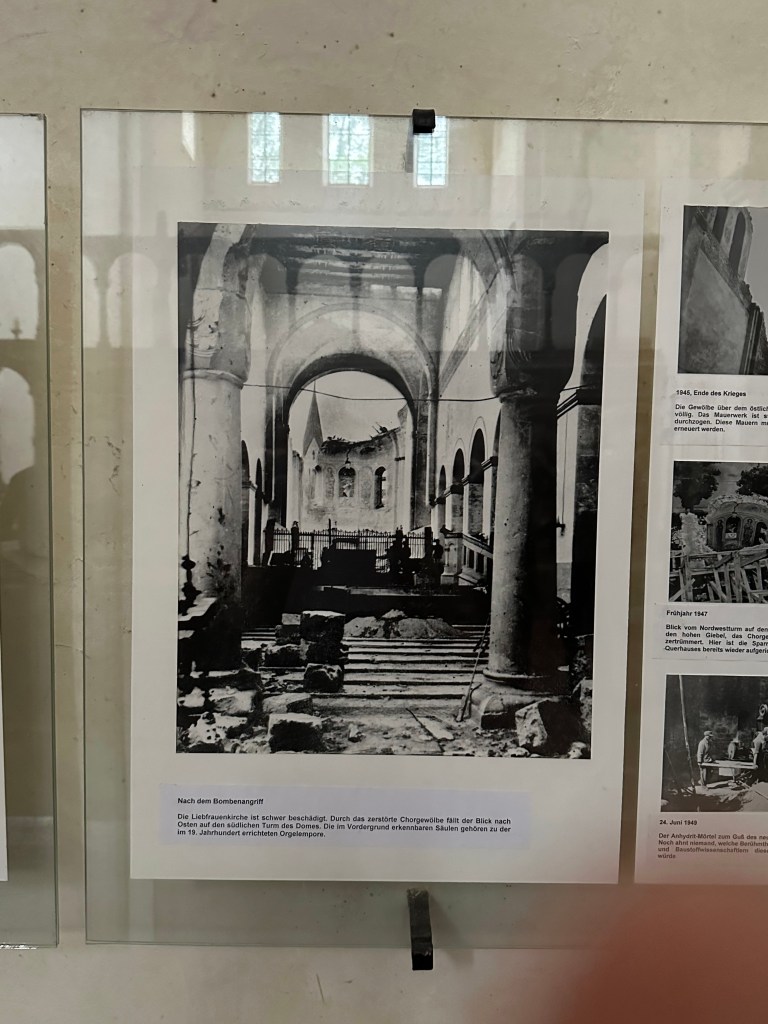
    The photos below show the extensive damage to the church from the bombings of World War Two. We are fortunate today that these sculptures somehow survived the destruction that was visited upon the rest of the church.

    I prayerfully beg you all to not forget how awful war is and how high the costs are in terms of human life and human achievements.

  • Rollo Dilworth’s Setting of Claudia Rankine’s Poem

    Dr. Dilworth has set Professor Rankine’s extraordinary poem to a thought-provoking piece of music that is both lyrical and dissonant. His title for the work is Weather: Stand the Storm, which captures both the title of the poem and the title of the spiritual (Stand the Storm) that is the central melodic theme.

    Dr. Dilworth wrote an extensive set of performance notes for his piece, which is something I really appreciate as a choral singer. I’ll mention just a few items out of the many elements he put into the music.

    The “George Floyd” Motives are different combinations of using the notes G and F. These notes are only one step (whole step) apart so they can create dissonance when they part of a chord and jagged leaps when they are part of a progression. These musical ideas generate exceptional poignancy regarding the death of Mr. Floyd.

    There are many deliberate numerical references in the score but I’ll just discuss one here, and that is 8:46. This was the amount of time that George Floyd was pinned down. Dr. Dilworth therefore uses 8/8, 4/4, and 6/8 time signatures to embed those numbers in his work.

    The section that has the text “Just us and the blues kneeling on a neck with the full weight of a man in blue.” is set to 12-bar blues.

    If you are interested in the complete performance notes you might be able to buy a copy of the piano reduction choral score from his publisher, Hal Leonard, LLC. It is ISBN 978-1-70518-585-8.

    Meanwhile, here is a link to a performance on Youtube that I think is particularly good: https://youtu.be/38drTqFhd6w. If you are in the Washington DC area, The Washington Chorus will be performing this work live at The Music Center at Strathmore on March 15th, 2025 at 7:30pm. You can get tickets here: https://thewashingtonchorus.org/stand-the-storm.

  • The Art of Poetry is Shining a Light

    Today I want to share a poem by Professor Claudia Rankine, who is currently with the New York University Creating Writing Program. This poem shines a light on systemic racism and social injustice. It was written during the pandemic, after the murder of George Floyd. Among other elegant elements, it has a delicate reference to Rousseau’s The Social Contract. I started to read The Social Contract myself during this period of time, because I was hoping to find something I could apply to the current social environment. I found more questions than answers, which I suppose is somewhat typical of philosophy.

    Tomorrow I’ll discuss Rollo Dilworth’s setting of this poem to music. Here is Professor Rankine’s Weather.

    Weather

    On a scrap of paper in the archive is written

    I have forgotten my umbrella. Turns out

    in a pandemic everyone, not just the philosopher,

    is without. We scramble in the drought of information

    held back by inside traders. Drop by drop. Face

    covering? No, yes. Social distancing? Six feet

    under for underlying conditions. Black.

    Just us and the blues kneeling on a neck

    with the full weight of a man in blue.

    Eight minutes and forty-six seconds.

    In extremis. I can’t breathe gives way

    to asphyxiation, to giving up this world,

    and then mama, called to, a call

    to protest, fire, glass, say their names, say

    their names, white silence equals violence,

    the violence of again, a militarized police

    force teargassing, bullets ricochet, and civil

    unrest taking it, burning it down. Whatever

    contracts keep us social compel us now

    to disorder the disorder. Peace. We’re out

    to repair the future. There’s an umbrella

    by the door, not for yesterday but for the weather

    that’s here. I say weather but I mean

    a form of governing that deals out death

    and names it living. I say weather but I mean

    a November that won’t be held off. This time

    nothing, no one forgotten. We are here for the storm

    that’s storming because what’s taken matters.

  • Picasso: Wait, what?

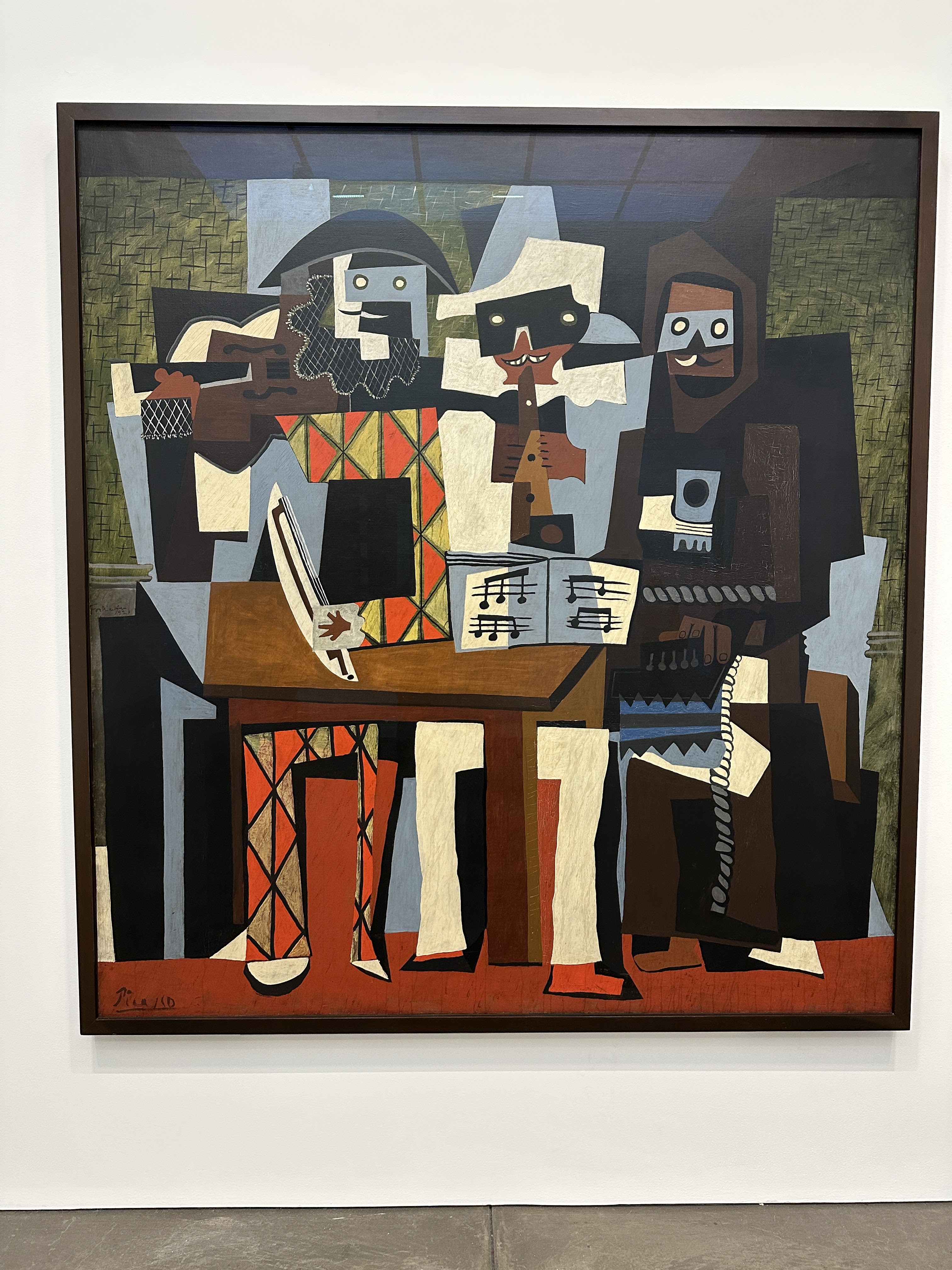
    I was thrilled, while at the Philadelphia Museum of Art, to turn and see one of Picasso’s most famous paintings! I thought “Gosh, I didn’t know it was HERE.”

    Well, it isn’t. It is most certainly a masterpiece, but it is slightly different than the famous painting of the same name and year.

    Three Musicians (1921) uses Synthetic Cubism, which is a “cut-paper style.”( You will know this style from Matisse.) Three masked musicians play various instruments. On the left is a harlequin playing the violin, in the middle is a sailor, maybe, or a clown playing the recorder, and on the right is a Dominican friar. I feel like Picasso is using a sense of humor in creating this. Strong vertical lines and gentle horizontal lines dominate the painting with the occasional diagonal line to introduce some tension. Beneath the whimsical portrayal is the more solid idea of three individuals performing as one entity. It is also a bit poignant; it was painted after the Second World War and has been interpreted as depicting lost prewar friendships.

    Three Musicians, 1921, Pablo Picasso. The Philadelphia Museum of Art

    If interested, you can check out the Museum of Modern Art in New York City to see the other Three Musicians painting from 1921.

  • Power of Poetry

    The best poets find a path to unlock the power of language to create beauty and to tell some of the deepest truths of human existence.

    Wilfred Owen is one of my favorite poets. His heart-wrenching poems, written from the trenches of World War One, flash in mournful beauty as they decry the folly, pity, and horror of war. This poem uses imagery from the crucifixion and also contrasts the war with Christ’s teaching to love one another, including one’s enemies.

    Another thing to note is that it is set in war-ravaged France, where there were often crosses set up at cross roads. In this instance the cross has been damaged and is missing an arm (“He too lost a limb”).

    Wilfred Owen was tragically killed just one day before the armistice.

    At a Calvary Near the Ancre

    One ever hangs where shelled roads part.

    In this war He too lost a limb,

    But his disciples hide apart;

    And now the solider bear with him.

    Near Golgotha strolls many a priest,

    And in their faces there is pride

    That they were flesh-marked by the Beast

    By whom the gentle Christ’s denied.

    The scribes on all the people shove

    And bawl allegiance to the state,

    But they who love the greater love

    Lay down their life; they do not hate.

    In a later post I’ll talk about the Wilfred Owen poems that Benjamin Britten selected for his choral masterpiece War Requiem.

  • Some of the most famous mosaics in the world

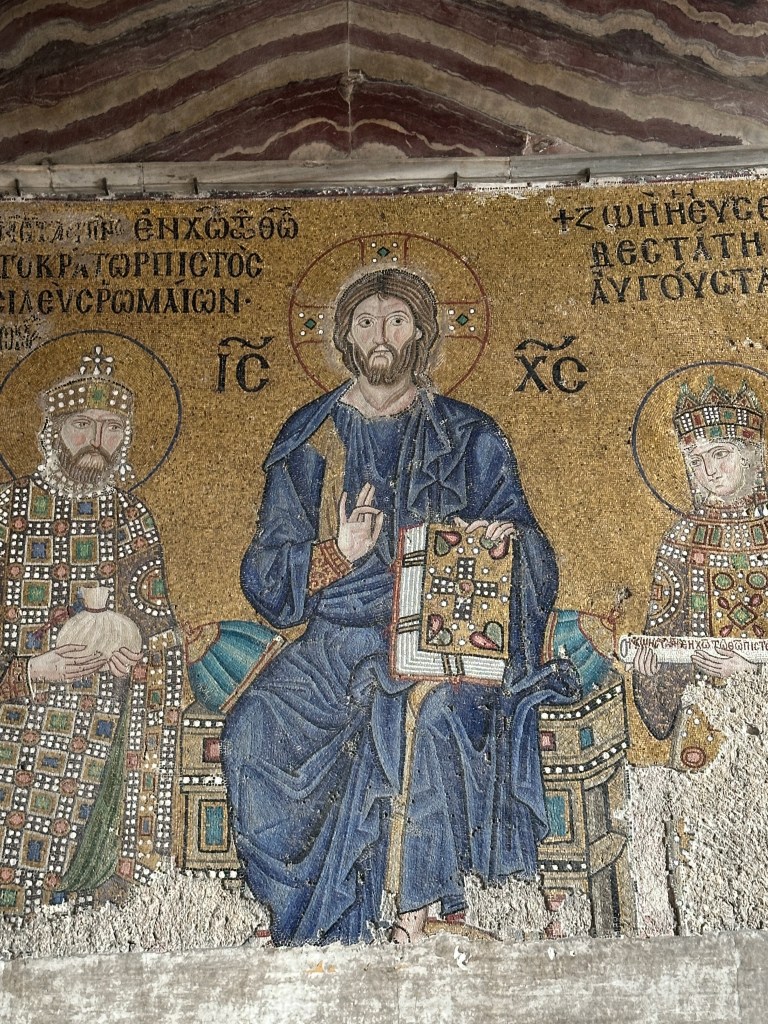
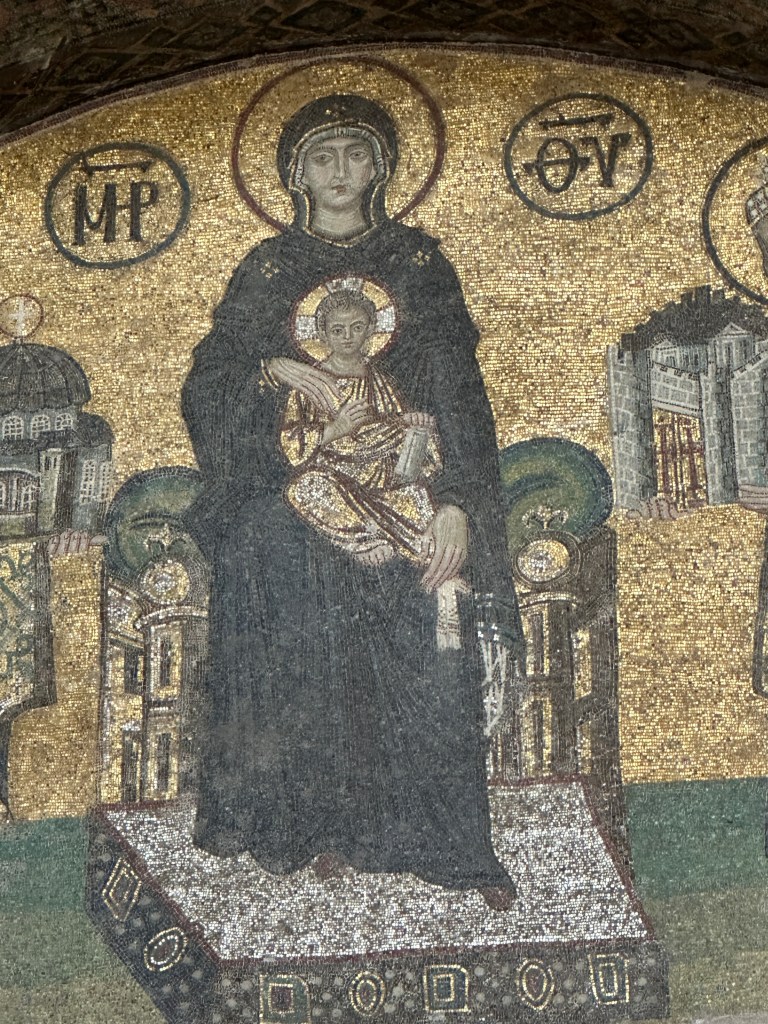
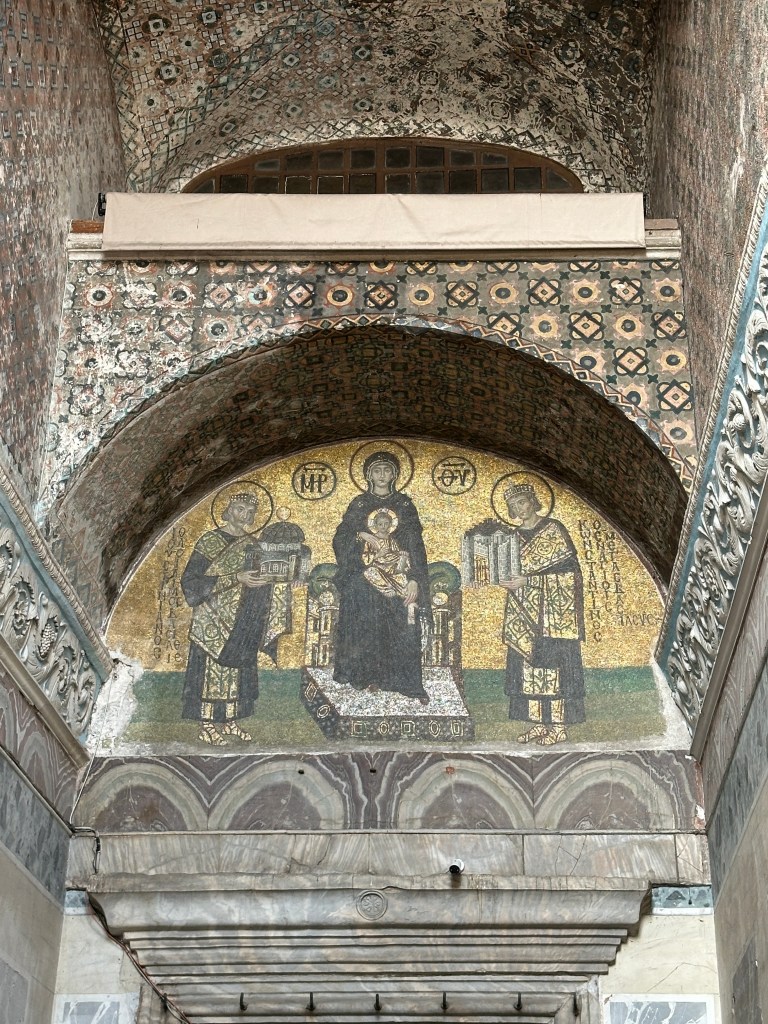
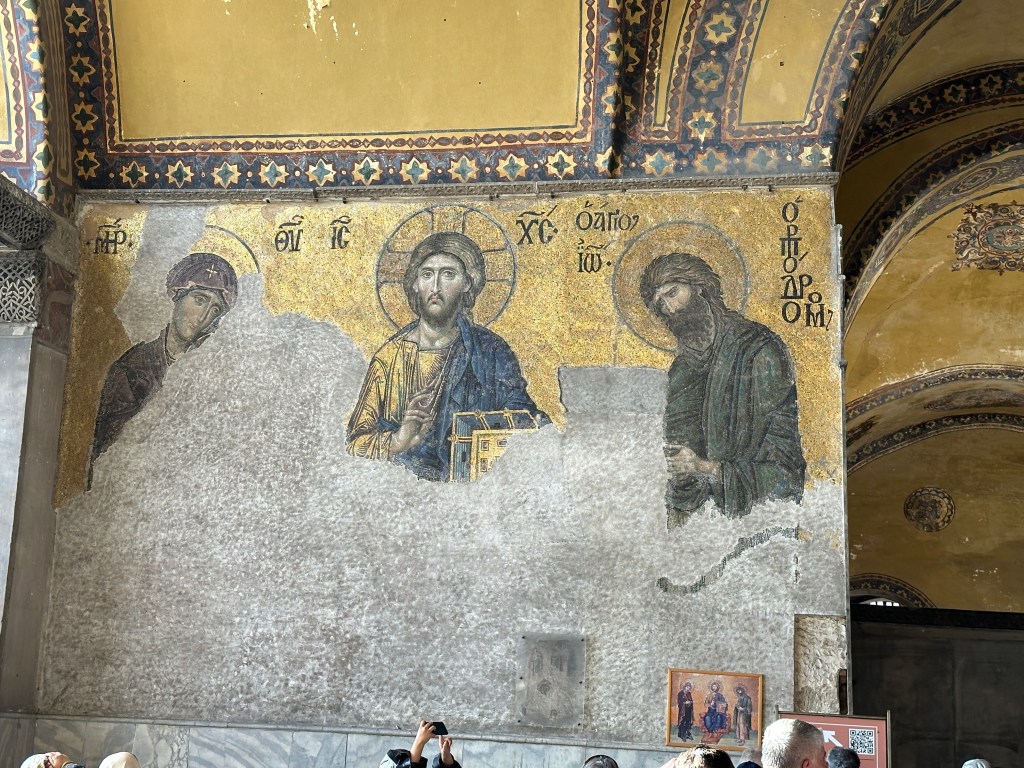
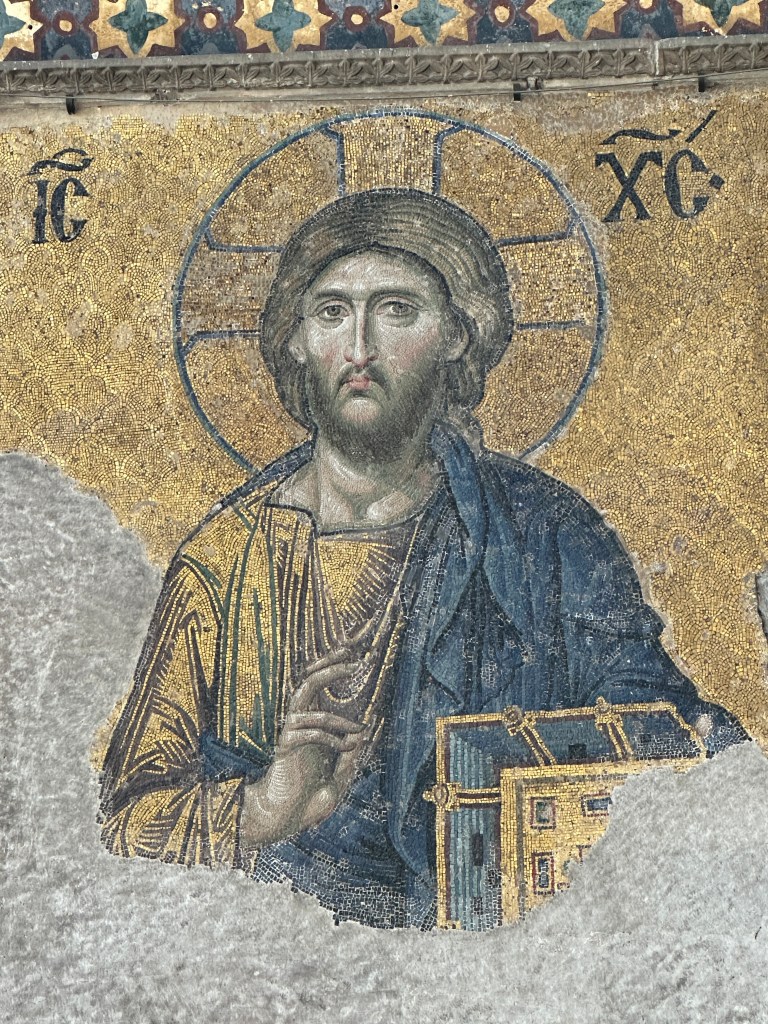
    Byzantine art is some of the earliest Christian art. It is characterized, among other things, for its wall mosaics. Although mosaics were not new, having existed as early as the Sumerians, their application to Christian themes and for the adornment of Christian places of worship was new.

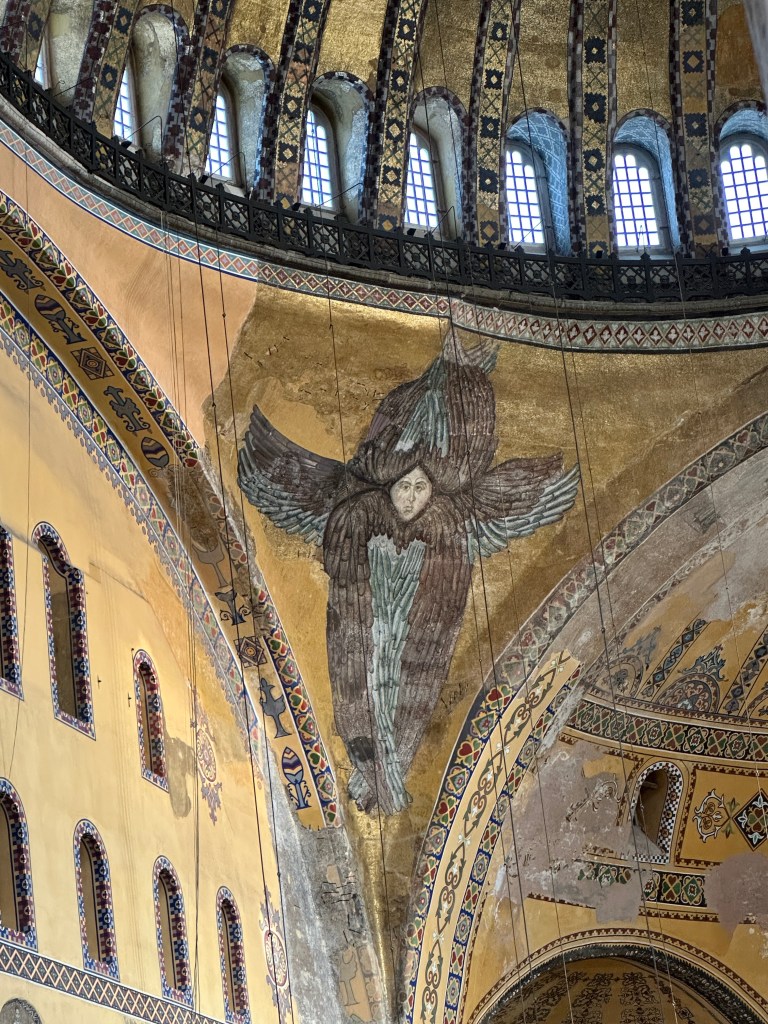
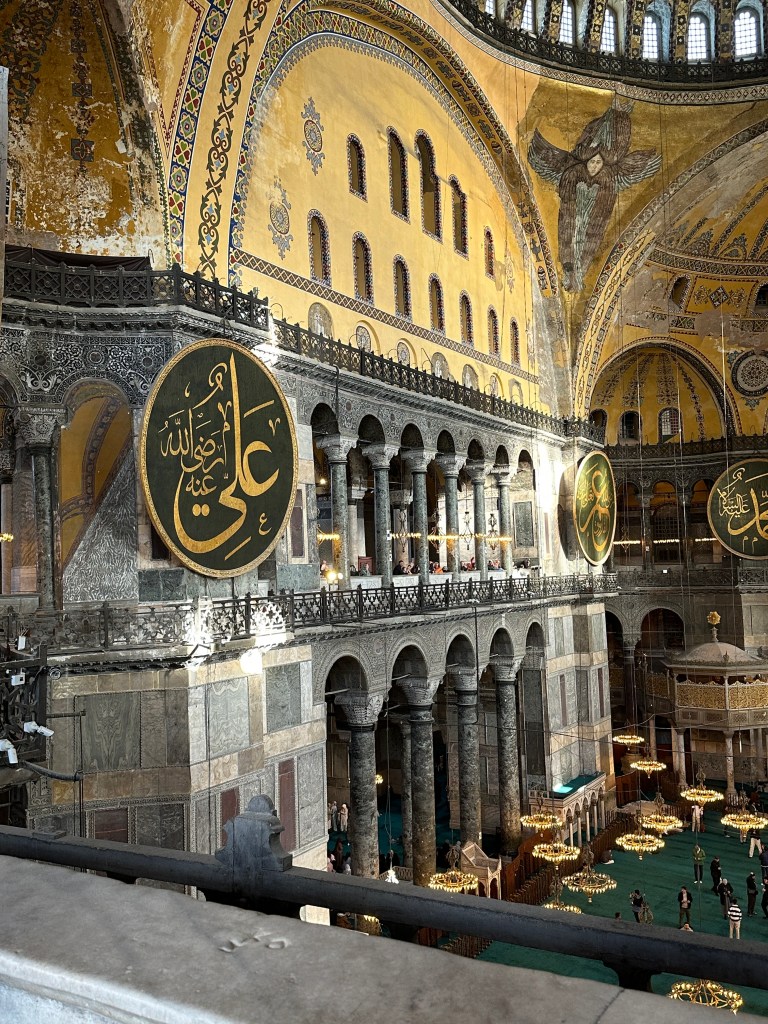
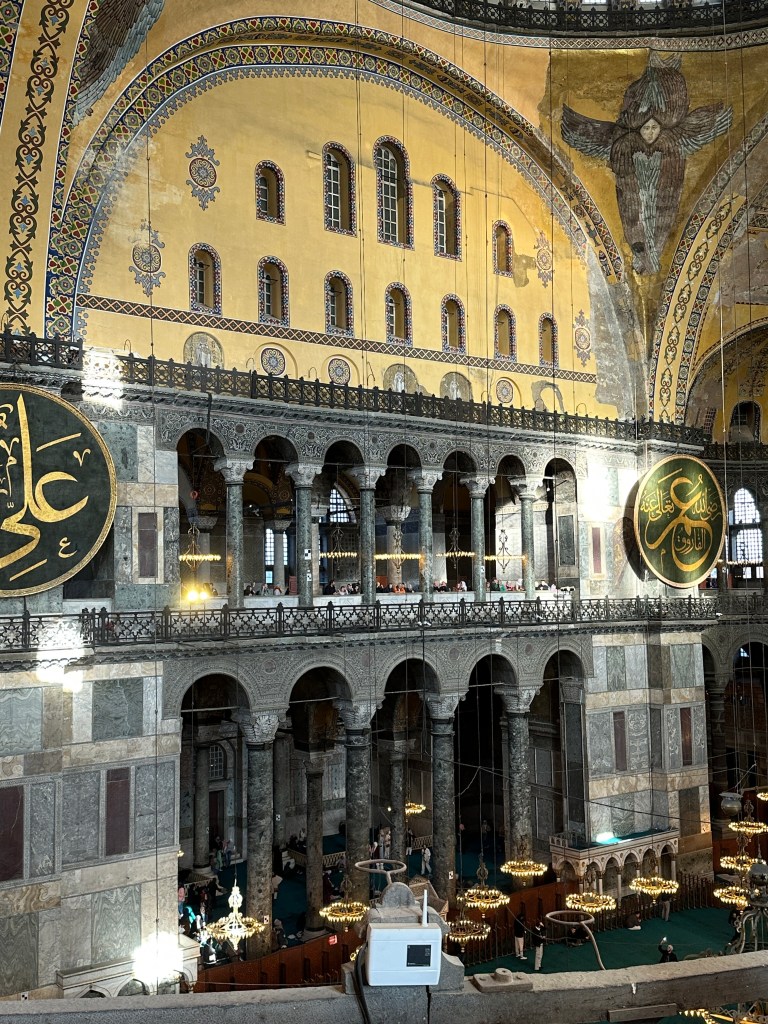
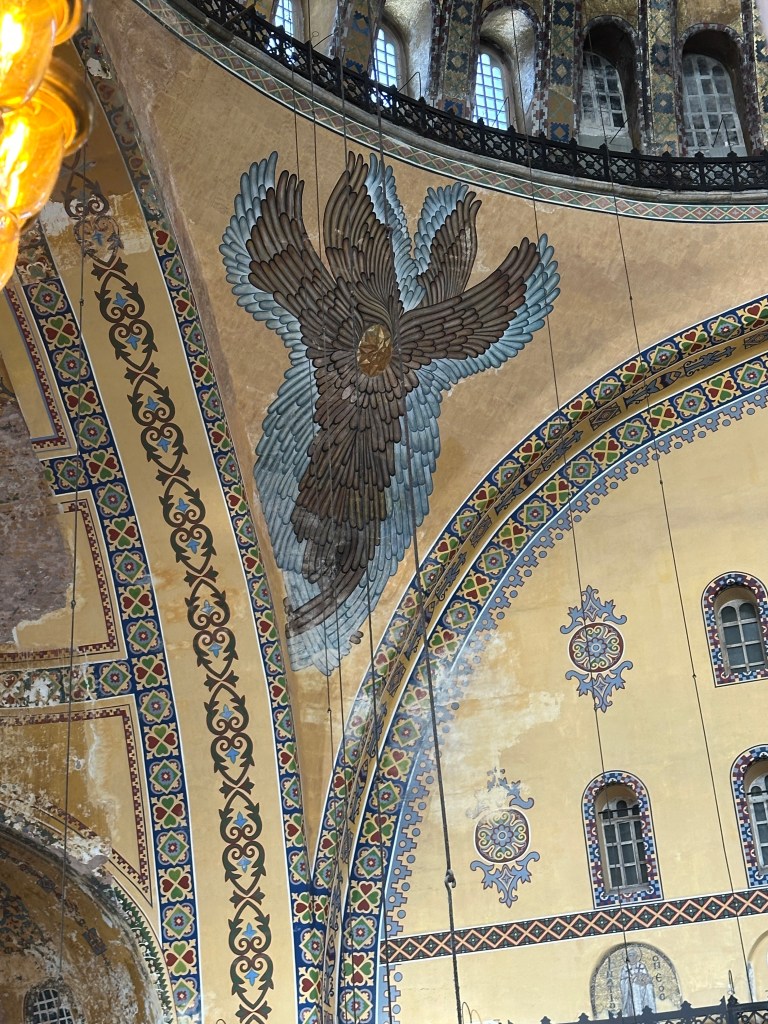
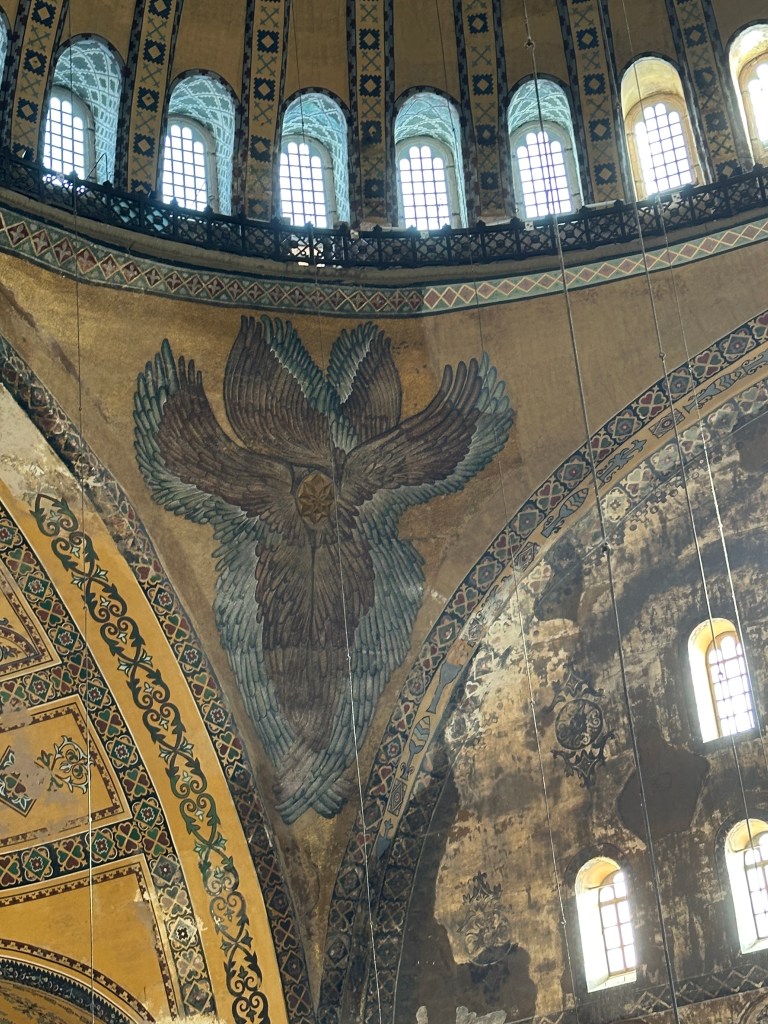
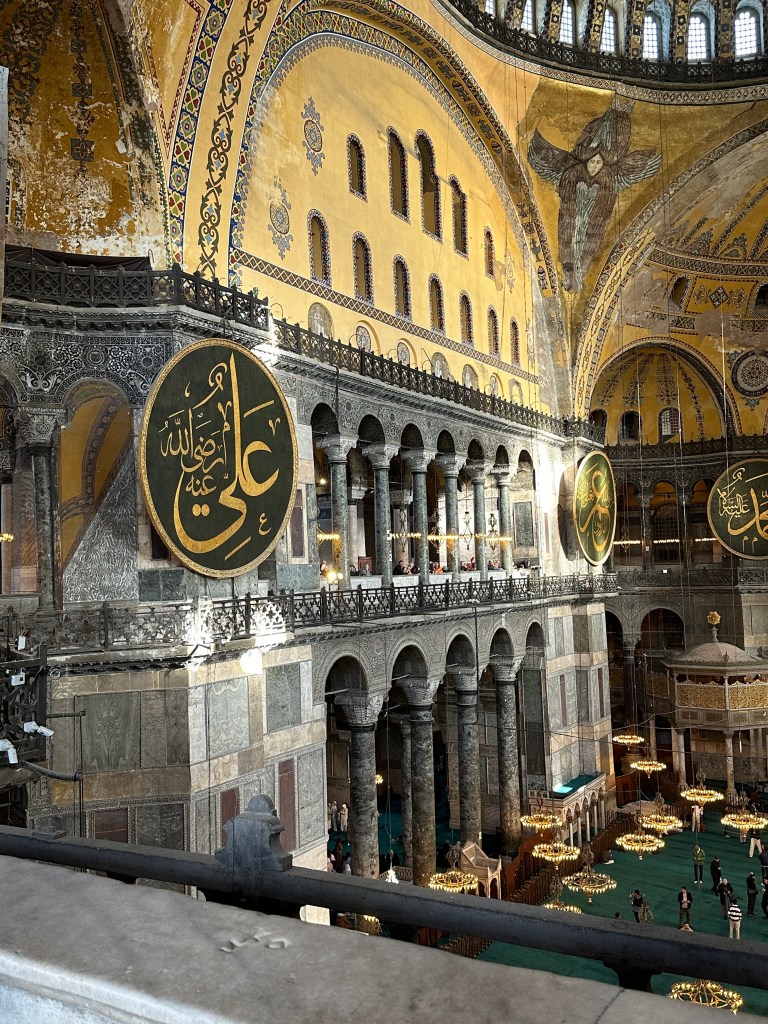
    The mosaics inside the Hagia Sophia in Istanbul are among the most famous in the world. They must have been utterly dazzling to see in the early days of Christian worship in Constantinople. I love the delicate depiction of the face of Jesus and the lovely golden folds of his robe.

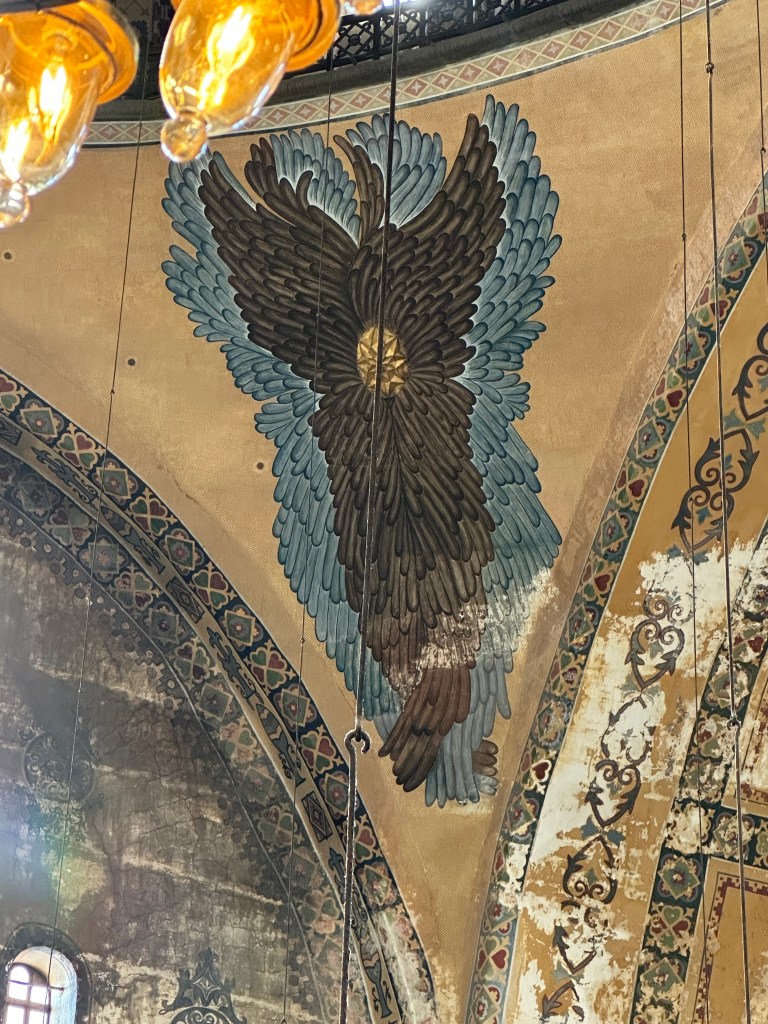
    Each of the pendentives has an angel on it. Some are seraphim and some are archangels. I didn’t get particularly good photos of them so it’s difficult to see how glorious they are.

    The mosaics in Hagia Sophia are truly inspirational and make one ponder the glorious things that can be achieved by man. When things seem bleak, I like to think about and celebrate this type of beauty in art.

  • Transcendent Humanity

    I’ve been feeling very low these past few days and wasn’t up to writing any posts. Instead I’ll simply post a link to a truly gorgeous podcast episode from Aria Code. This podcast made me think about how transcendent love is for humanity.

    https://podcasts.apple.com/us/podcast/aria-code/id1442604220?i=1000633328170

    Love and compassion are so important; please don’t forget about them.

  • Revolutionary Architecture

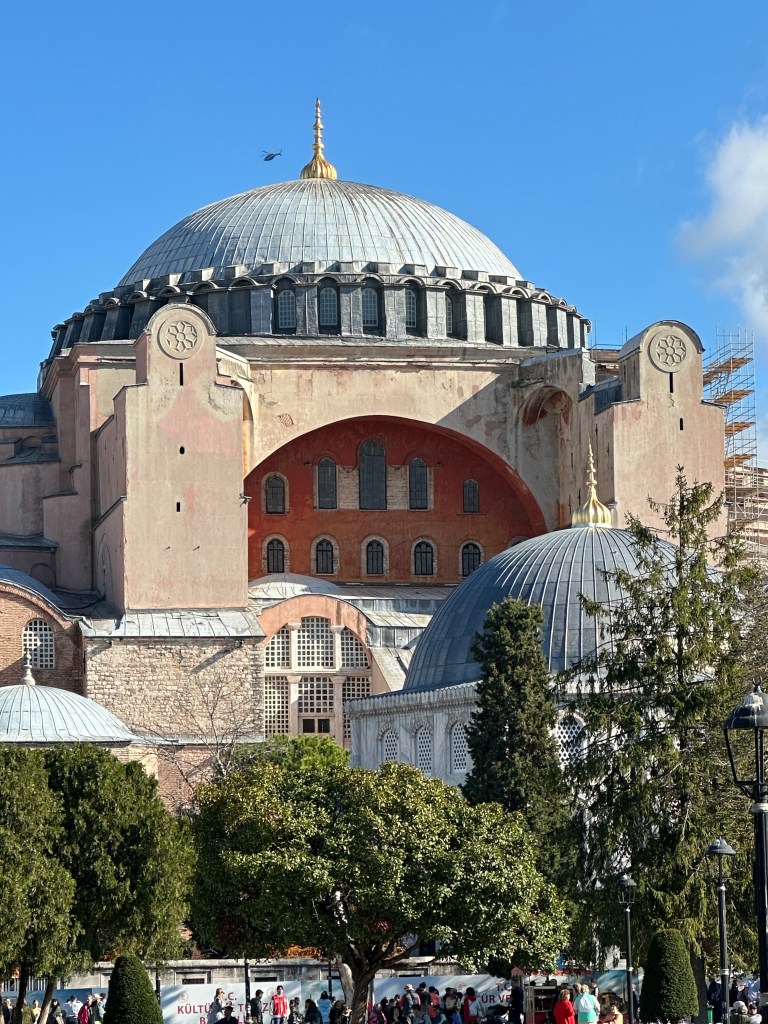
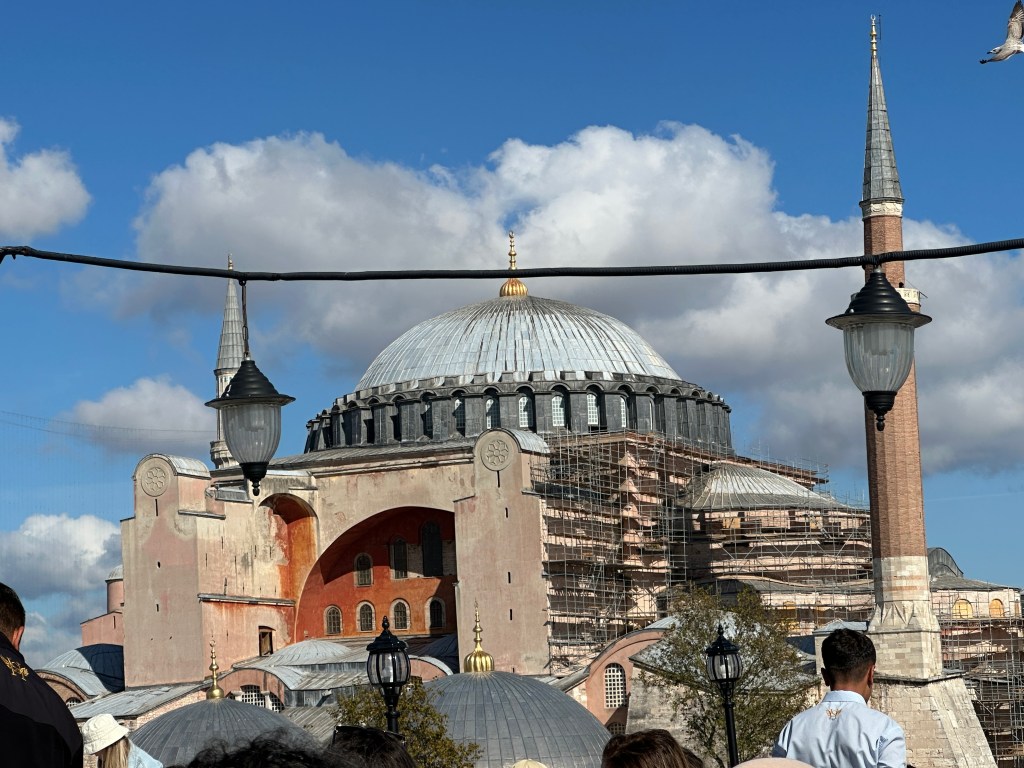
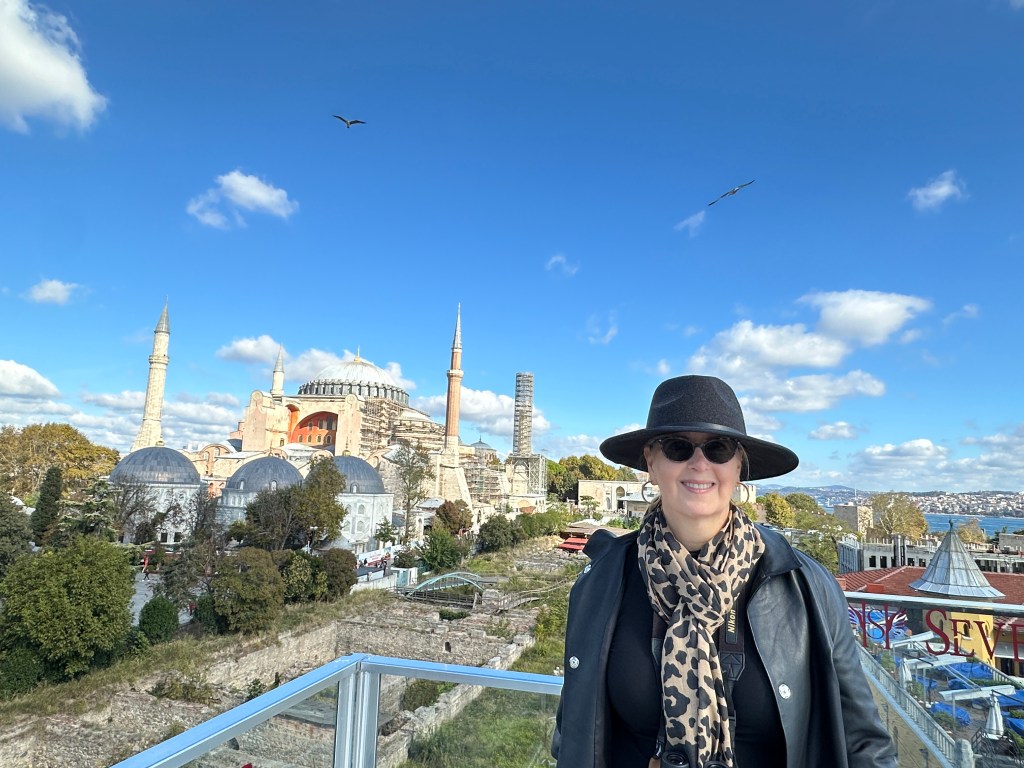
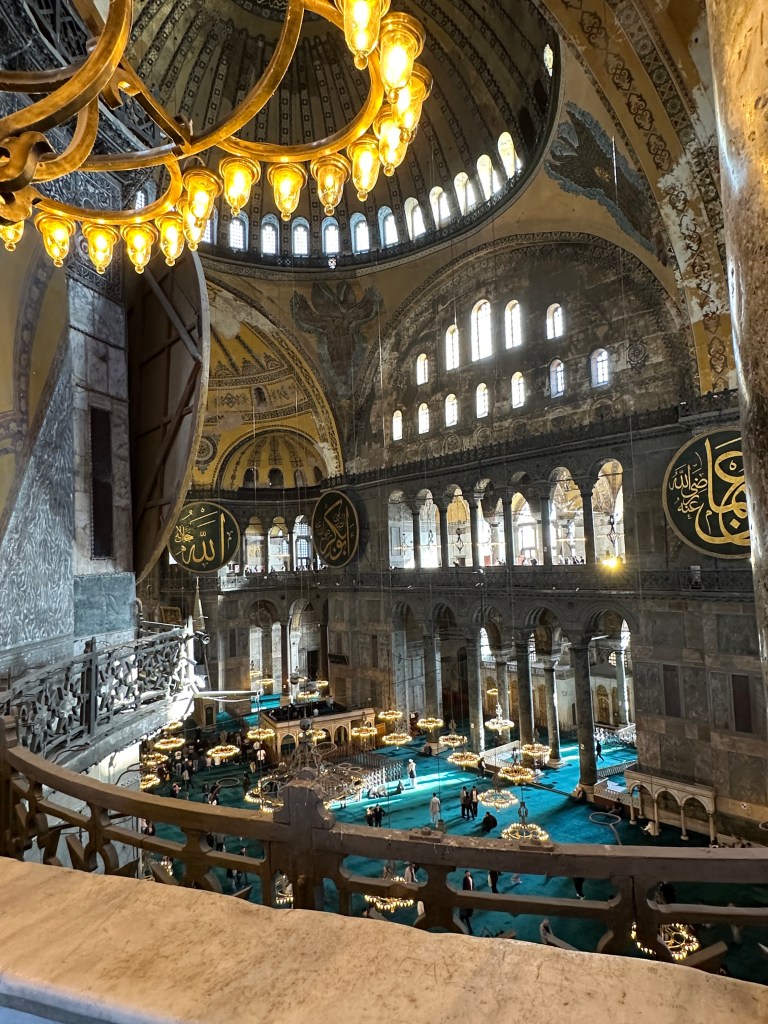
    I waited forty-five years to see the Hagia Sophia and was finally able to see it in October 2024. Some might wonder why I’m calling a church built in the reign of Justinian “revolutionary,” but it was! This building launched architecture in a whole new direction.

    Previously, large buildings were constructed in the basilica style, which is the style you still see in church architecture today. It’s a large rectangular-shaped building with rows of columns supporting the roof. Since the walls also had to support the roof to some extent, there were not many windows in the walls and those that were there were small.

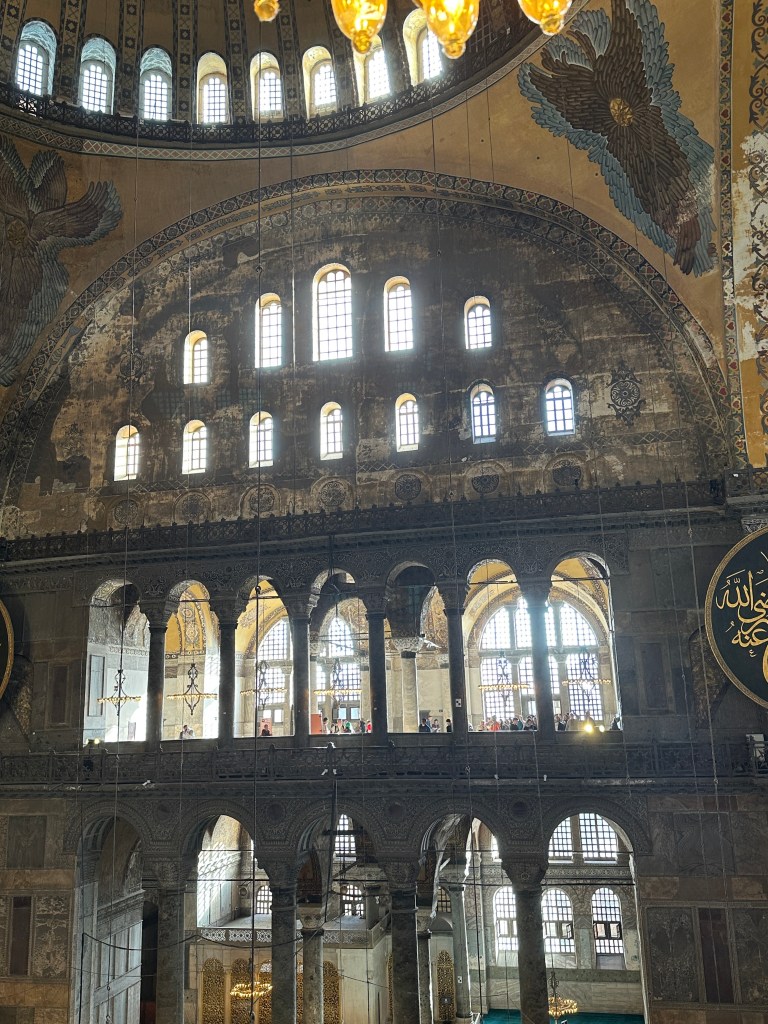
    The Hagia Sophia instead consists of a large square center with enormous piers at the corners, that spread out into triangular areas at their head, which are called pendentives. The pendentives and piers are strong enough to support a glorious dome. Although domes were already known, this dome’s size made it unique for the time. I’ve read some descriptions that say the dome appears to float atop the church (I agree.) Another consequence of having weight-bearing piers and pendentives is that they could put large windows in the walls and those in turn lent a beautiful light to the interior. The sense of soaring height and natural light must have been a wonderful spiritual experience at the time. Heck, it’s a wonderful experience today even after all the innovations we’ve seen in architecture.

    The church has suffered a much damage from earthquakes and war over the fifteen centuries since it was built and today it has a lot of external buttressing to keep it together. Exterior photos can therefore be very clunky-looking but I would argue that the dome is still spectacular!

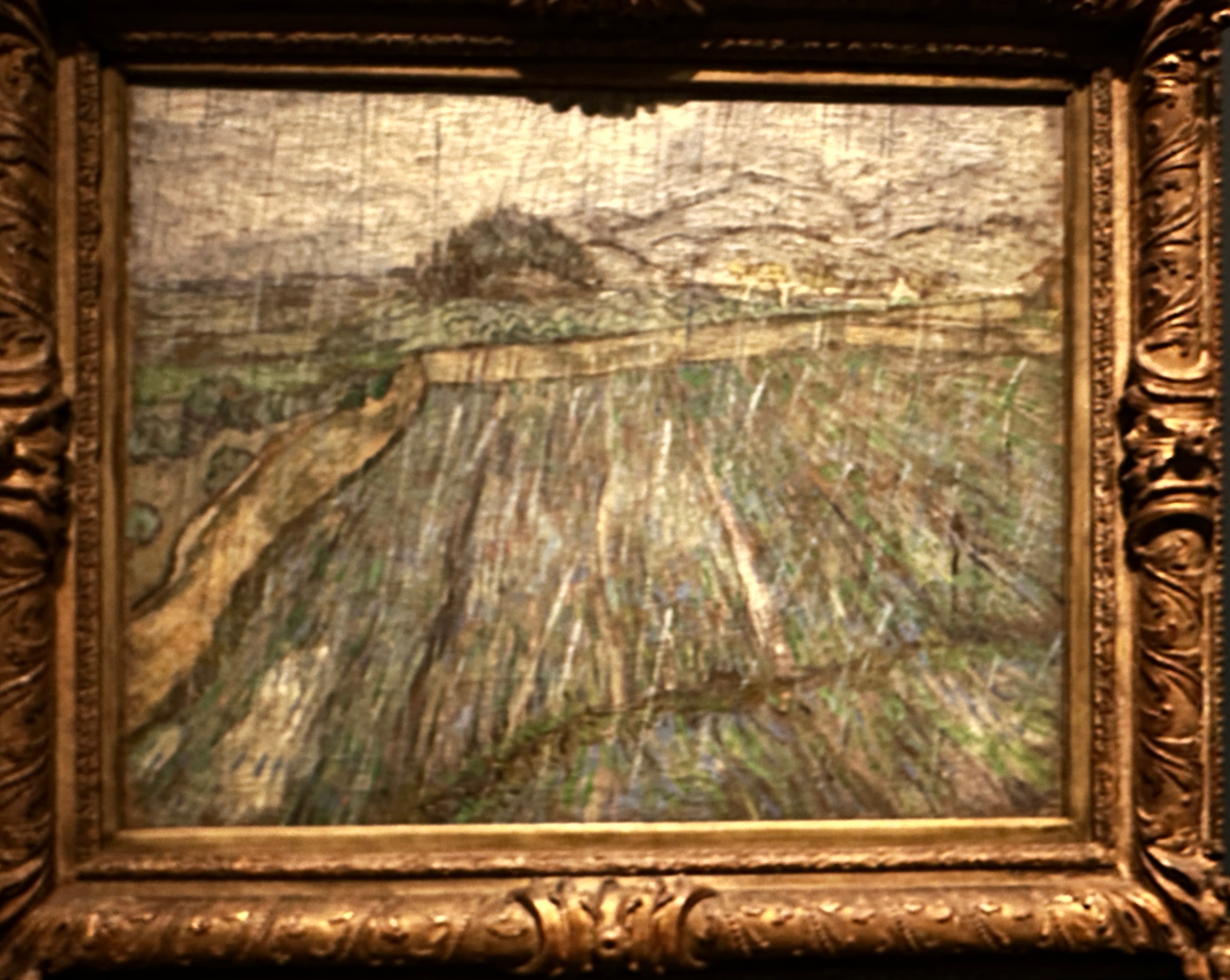
  • Rain by Van Gogh

    I was surprised by this painting because the colors are more muted than I expect from Vincent Van Gogh. The subject matter, rain, is difficult to capture well in painting, yet he has gotten it perfectly. Drops of rain have to capture light just right in order for our eyes to see it. Oftentimes I look out the window to see if it is raining or not, but it takes a moment for my eye to adjust and to see the rain. That is why I think this painting is so marvelous; it has caught that moment when your eye sees the rain drops.

    I like how the storm has muted the colors in the scene. I also note that although Van Gogh uses the traditional vanishing point in this painting, he is more dependent on shape and form to suggest depth rather than using haze or dimness. As ever, I love the strong brush strokes with large amounts of paint applied to the canvas.

    Thank you, Van Gogh, for giving me such a thrill of pleasure!

    Rain, Vincent Van Gogh. Philadelphia Museum of Art, Philadelphia, PA
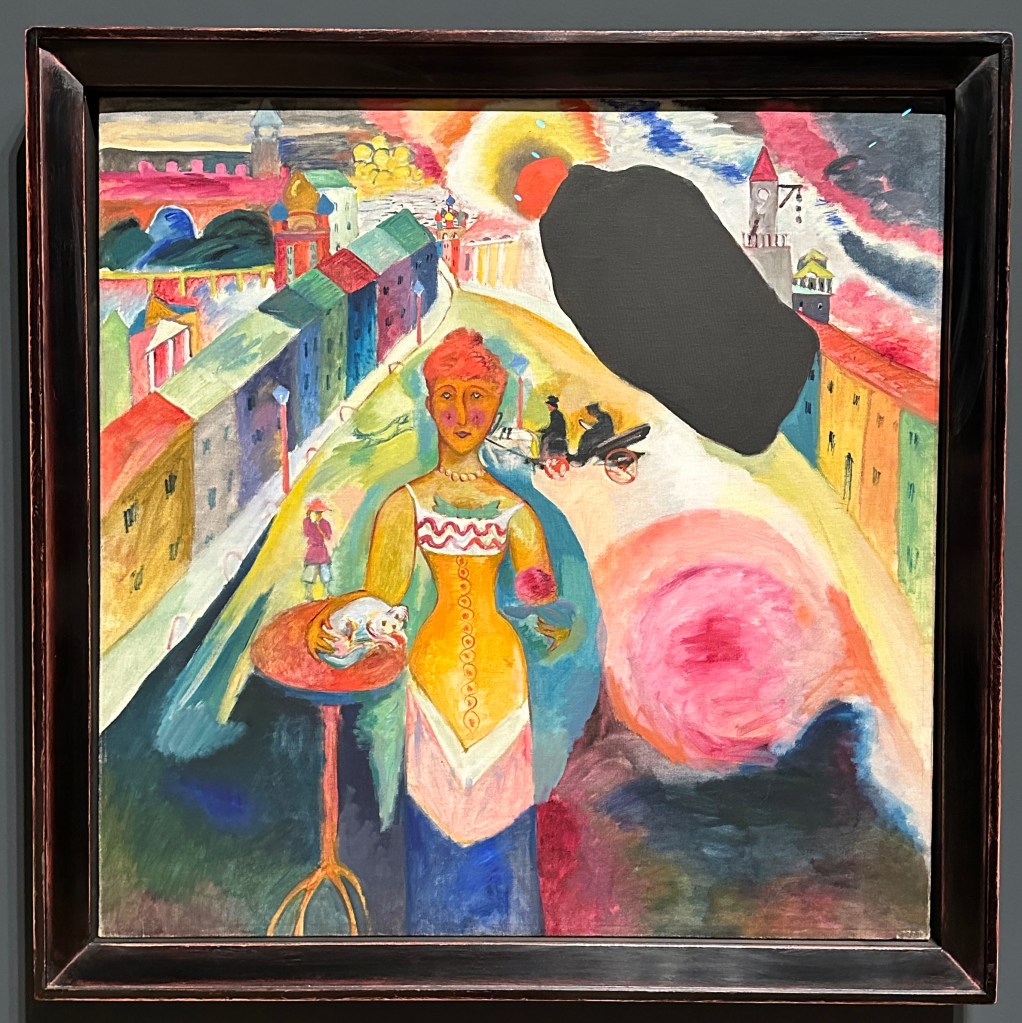
  • We must be soldiers for Art!

    Mstislav Rostropovich told our choral director, pounding the table with his fist for emphasis, “We must be soldiers for Art!” Rostropovich famously stood up to a repressive totalitarian regime, so it is worth paying attention to his thoughts on the arts. 

    Now as we face our own regime that may become repressive and totalitarian, it is important to think about the role that art plays in our lives. Art is many things: it is great beauty, it is innovation, and many times it is a challenge to empathize with groups we had not thought about before or a challenge to rethink whether standard social concepts are benefiting us or not.

    Here are my thoughts on my encounters with Art.

    Woman in Moscow, Wassily Kandinsky. Tate Modern, London

  • Piano Concertos

    Last week I had the pleasure of attending three orchestra concerts in as many days, each with a different orchestra. All three had programmed piano concertos.

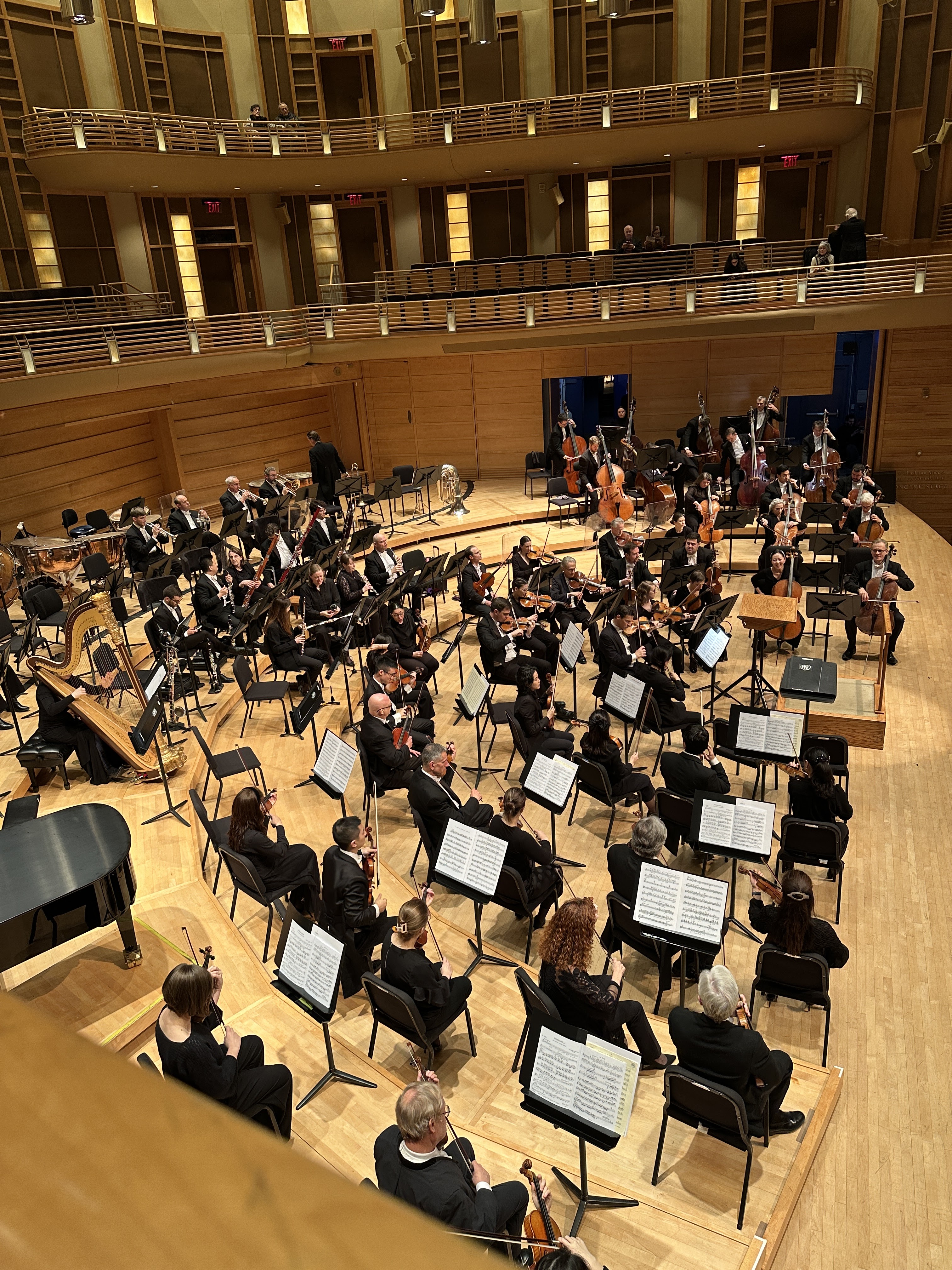
    The Baltimore Symphony Orchestra (BSO) played Mozart’s 20th piano concerto. This is one of my favorites. The piano part sounds like glistening falls of pure, clear water. The sharp clear sound of a concert grand piano is liquid and gorgeous when Mozart is being played. 

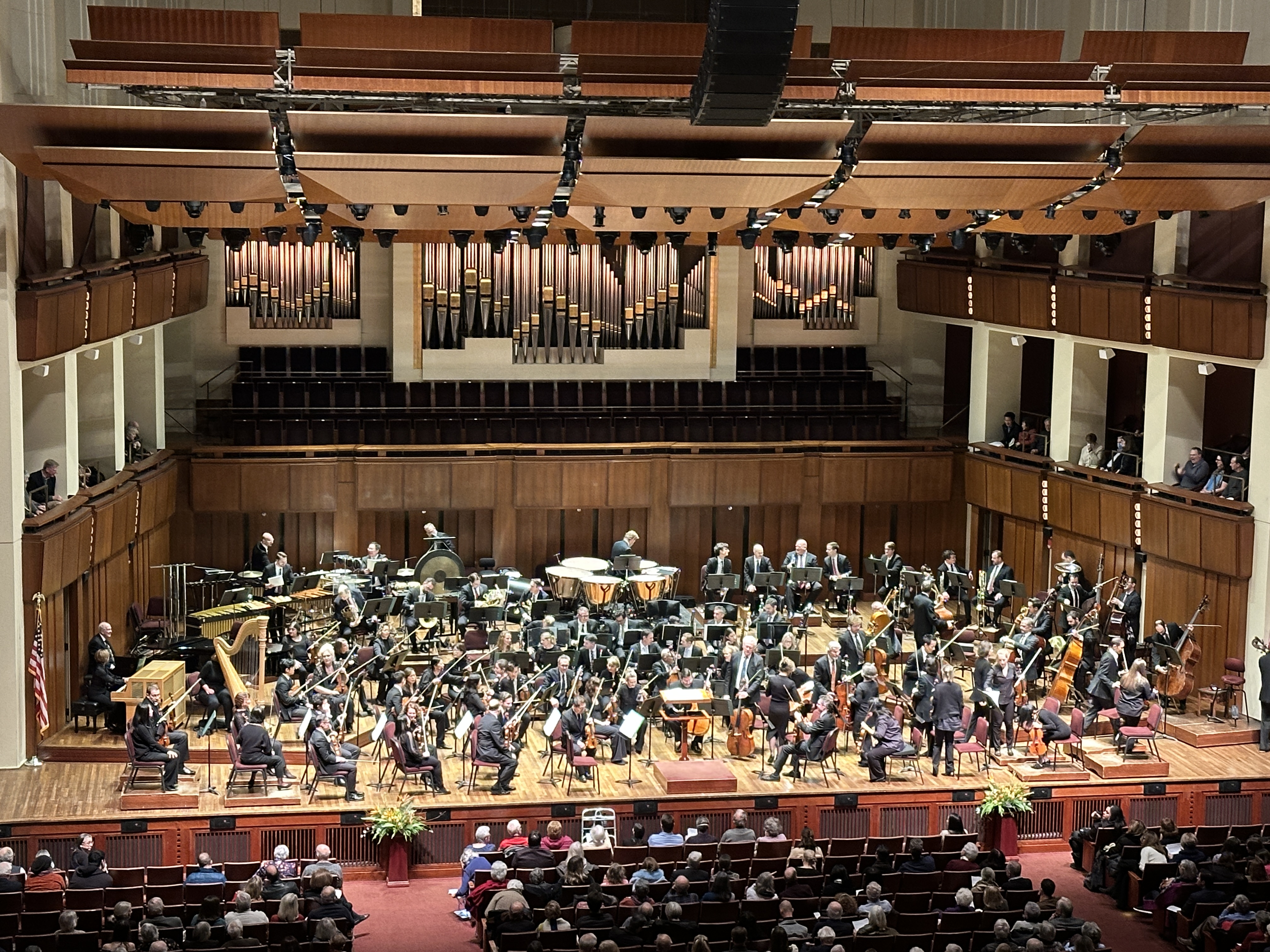
    The National Symphony Orchestra (NSO) played Beethoven’s 3rd piano concerto. Under the leadership of Maestro Noseda, the NSO has become a truly excellent ensemble. For this concert, the orchestra was led by visiting conductor Maestro Carlos Miquel Prieto and the pianist was Jorge Federico Osorio. They both were so superb! I particularly like the second movement of this concerto. There’s a lovely bit where the flute and bassoon play off one another while the piano just doodles around in a light pattern of glitter overhead. Moments later the lower strings hold a long note and then take two steps down. It is so poignant and lovely. I have wondered for many years why it is that some chords and sounds are so stunningly beautiful. If I knew more about music theory I could talk about the various modes (Aeolian, Lydian, Frisian, etc.) the composer used to create the sensations we feel as we listen. For now, I’m just going to listen and enjoy.

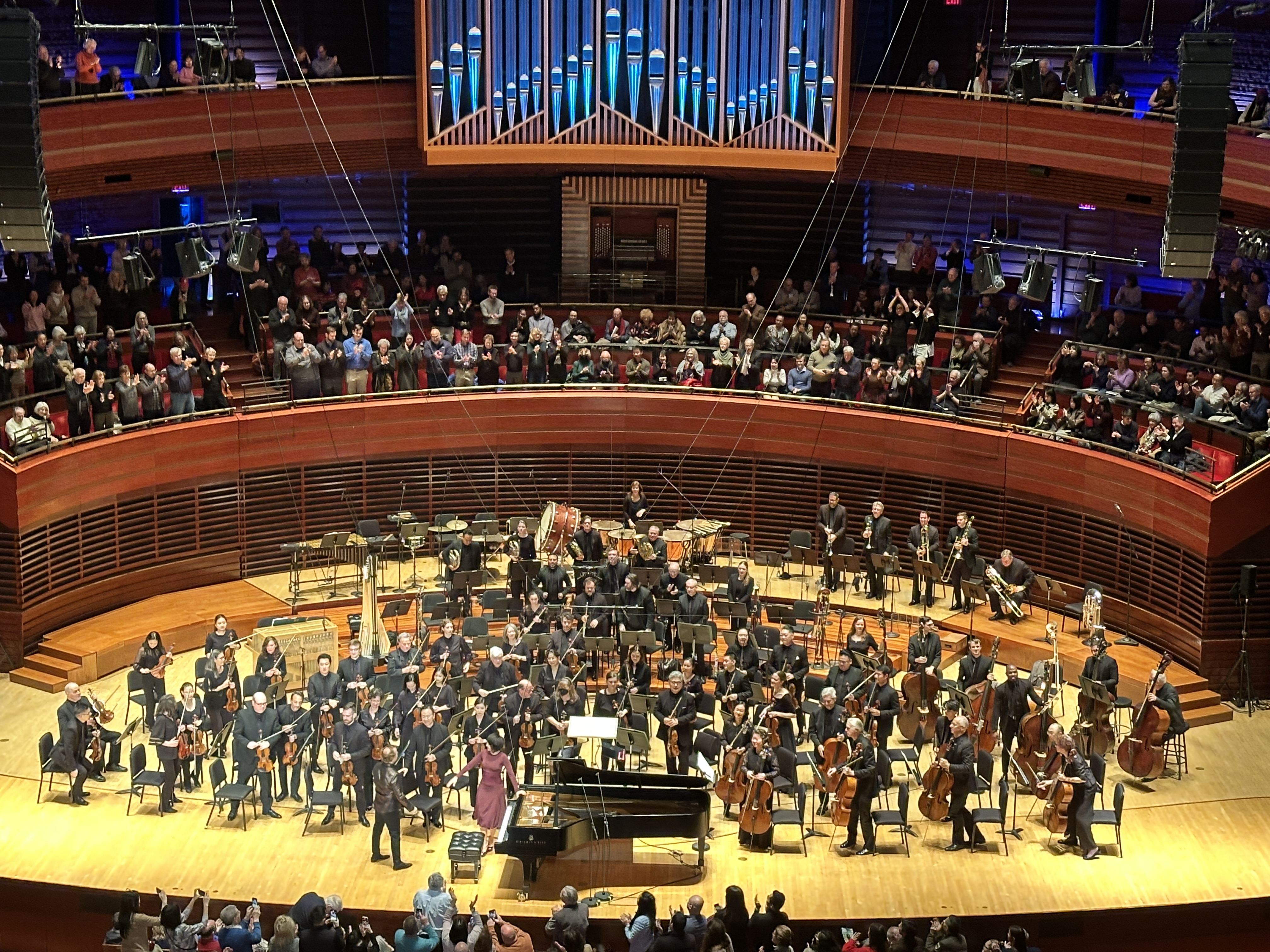
    The Philadelphia Orchestra the next day was just superb! What a remarkable ensemble they are! Pianist Yuja Wang (wearing a fabulous pair of Louboutins!) played the Tchaikovsky piano concerto. This is the second time I’ve had the privilege to hear Ms. Wang play. Her hands just seemed like a blur shimmering over the keyboard. I had forgotten how lovely the second movement is in this concerto; it fills your heart with a deep longing that is sorrowful and beautiful at the same time.

    It was a great pleasure to hear all three of these concerts. I thank the composers for writing such gorgeous music and I thank the musicians for playing it so beautifully!

    Baltimore Symphony Orchestra, Strathmore Music Center, Bethesda, MD
    Baltimore Symphony Orchestra, Strathmore Music Center, Bethesda, MD
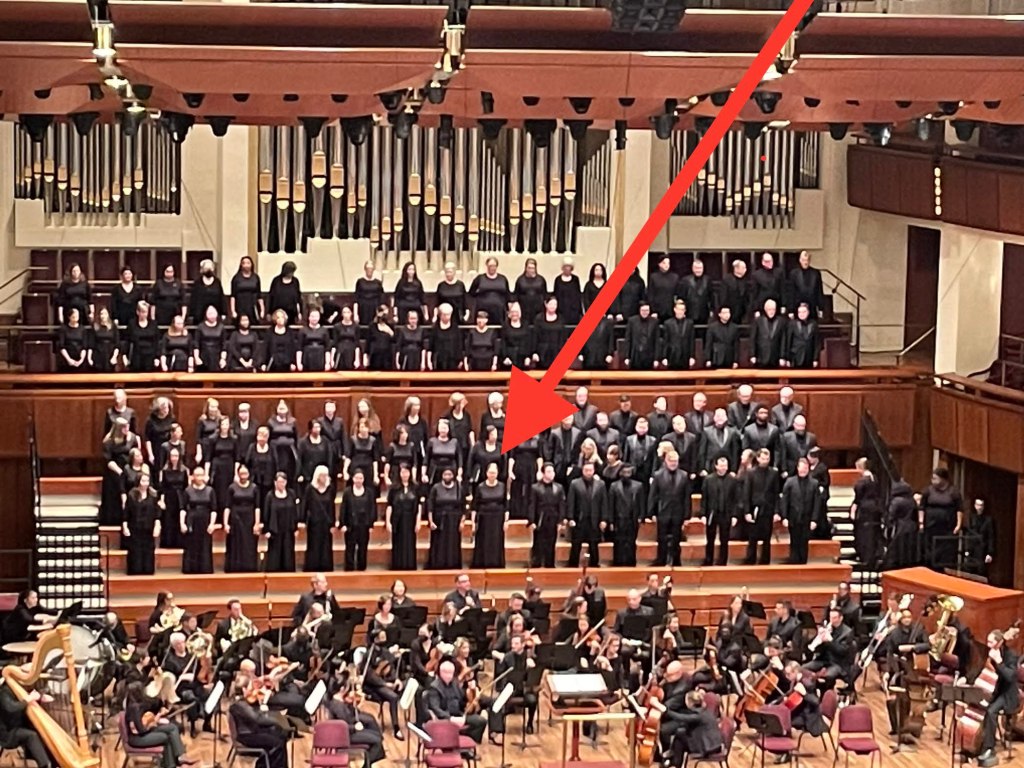
    National Symphony Orchestra, Kennedy Center Concert Hall, Washington, DC
    National Symphony Orchestra, Kennedy Center Concert Hall, Washington, DC
    Philadelphia Orchestra, Kimmel Center, Philadelphia, PA
    Philadelphia Orchestra, Kimmel Center, Philadelphia, PA