Tag: art

  • The First Stirrings of Abstract Thought

    I’m particularly fascinated by prehistoric cultures as well as cultures from the very, very early days of writing. I’m awed by how they first developed art and abstract thinking. Therefore I was quite excited to be able to see some of the following items at a private museum in Turkey.
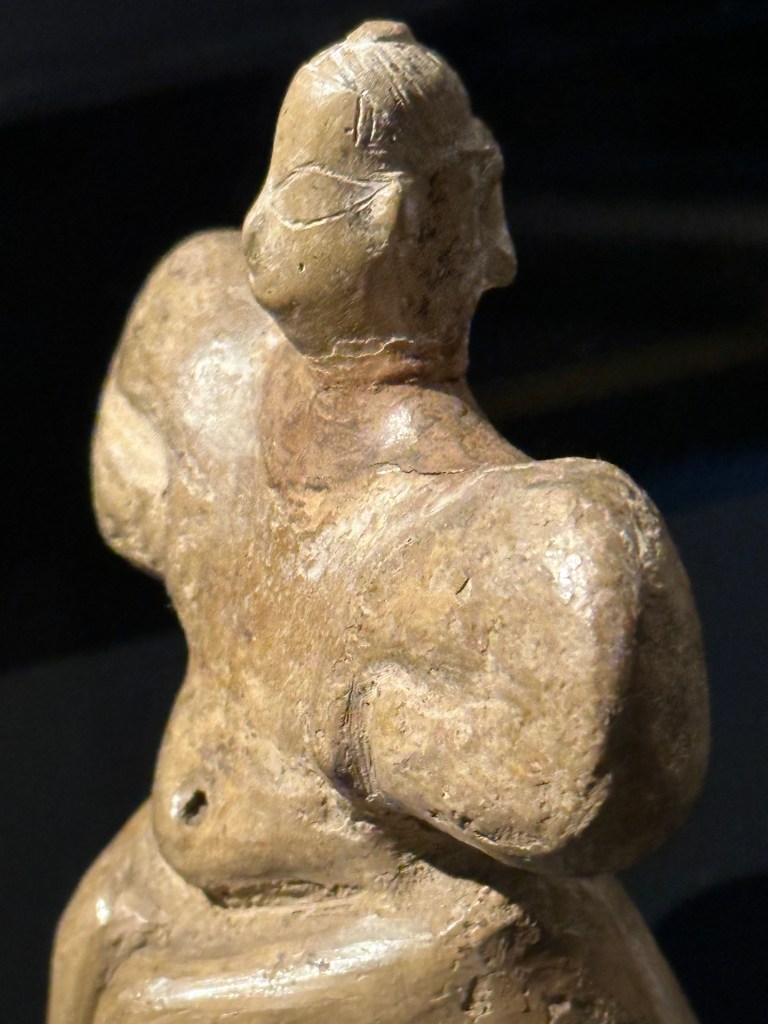
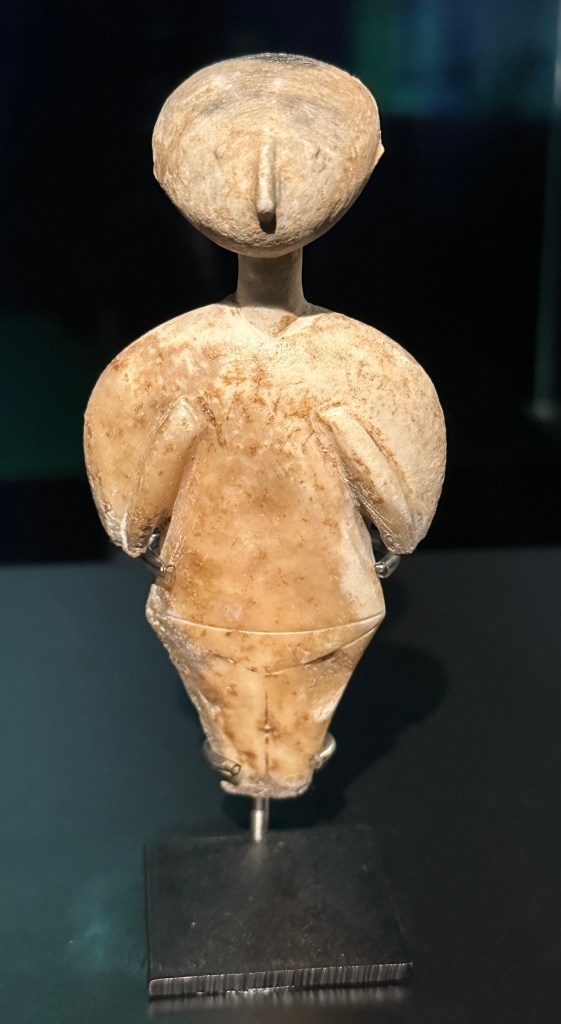
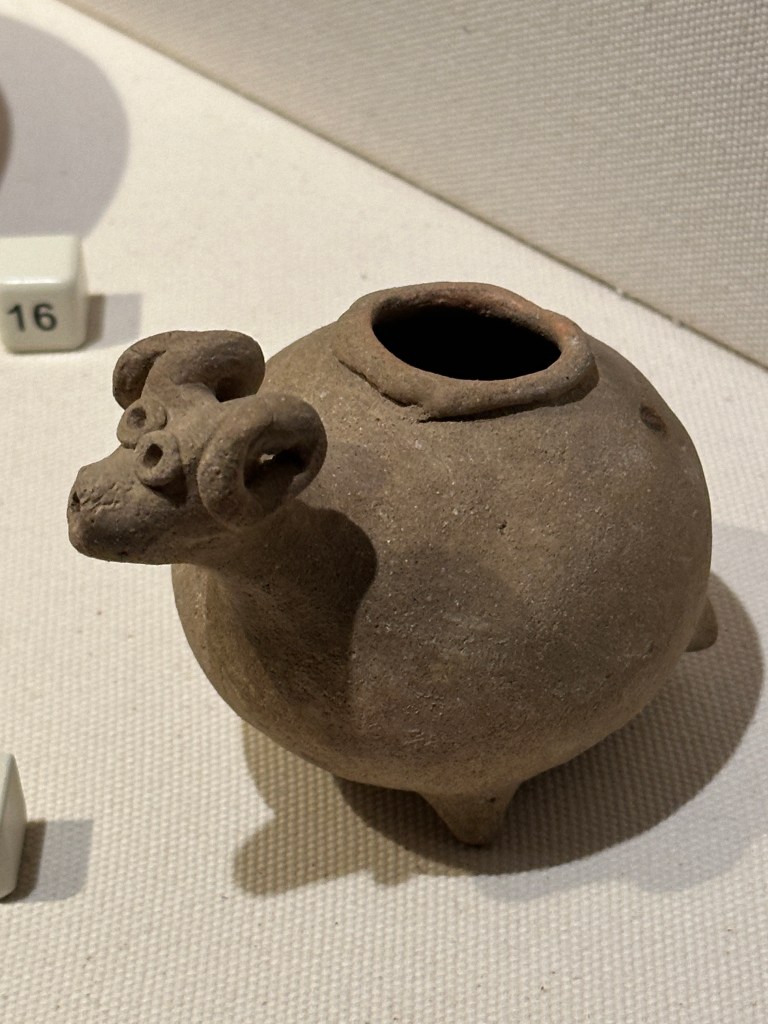
    The first two are fertility goddess figures, the first from the late neolithic period about the sixth millennium BCE and the second from the early Iron Age about the third millennium BCE. I love how they capture the female form and how the rounded lushness of the carving portrays beauty and desirability. It’s especially thrilling to me to think about how old these pieces are and that I am looking at the same object that an artist saw in their mind’s eye thousands of years before my existence.

    The third photo just made me laugh, so I had to include this cute little guy. The museum has labeled it as a ram-shaped rhyton, which is a drinking horn or cup. It’s from the second millennium BCE.

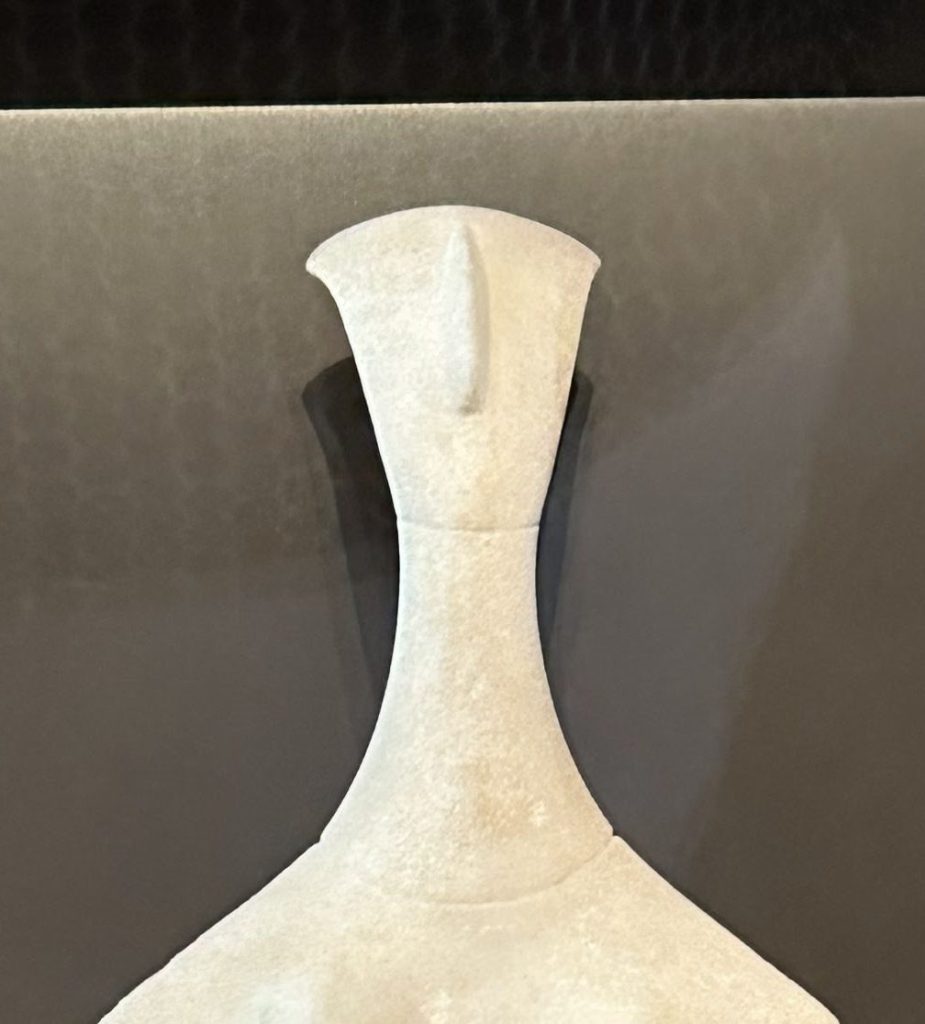
    Below I have some photos of a Cycladic idol from the Neues Museum, Berlin.
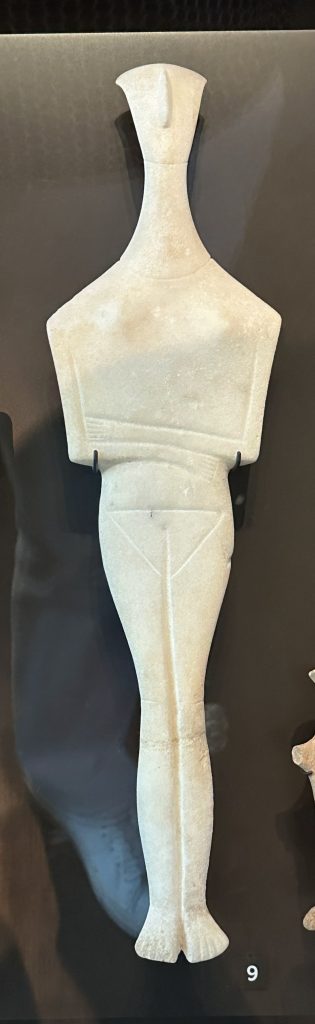
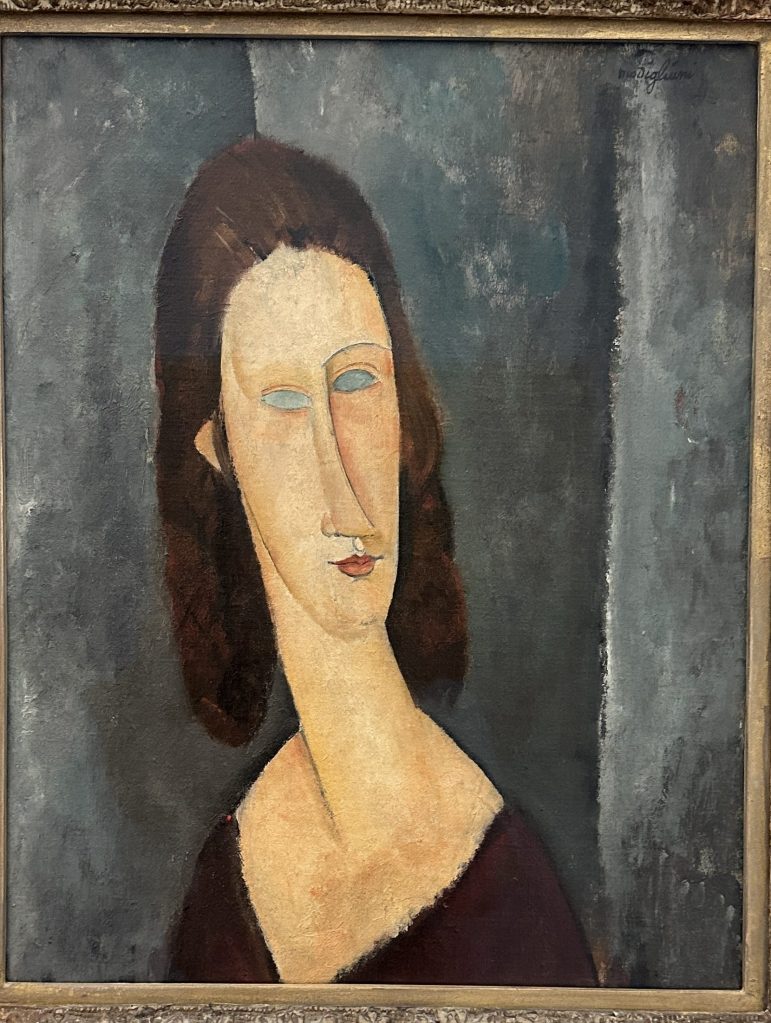
    This piece is from the Cycladic Islands some time between 2600 and 1100 BCE. I love the soaring elegant form of the figure, especially the face. It reminds me of Modigliani and I wonder if he was influenced by Cycladic art.
  • The Greatness of Mankind

    This morning in The Washington Post Robin Givhan wrote about the arts “At their best, the arts help people to think more deeply and more broadly. They help people grasp commonalities across expansive divides. Sometimes they highlight the greatness of man, but more often and more powerfully, they remind people of their fallibility.”

    In this blog I primarily want to talk about how the arts highlight the greatness of man because I want to celebrate what we humans can do that is superlative.

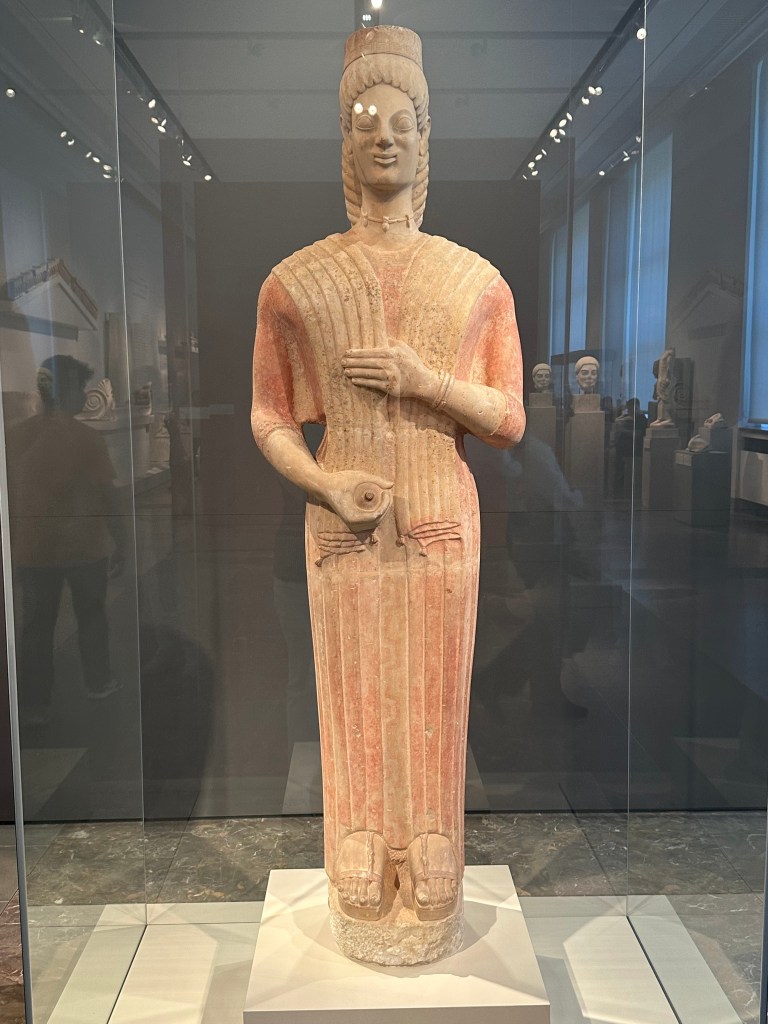
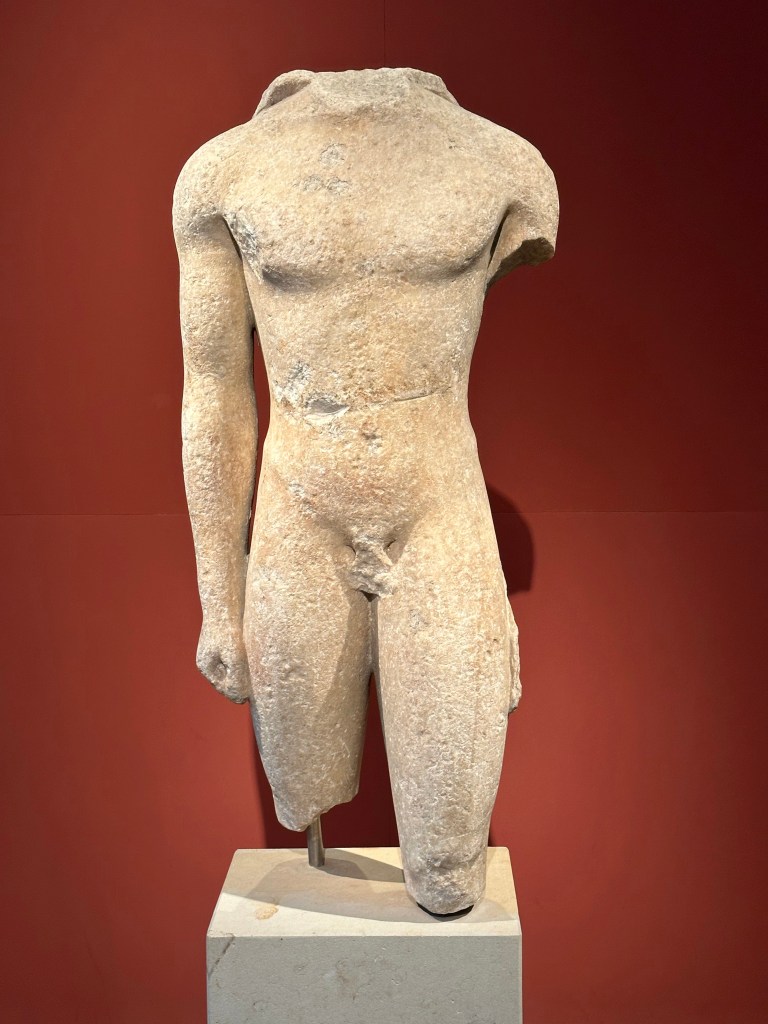
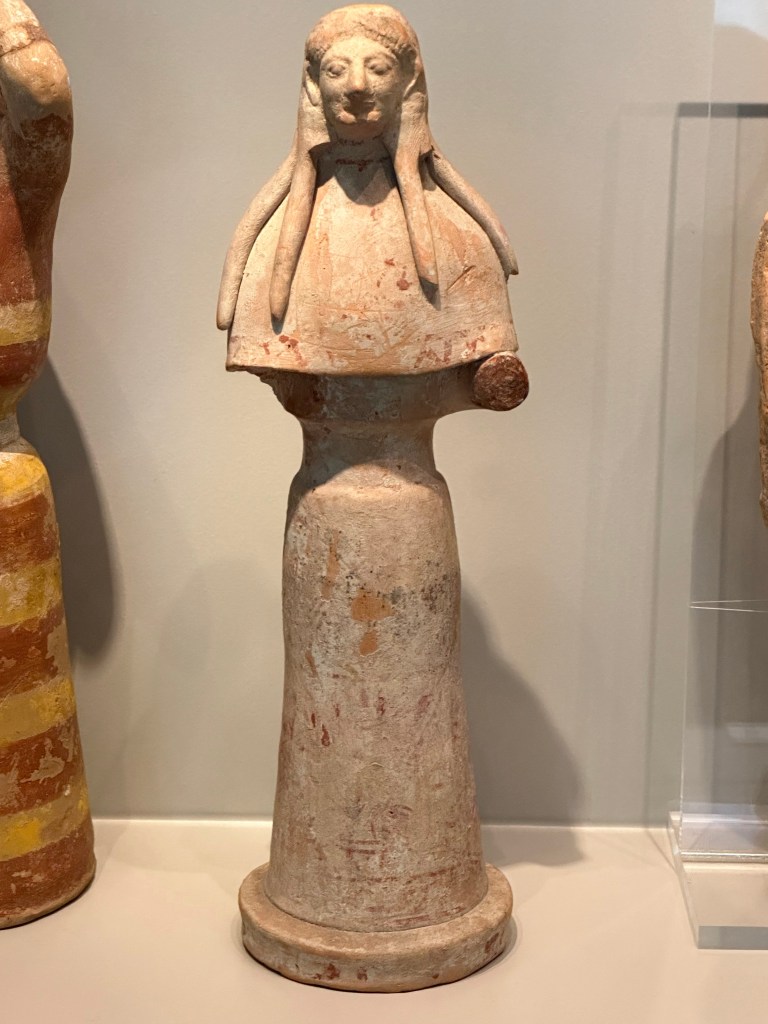
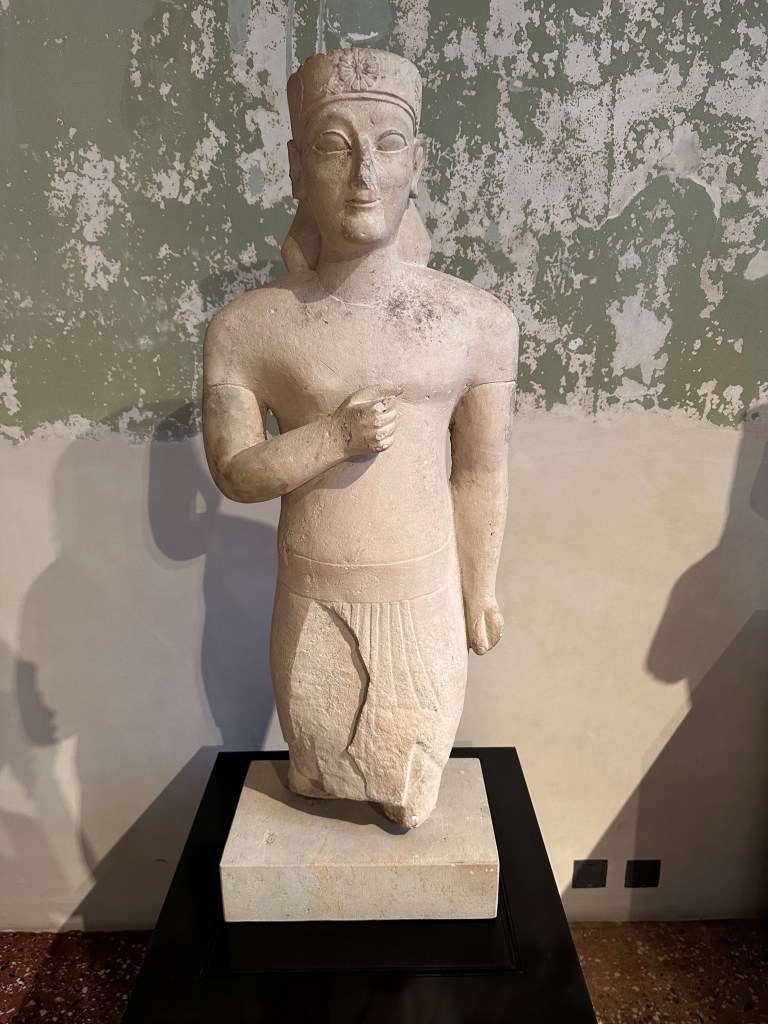
    Today I want to discuss Greek sculpture during the start of the great flowering of the arts in Greek antiquity. Early Greek sculpture, usually called the archaic style, was a highly realistic style that was, however, still rather stiff. Note the beauty of the rendering of the human figure, yet they are still not quite naturalistic. Arms are held stiffly at the side or otherwise close to the body. They nonetheless celebrate the human form.

    So to Ms. Givhan’s point, these help us to realize the commonalities humanity across an expansive divide of time and space.

    Tomorrow I’ll write about the succeeding period in Greek sculpture usually referred to as the classical style.

  • More Thoughts on Rollo Dilworth’s Weather: Stand the Storm

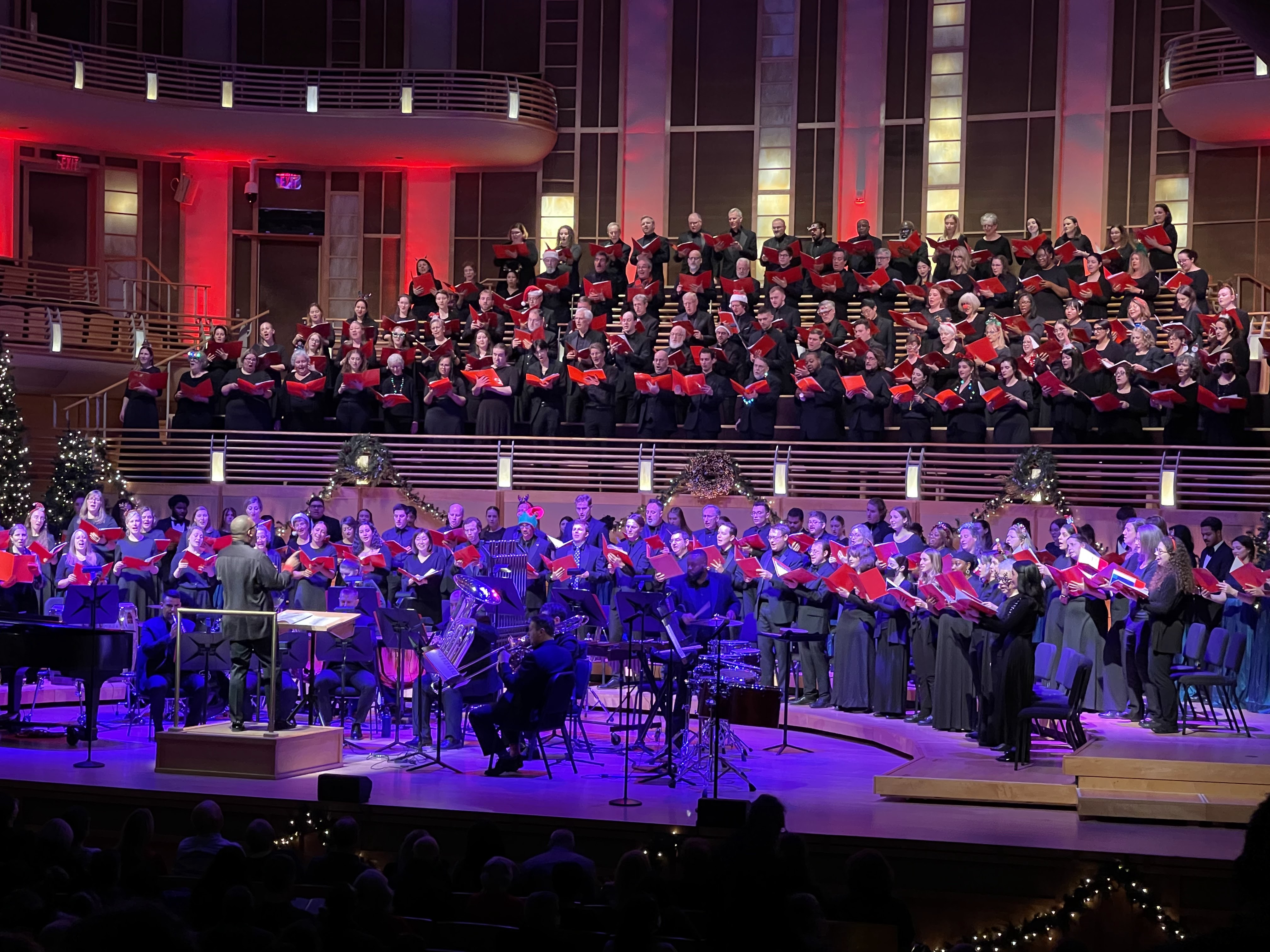
    Professor Rankine wrote a powerful poem that I posted here. As we continue to rehearse Dr. Dilworth’s setting for the poem, I discover more about how the music brings out the further meaning of the poem.

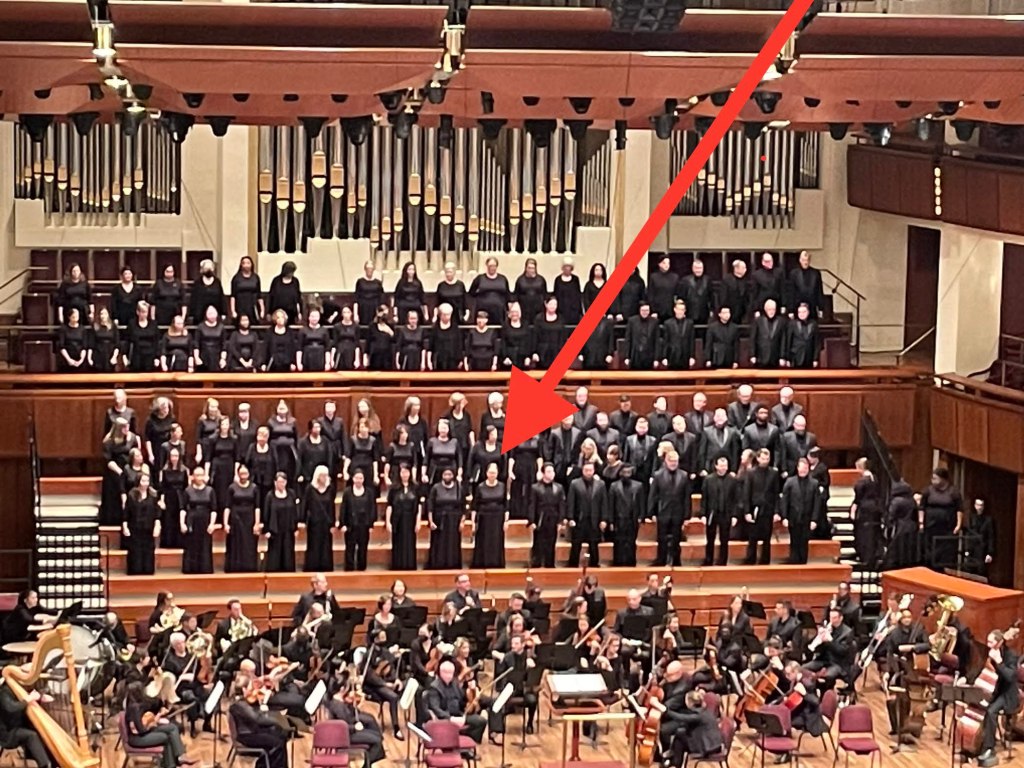
    The Washington Chorus, Dr. Eugene Rogers, artistic director

    The poem starts in the peaceful environment of a university archive (“On a scrap of paper in the archives is written I have forgotten my umbrella.”) and the music is tranquil yet with a surprisingly urgent beat. Next it discusses the confusion of information that accompanied the start of the pandemic and the music takes on swirls and yet is in a persistent twelve-bar blues setting. Then for the devastating stanza “Six feet under for underlying conditions. Black” there is a dark and dissonant chord on the word “Black”.

    The most poignant repetitions are “eight minutes forty-eight seconds” over and over, then leading to “I can’t breathe” over and over. The music drops out of the twelve-bar blues to an urgent, rattling dissonance and confusion the concludes with repetitions of “in extremis.” Was the poet also making a reference to extremism here? That could be a valid interpretation.

    Then the music begins a march to accompany “whatever contracts keep us social compel us now to disorder the disorder,” perhaps inviting us to march in protest.

    The piece concludes with a reinstatement of tranquility as the poet observes “There’s an umbrella by the door, not for yesterday but for the weather that’s here” and builds to the sound of strength as the chorus declaims “We are here for the storm that’s storming because what’s taken matters.”

    This is why I love music so much, and choral singing in particular. It adds a drama to the words that is unmatched.

  • Kandinsky Always Makes Me Happy

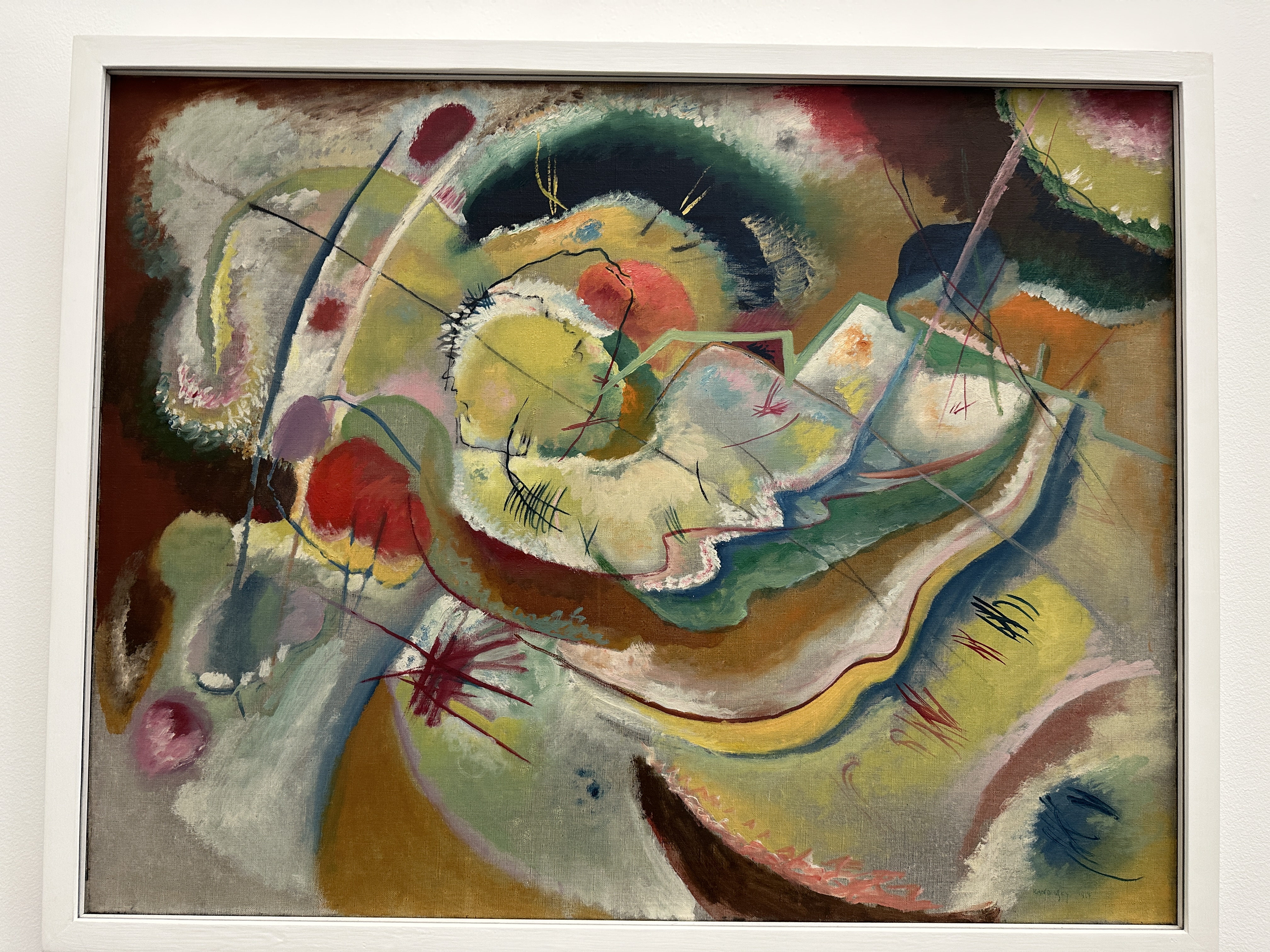
    Kandinsky always makes me happy, even when he may not intend it. This painting at the Philadelphia Museum of Art, called Little Painting with Yellow (Improvisation), has bright colors and lines of motion that together make me happy. An improvisation is something that is made up or created on the spot but is usually done by a highly-skilled artist. Said artist can be a musician, composer, oil painter, sculptor, poet, etc. The distinguished point is that the work was not planned out ahead of time but was executed in a moment from pure artistic vigor.

    Little Painting with Yellow (Improvisation), 1914, Wassily Kandinsky, Philadelphia Museum of Art, Philadelphia, PA.

    The style of the painting resists characterization for several reasons, but I don’t want to go into all that here. I’ll just say that he wanted to create spiritual experiences with completely non-representational shapes. In this instance, Kandinsky seems to have done exactly that and to have done it with an unplanned improvisation.

    I need a little happiness right now, so I’m grateful for Kandinsky’s artistic talent.

  • Medieval Saxons Rediscover Humanist Sculpture

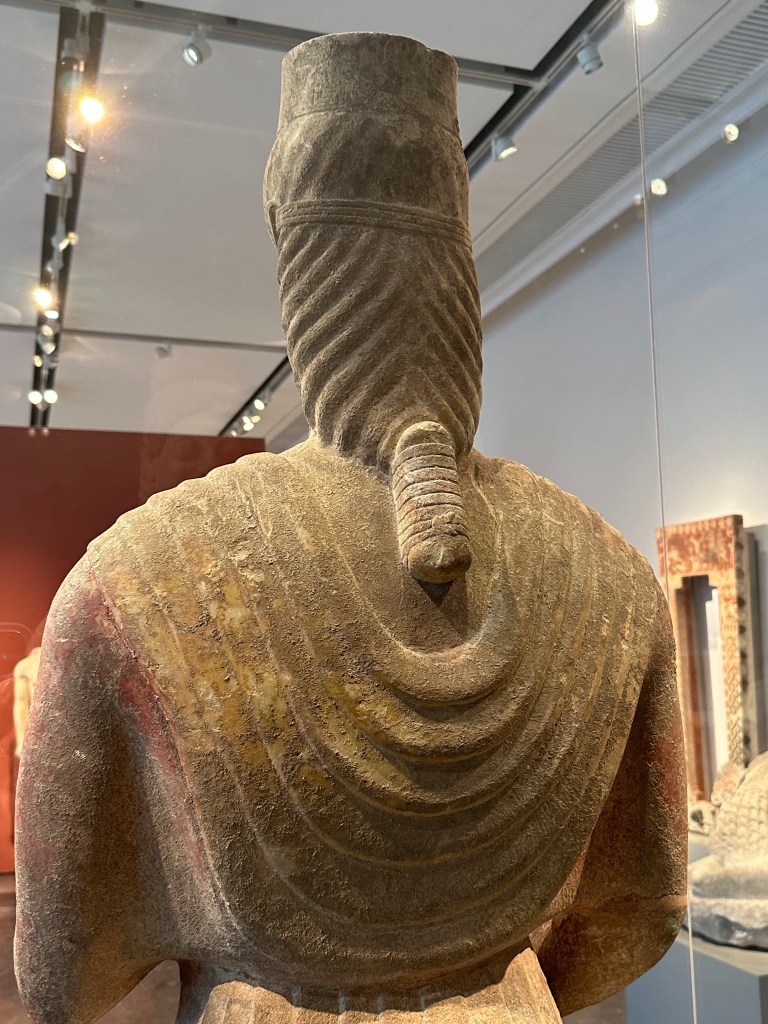
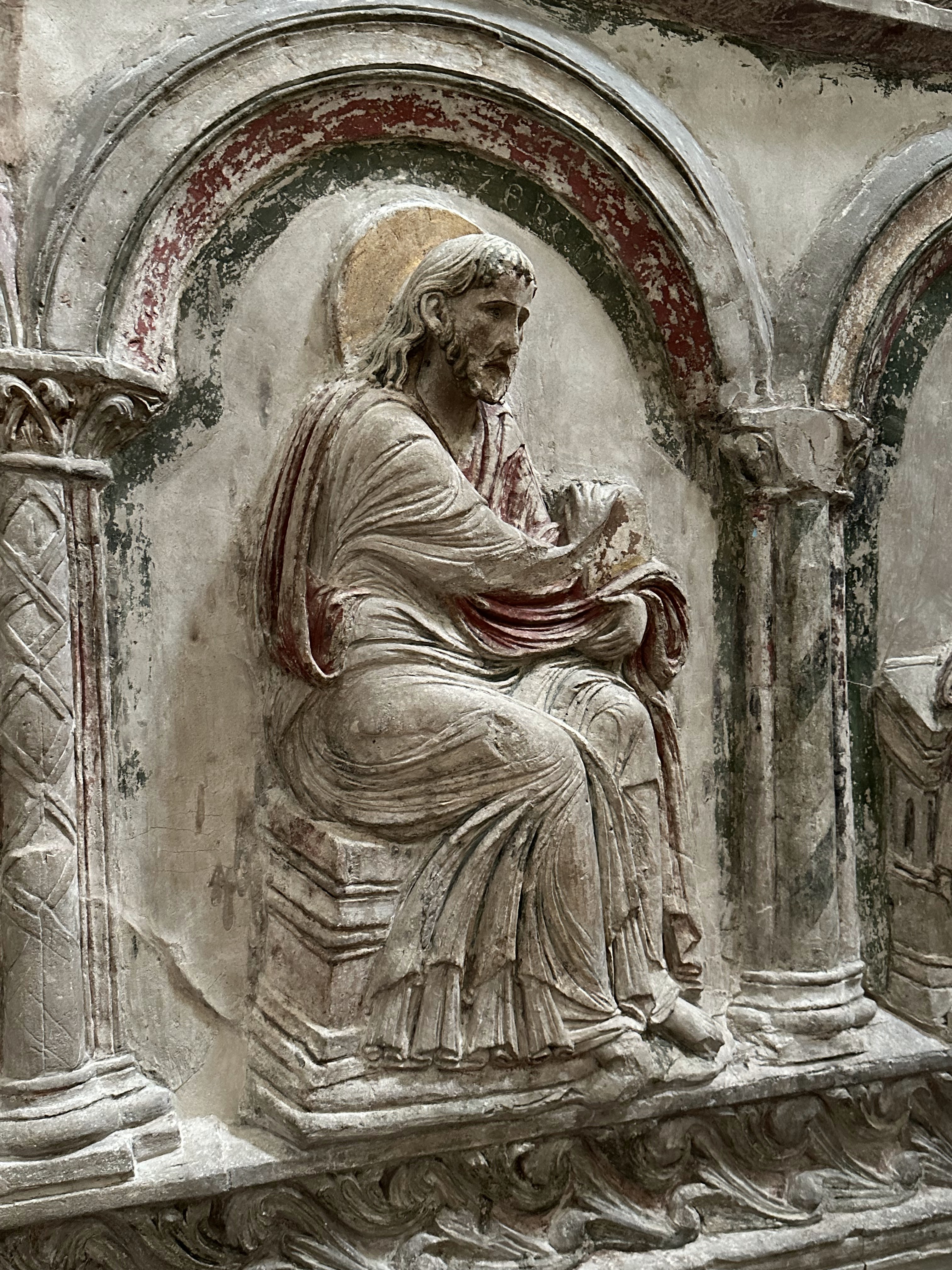
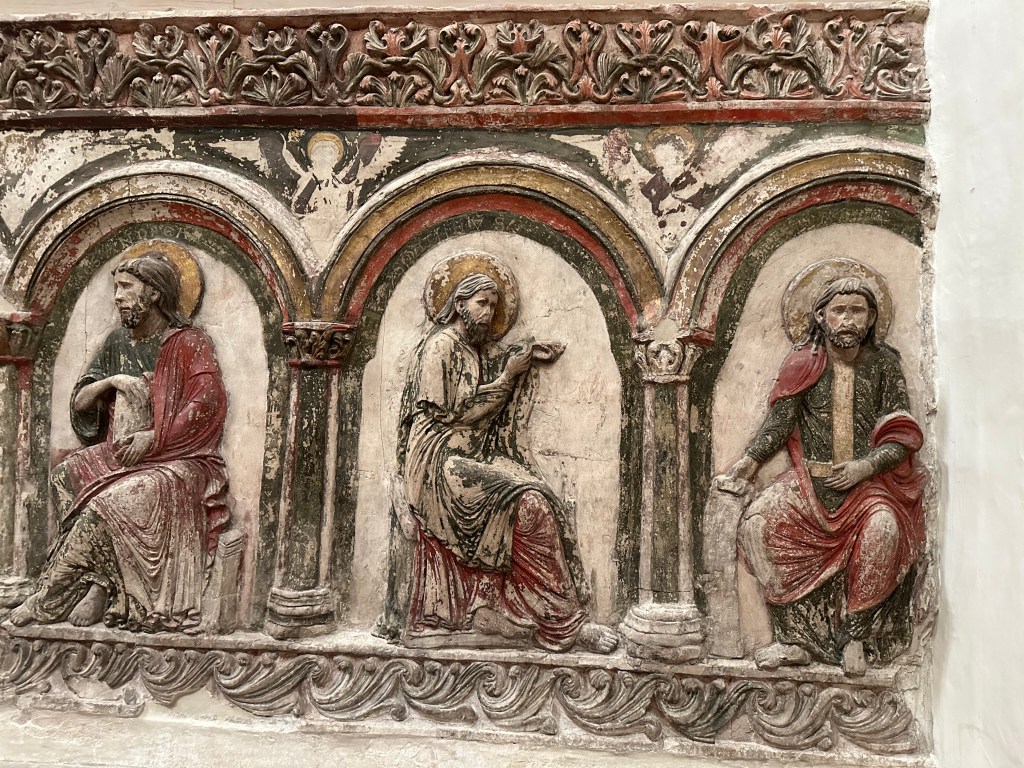
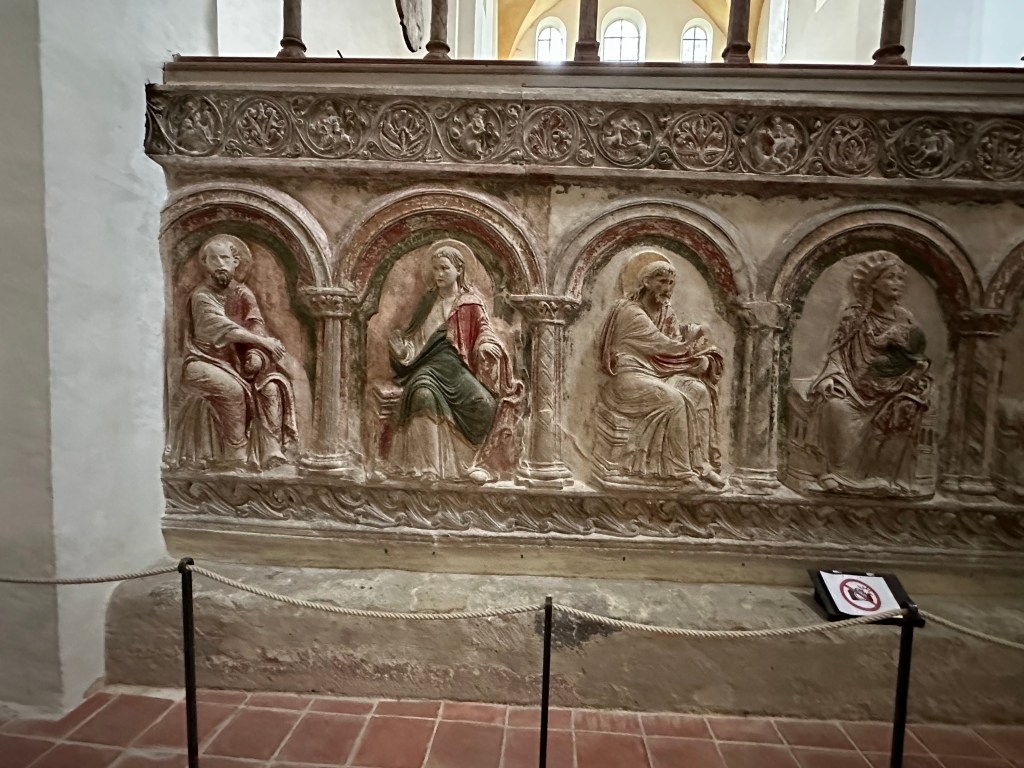
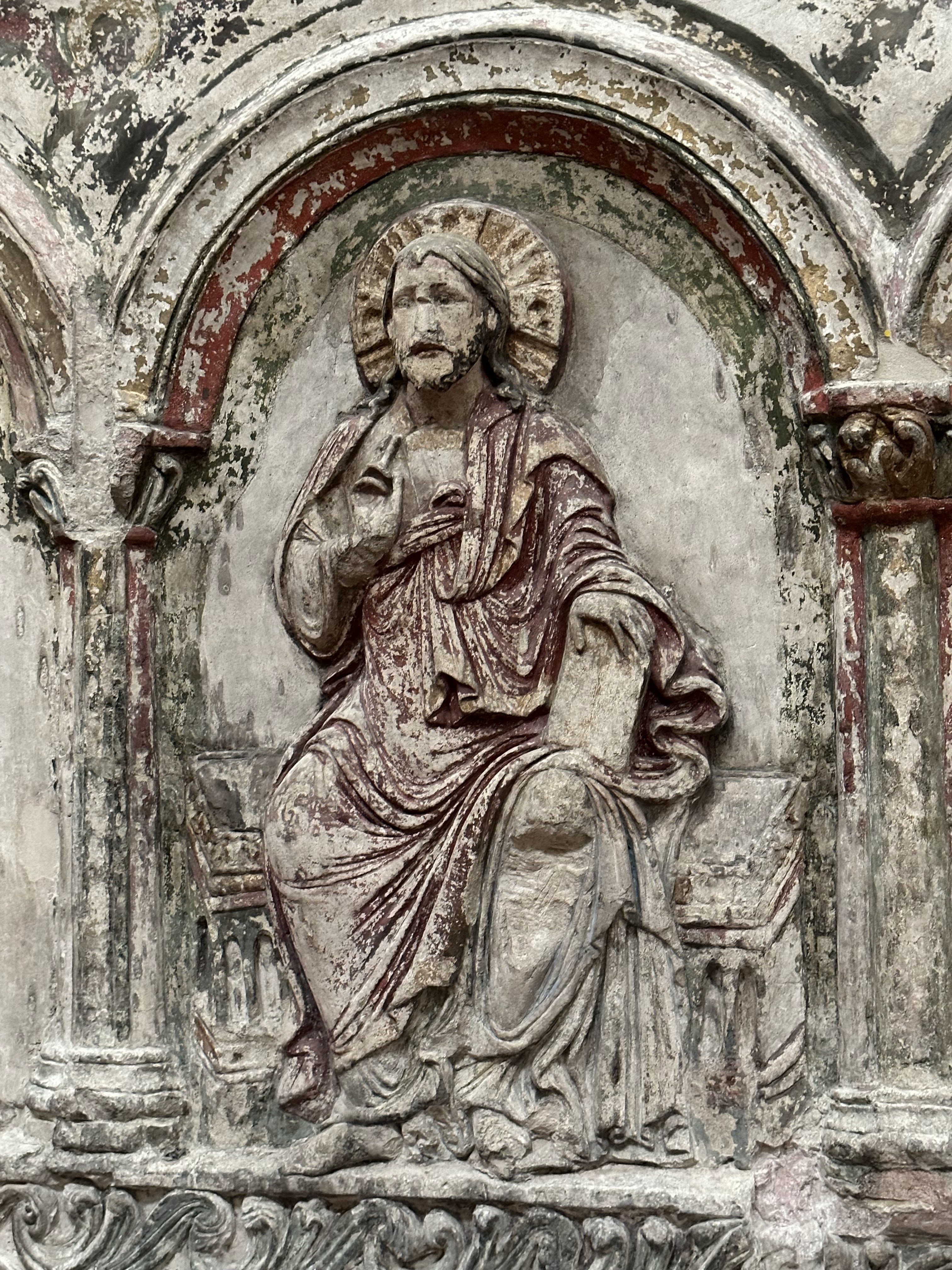
    In Halberstadt’s Liebfrauenkirche are some remarkable stone bas-relief carvings. These carvings, depicting Christ, the Virgin Mary, and the twelve apostles, are romanesque masterpieces that date from the early thirteenth century. They are the more remarkable because they arose after a period when the heights achieved by Greek sculpture had been long forgotten.

    The sculptures are notable for being full-figured, with a few even stepping outside of their frames. The faces are individual, they have meaningful glances, and the drapery folds are realistic. They were strongly influenced by the Byzantine Art encountered in Constantinople during the crusades.

    Outer choir bas-relief sculpture, Liebfrauenkirche, Halberstadt, Germany

    Originally they were highly painted.

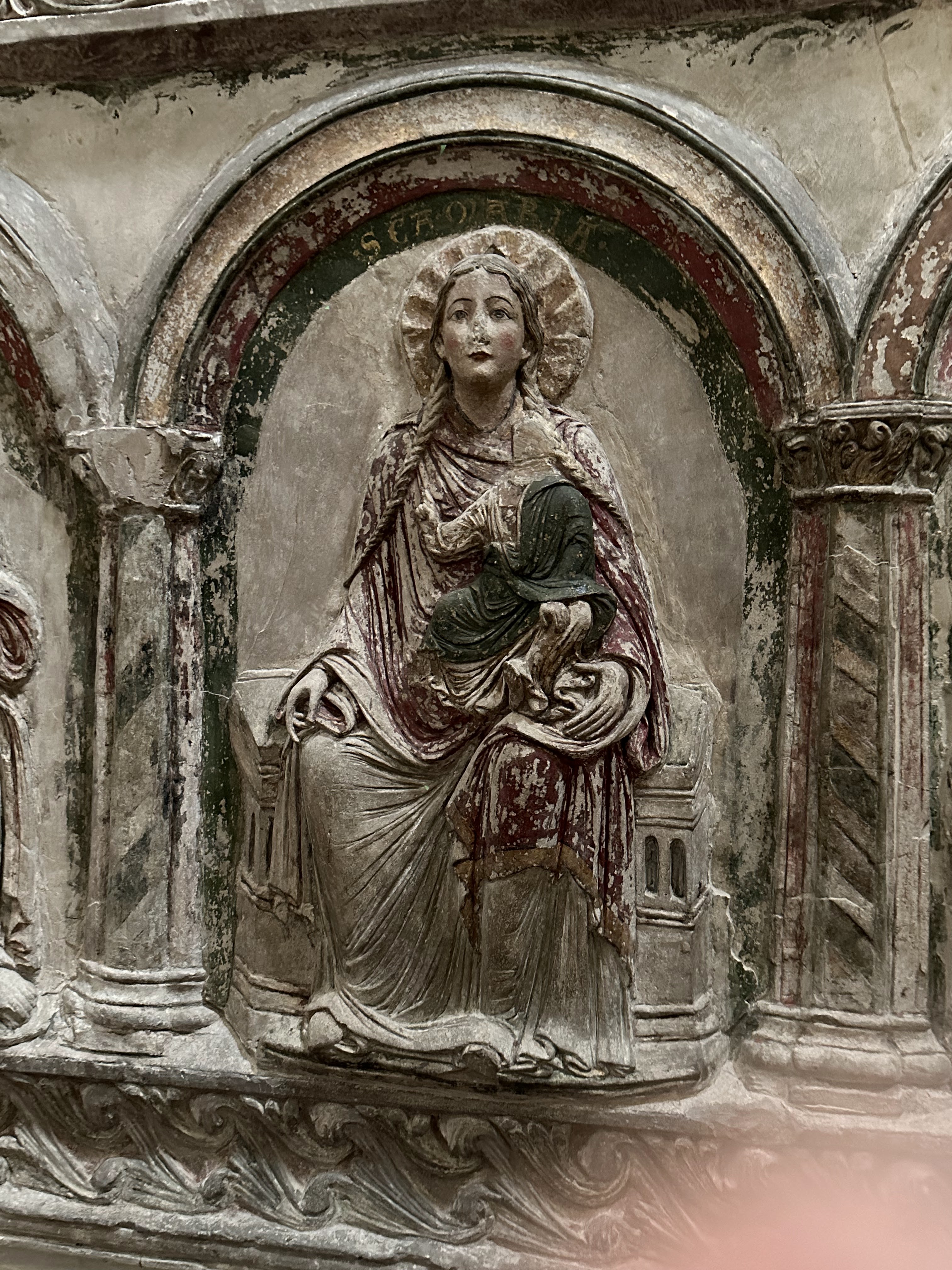
    The Virgin Mary here has beautiful hands and is depicted with the braids that were typical for the area.

    The Virgin Mary with the Christ child, Liebfrauenkirche, Halberstadt, Germany

    The Christ sculpture here has been damaged over the years but is still sitting in majesty.

    Christ in Majesty, Liebfrauenkirche, Halberstadt, Germany

    I’m glad to know that these gorgeous works of art exist in the world. Arising when they did led to the continued development of western art, which has given so much to humanity. I celebrate the achievement of the human spirit they represent.

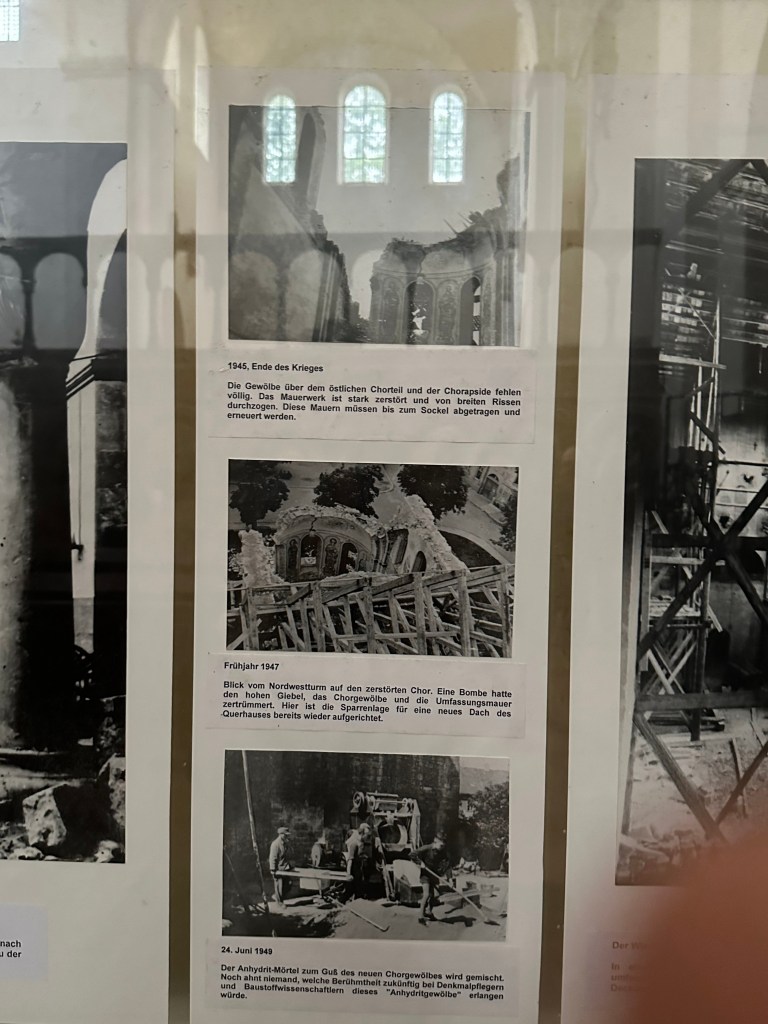
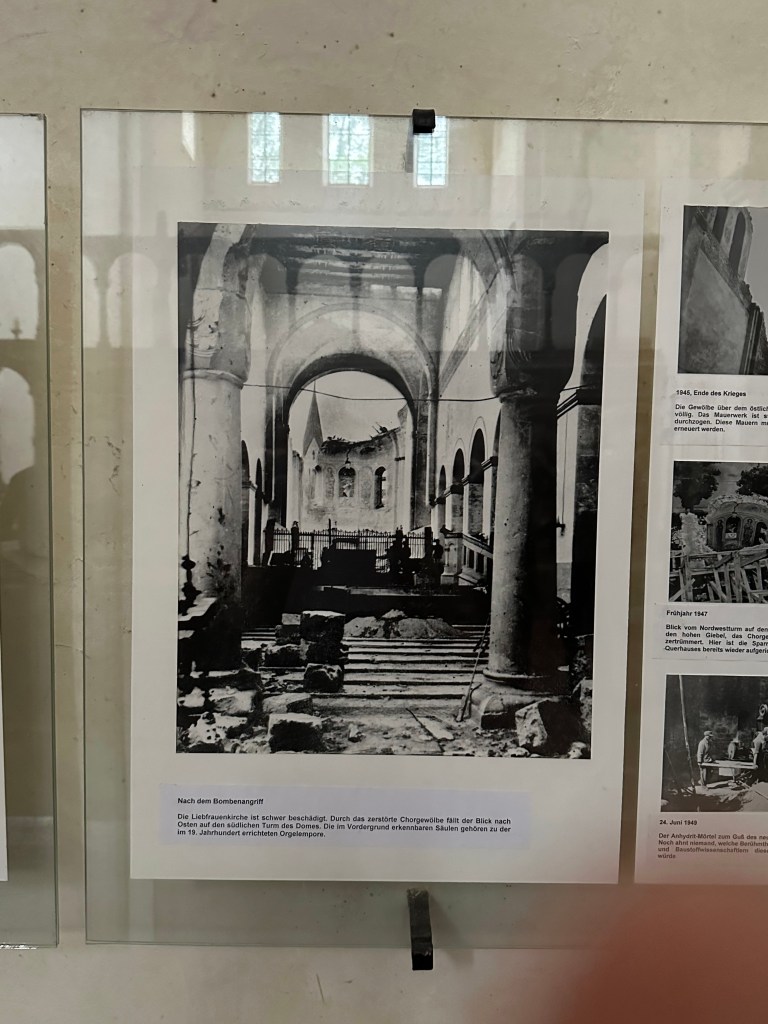
    The photos below show the extensive damage to the church from the bombings of World War Two. We are fortunate today that these sculptures somehow survived the destruction that was visited upon the rest of the church.

    I prayerfully beg you all to not forget how awful war is and how high the costs are in terms of human life and human achievements.

  • Rollo Dilworth’s Setting of Claudia Rankine’s Poem

    Dr. Dilworth has set Professor Rankine’s extraordinary poem to a thought-provoking piece of music that is both lyrical and dissonant. His title for the work is Weather: Stand the Storm, which captures both the title of the poem and the title of the spiritual (Stand the Storm) that is the central melodic theme.

    Dr. Dilworth wrote an extensive set of performance notes for his piece, which is something I really appreciate as a choral singer. I’ll mention just a few items out of the many elements he put into the music.

    The “George Floyd” Motives are different combinations of using the notes G and F. These notes are only one step (whole step) apart so they can create dissonance when they part of a chord and jagged leaps when they are part of a progression. These musical ideas generate exceptional poignancy regarding the death of Mr. Floyd.

    There are many deliberate numerical references in the score but I’ll just discuss one here, and that is 8:46. This was the amount of time that George Floyd was pinned down. Dr. Dilworth therefore uses 8/8, 4/4, and 6/8 time signatures to embed those numbers in his work.

    The section that has the text “Just us and the blues kneeling on a neck with the full weight of a man in blue.” is set to 12-bar blues.

    If you are interested in the complete performance notes you might be able to buy a copy of the piano reduction choral score from his publisher, Hal Leonard, LLC. It is ISBN 978-1-70518-585-8.

    Meanwhile, here is a link to a performance on Youtube that I think is particularly good: https://youtu.be/38drTqFhd6w. If you are in the Washington DC area, The Washington Chorus will be performing this work live at The Music Center at Strathmore on March 15th, 2025 at 7:30pm. You can get tickets here: https://thewashingtonchorus.org/stand-the-storm.

  • Picasso: Wait, what?

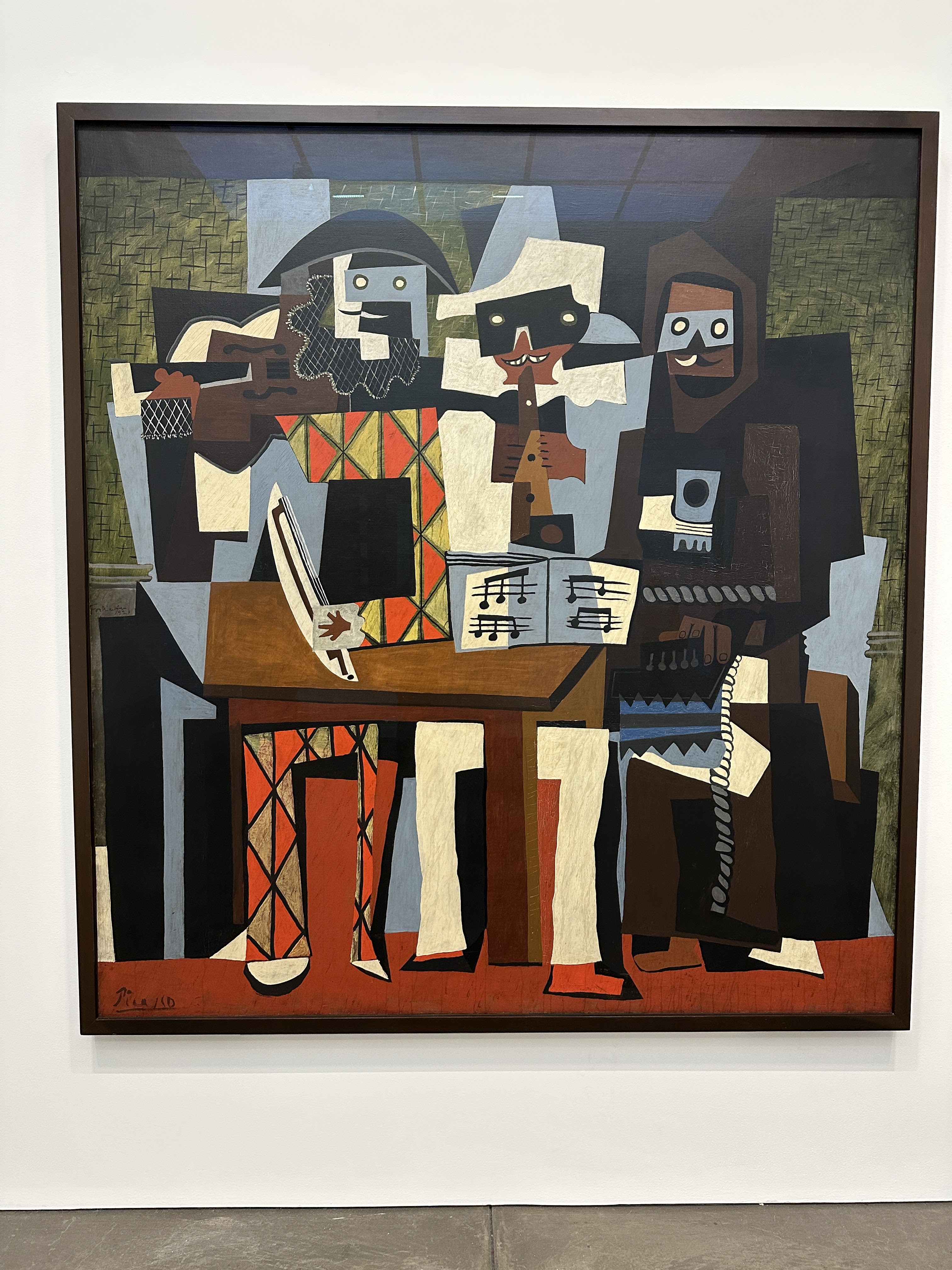
    I was thrilled, while at the Philadelphia Museum of Art, to turn and see one of Picasso’s most famous paintings! I thought “Gosh, I didn’t know it was HERE.”

    Well, it isn’t. It is most certainly a masterpiece, but it is slightly different than the famous painting of the same name and year.

    Three Musicians (1921) uses Synthetic Cubism, which is a “cut-paper style.”( You will know this style from Matisse.) Three masked musicians play various instruments. On the left is a harlequin playing the violin, in the middle is a sailor, maybe, or a clown playing the recorder, and on the right is a Dominican friar. I feel like Picasso is using a sense of humor in creating this. Strong vertical lines and gentle horizontal lines dominate the painting with the occasional diagonal line to introduce some tension. Beneath the whimsical portrayal is the more solid idea of three individuals performing as one entity. It is also a bit poignant; it was painted after the Second World War and has been interpreted as depicting lost prewar friendships.

    Three Musicians, 1921, Pablo Picasso. The Philadelphia Museum of Art

    If interested, you can check out the Museum of Modern Art in New York City to see the other Three Musicians painting from 1921.

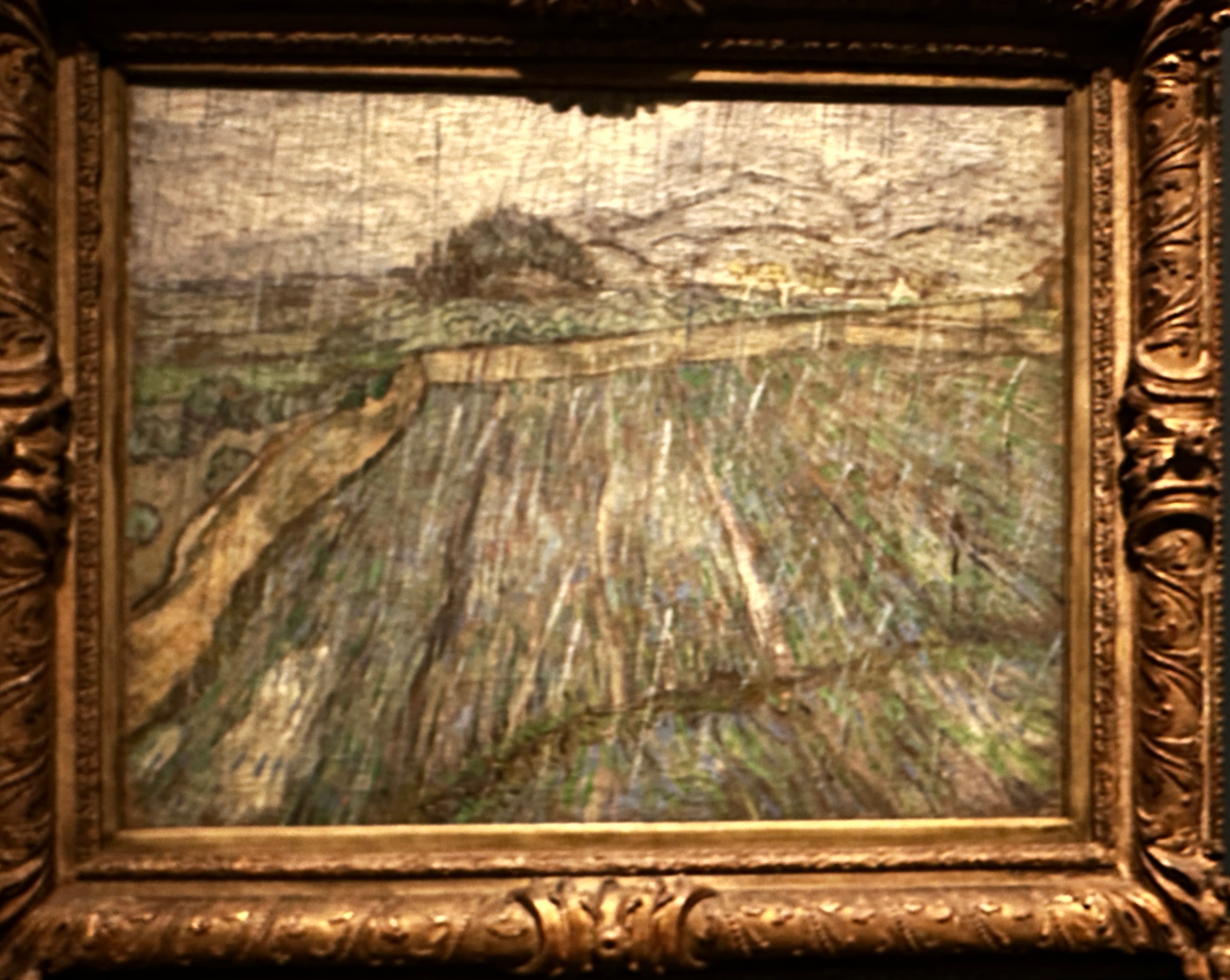
  • Rain by Van Gogh

    I was surprised by this painting because the colors are more muted than I expect from Vincent Van Gogh. The subject matter, rain, is difficult to capture well in painting, yet he has gotten it perfectly. Drops of rain have to capture light just right in order for our eyes to see it. Oftentimes I look out the window to see if it is raining or not, but it takes a moment for my eye to adjust and to see the rain. That is why I think this painting is so marvelous; it has caught that moment when your eye sees the rain drops.

    I like how the storm has muted the colors in the scene. I also note that although Van Gogh uses the traditional vanishing point in this painting, he is more dependent on shape and form to suggest depth rather than using haze or dimness. As ever, I love the strong brush strokes with large amounts of paint applied to the canvas.

    Thank you, Van Gogh, for giving me such a thrill of pleasure!

    Rain, Vincent Van Gogh. Philadelphia Museum of Art, Philadelphia, PA