I’m particularly fascinated by prehistoric cultures as well as cultures from the very, very early days of writing. I’m awed by how they first developed art and abstract thinking. Therefore I was quite excited to be able to see some of the following items at a private museum in Turkey.
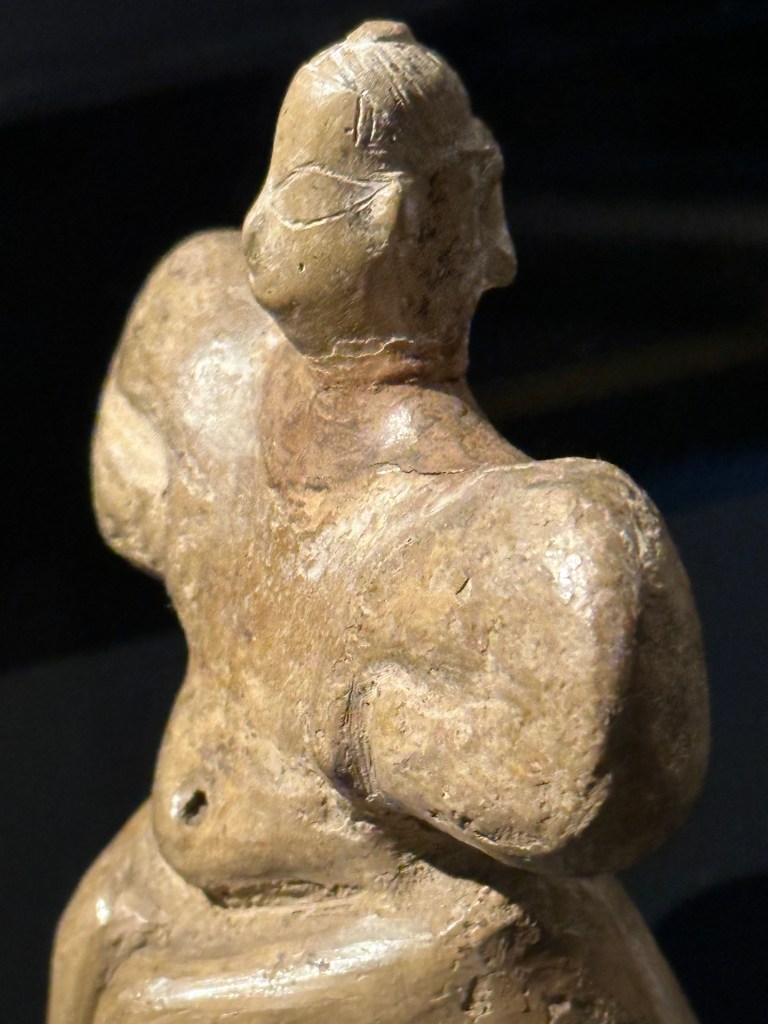
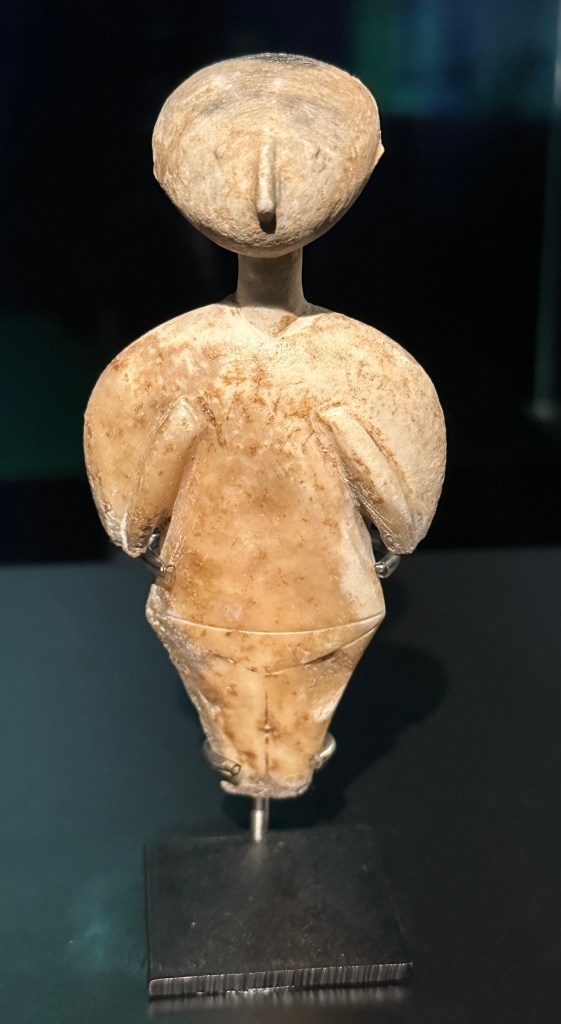
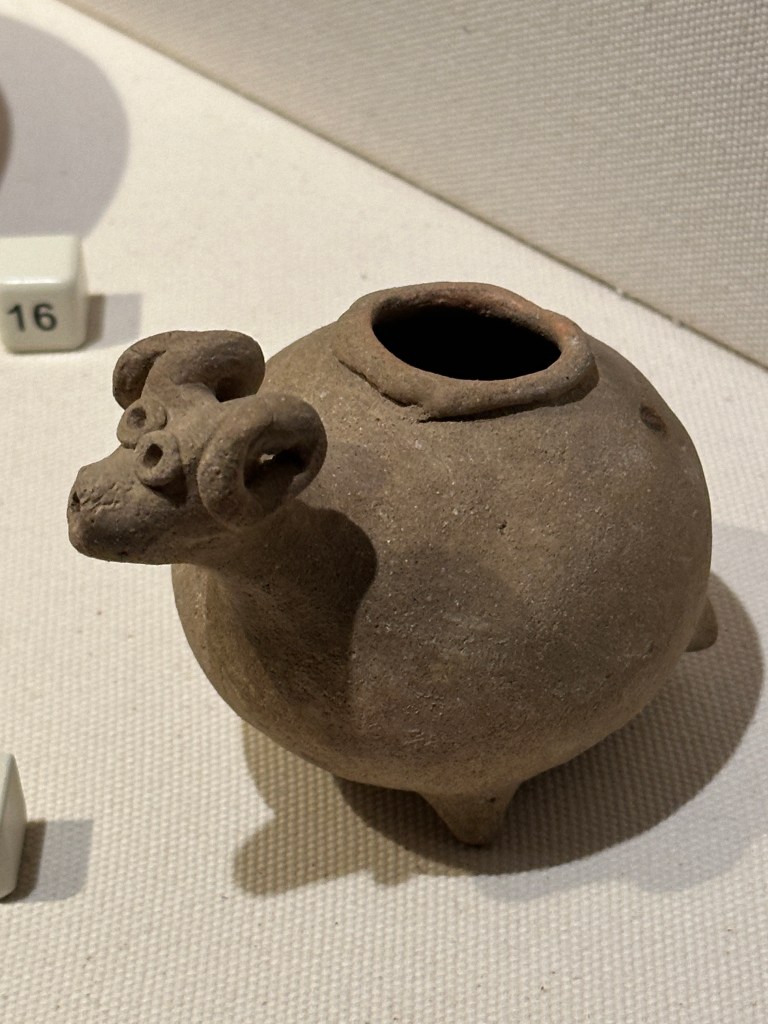
The first two are fertility goddess figures, the first from the late neolithic period about the sixth millennium BCE and the second from the early Iron Age about the third millennium BCE. I love how they capture the female form and how the rounded lushness of the carving portrays beauty and desirability. It’s especially thrilling to me to think about how old these pieces are and that I am looking at the same object that an artist saw in their mind’s eye thousands of years before my existence.
The third photo just made me laugh, so I had to include this cute little guy. The museum has labeled it as a ram-shaped rhyton, which is a drinking horn or cup. It’s from the second millennium BCE.
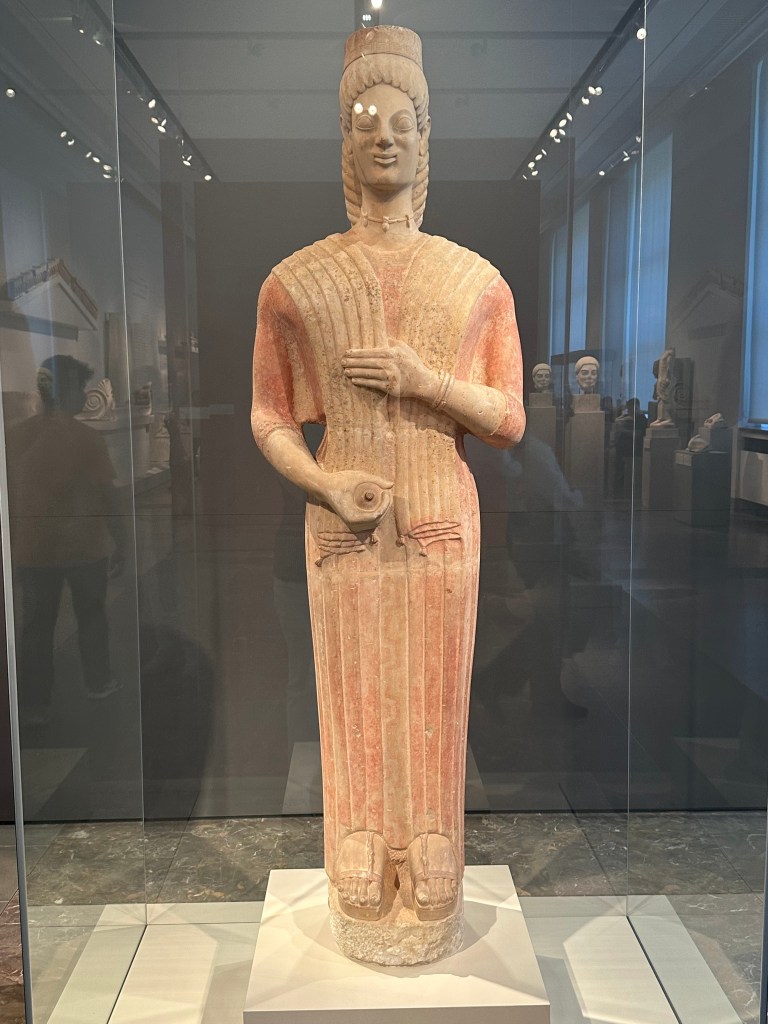
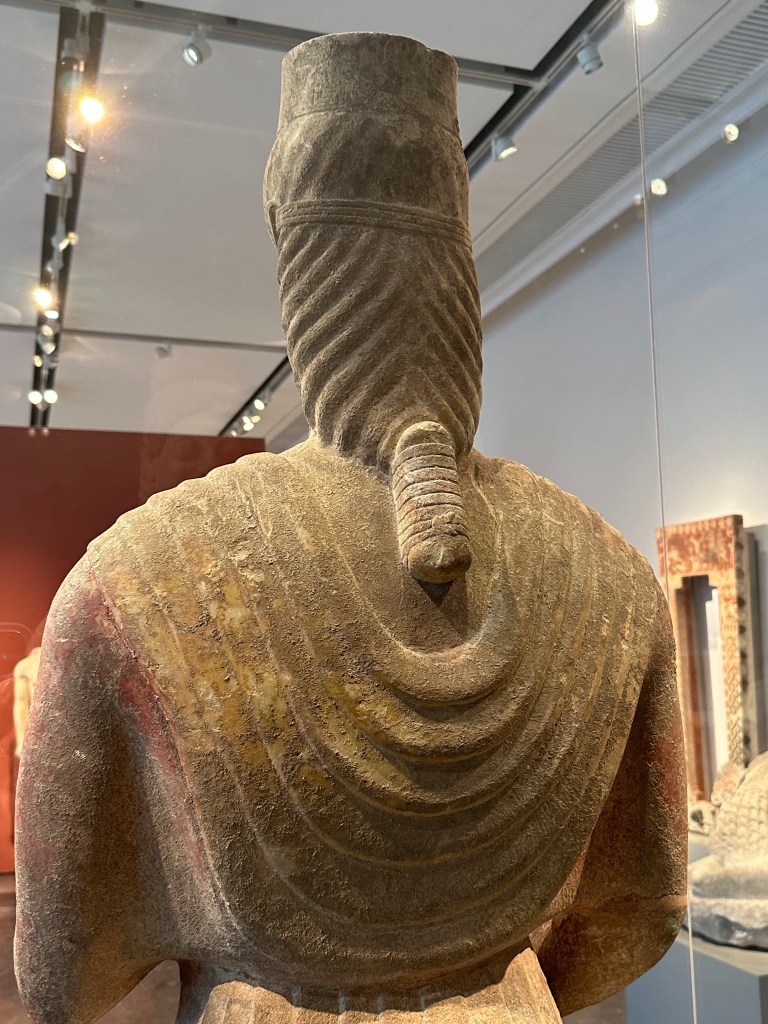
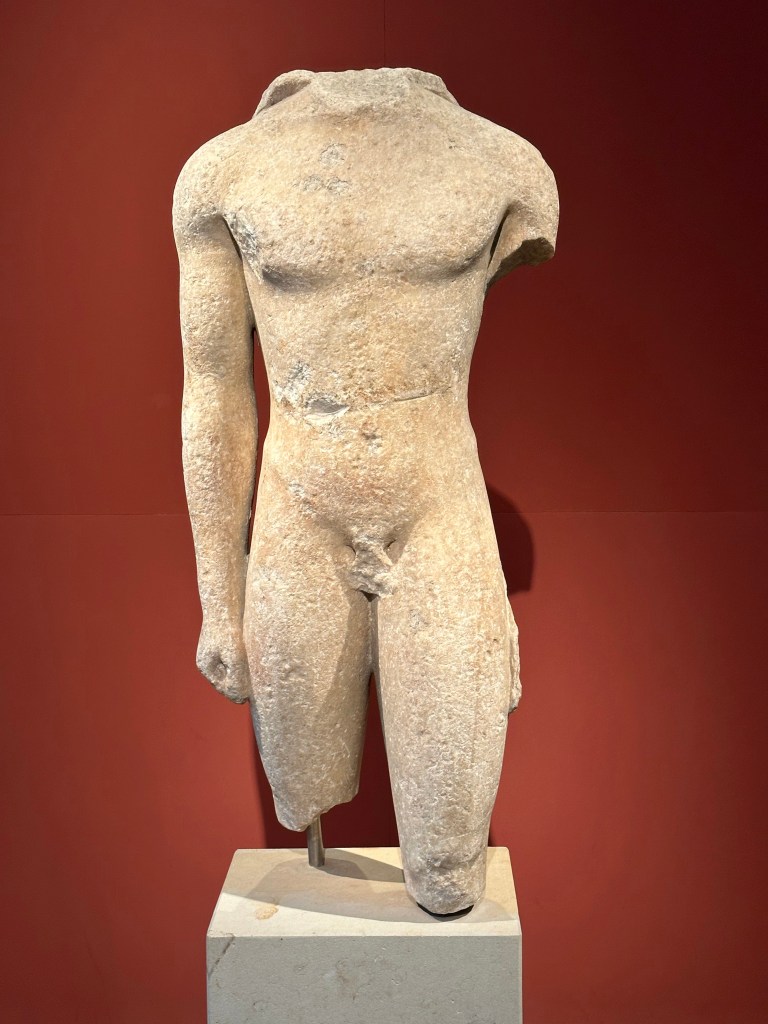
Below I have some photos of a Cycladic idol from the Neues Museum, Berlin.
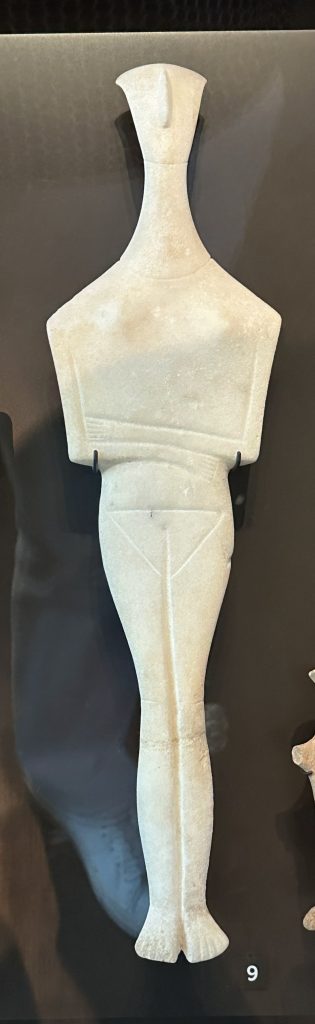
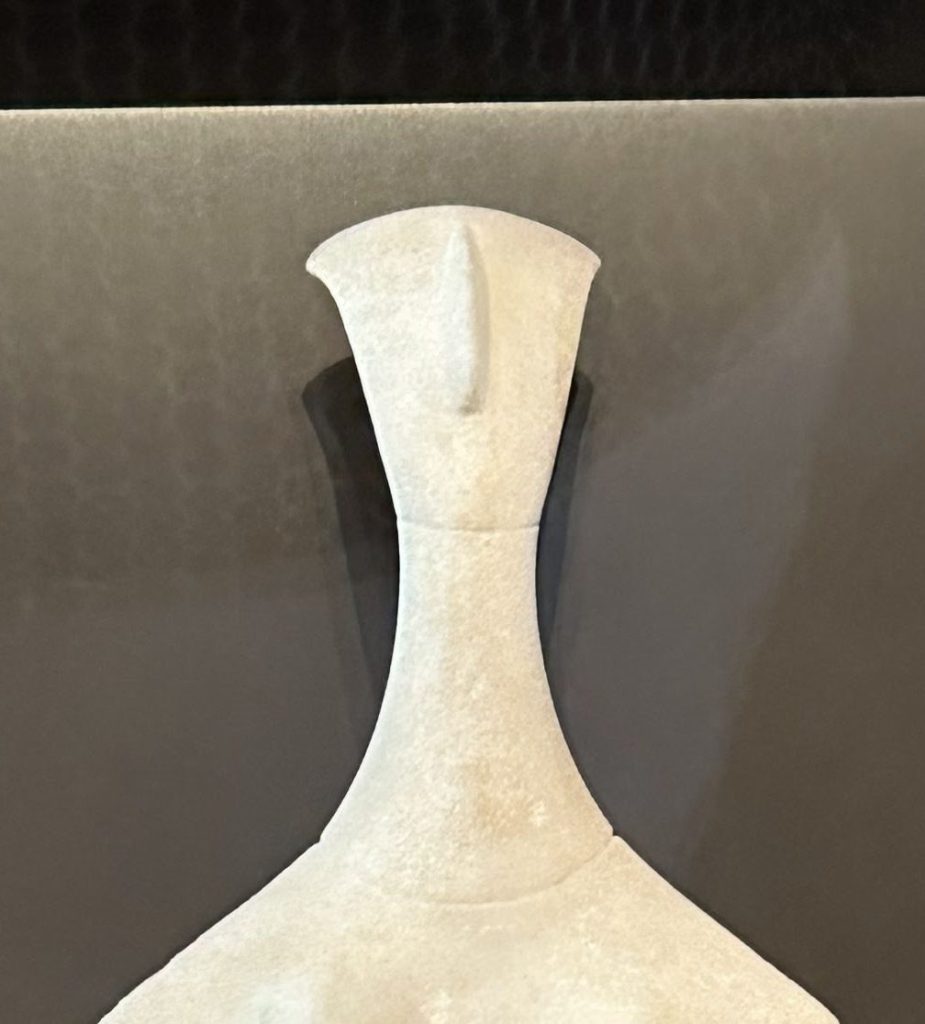
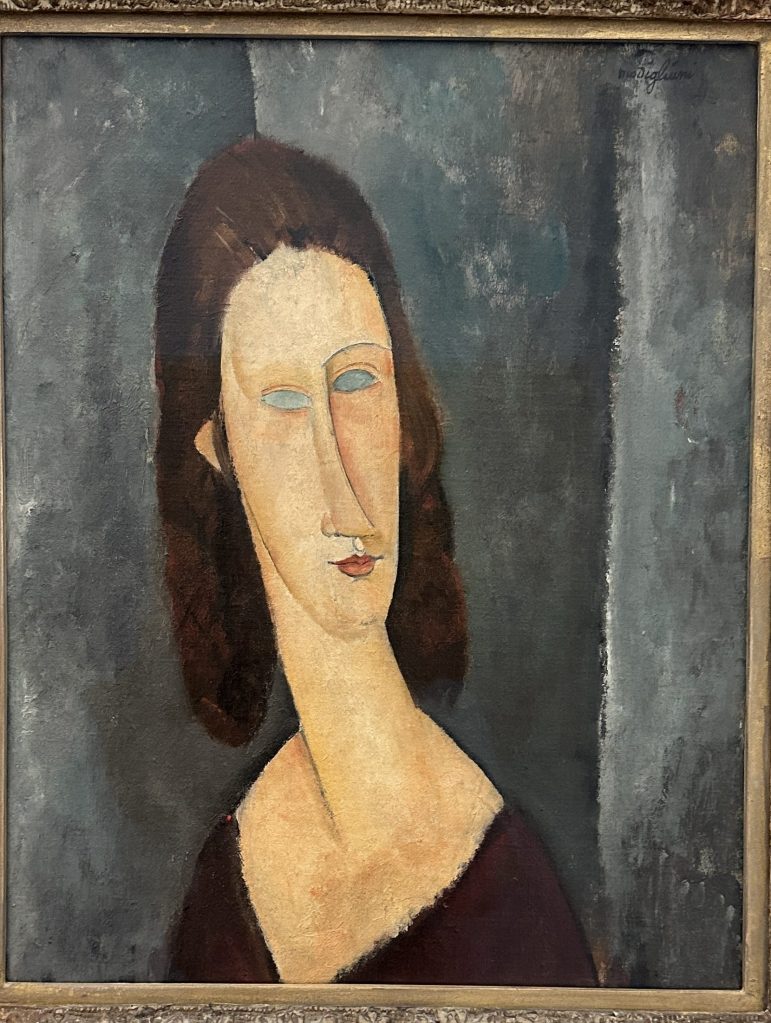
This piece is from the Cycladic Islands some time between 2600 and 1100 BCE. I love the soaring elegant form of the figure, especially the face. It reminds me of Modigliani and I wonder if he was influenced by Cycladic art.
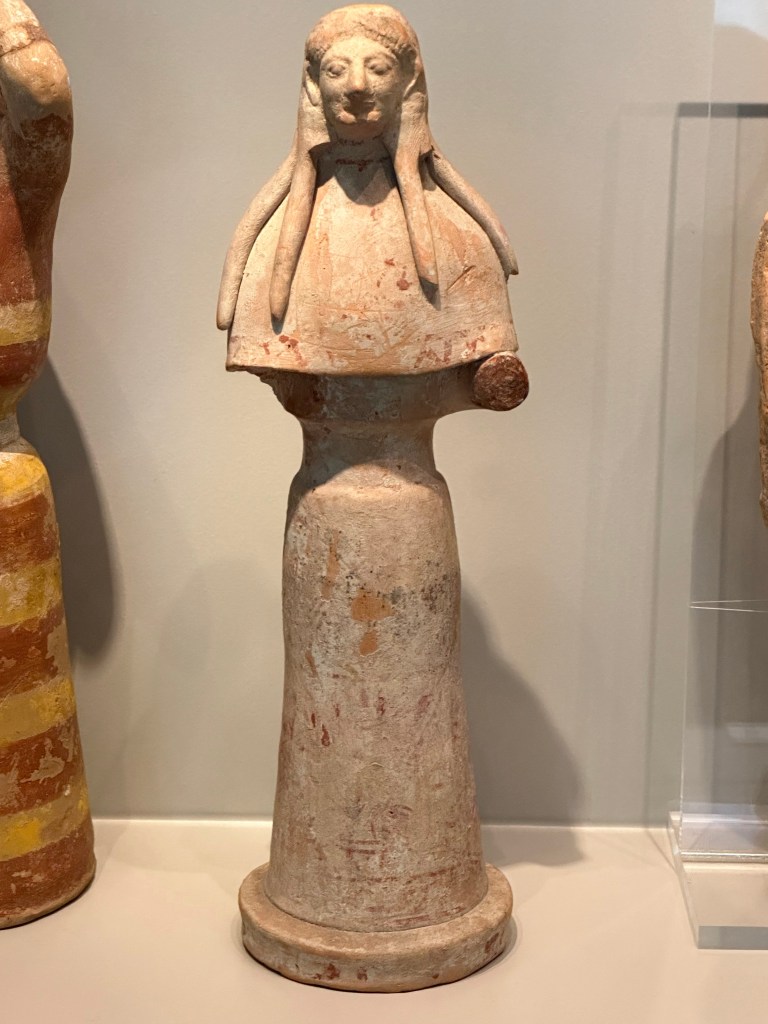
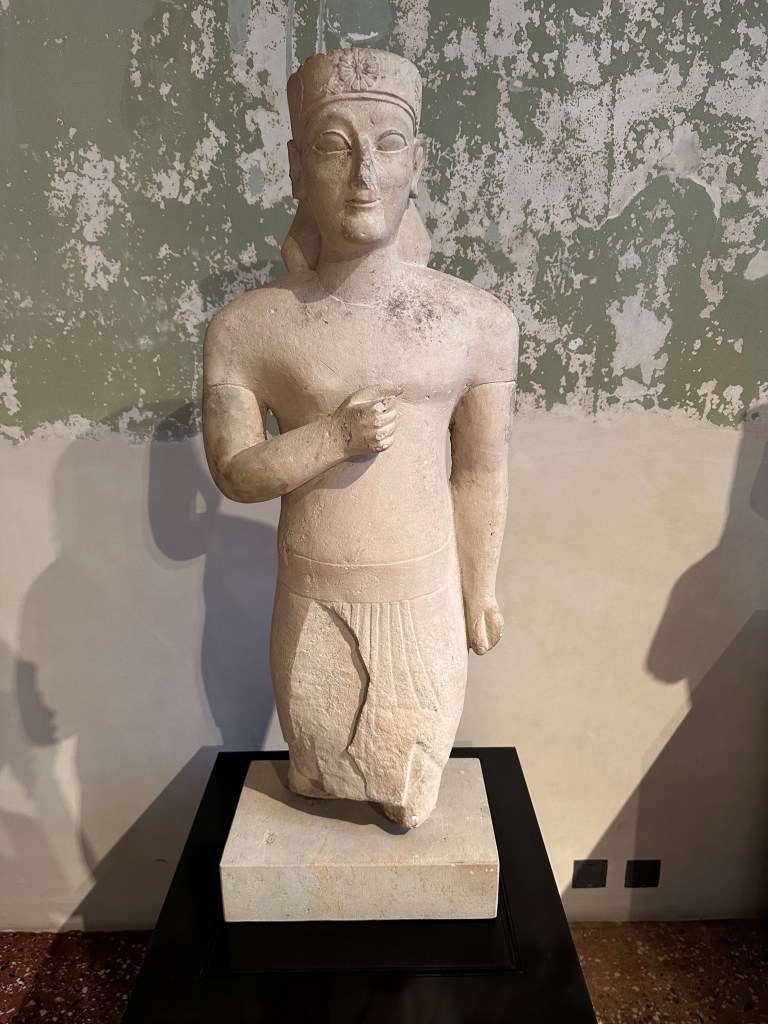

 We must be soldiers for Art!