Tag: history

  • Monteverdi Invents New Genre of Music!

    My chorus director told us that with the 1610 Vespers, Monteverdi ushered in a whole new era in music. What he had invented was the baroque style of music.

    He kind of snuck up on his audience with it. The first movement “Deus in Adjutorium” starts with very conservative chords of an almost Gregorian chant type of timbre, but that is pretty much the end of any late-renaissance period music. From there he created twisting and twining lines of music that lay out almost everything the baroque was going to be. He has polyphonic and homophonic sections. He has flashes of ornamentation. He writes out gorgeous fugues. He has murderously difficult syncopation. He even has a walking bass. Yet all of it is light and facile and it is absolutely beautiful.

    The Washington Bach Consort did a particularly fine rendition of this piece back in April 2026. Maestro Dana Marsh had a refined and elegant interpretation of the work with an emphasis on that which is not obvious in the music and a de-emphasis on that which is. Many modern performers are tempted to blast out those obvious bits, but the maestro treated them with a delicate subtlety.

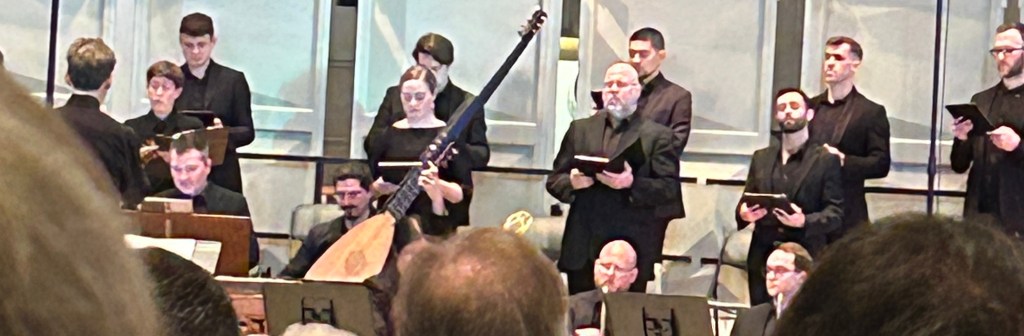
    An extra bonus is being able to see all kinds of fun instruments. The stringed instrument here is a theorbo. The photo is not great but I was very far away. Theorbos comes in many different sizes; this was one of the largest I have seen. You can see where the elongated neck houses a second peg box, which is one of the characteristics of this instrument.
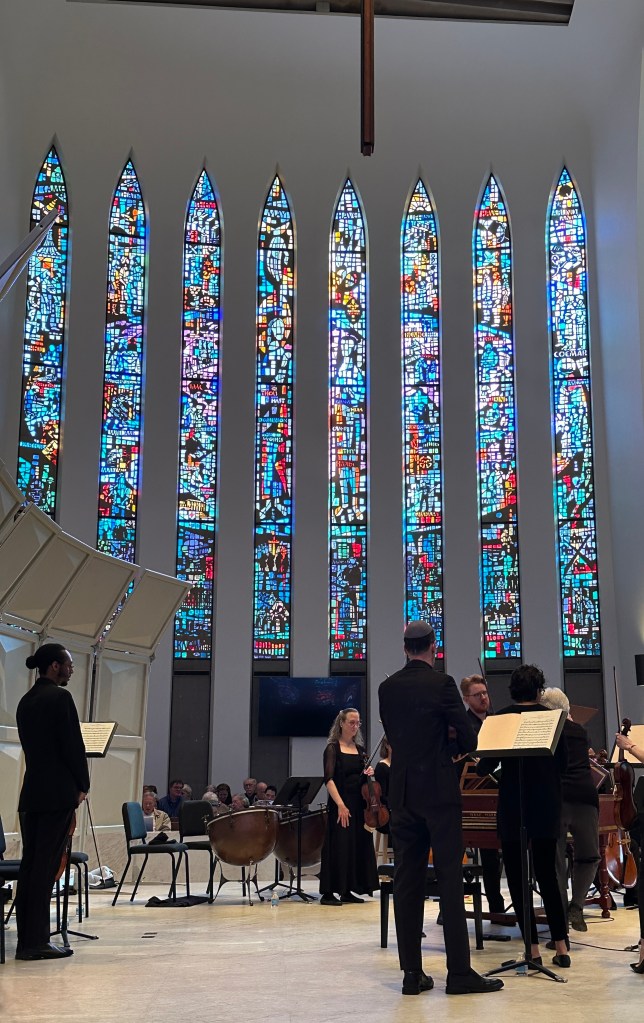
    Yet another bonus is to experience this shimmering, gorgeous music at the National Presbyterian Church in Washington DC. The church has stunning modern architecture. The marvelous stained glass windows give me moments to contemplate the idea of love – especially the love that is between us – which is the most fundamental basis for the Christian faith.
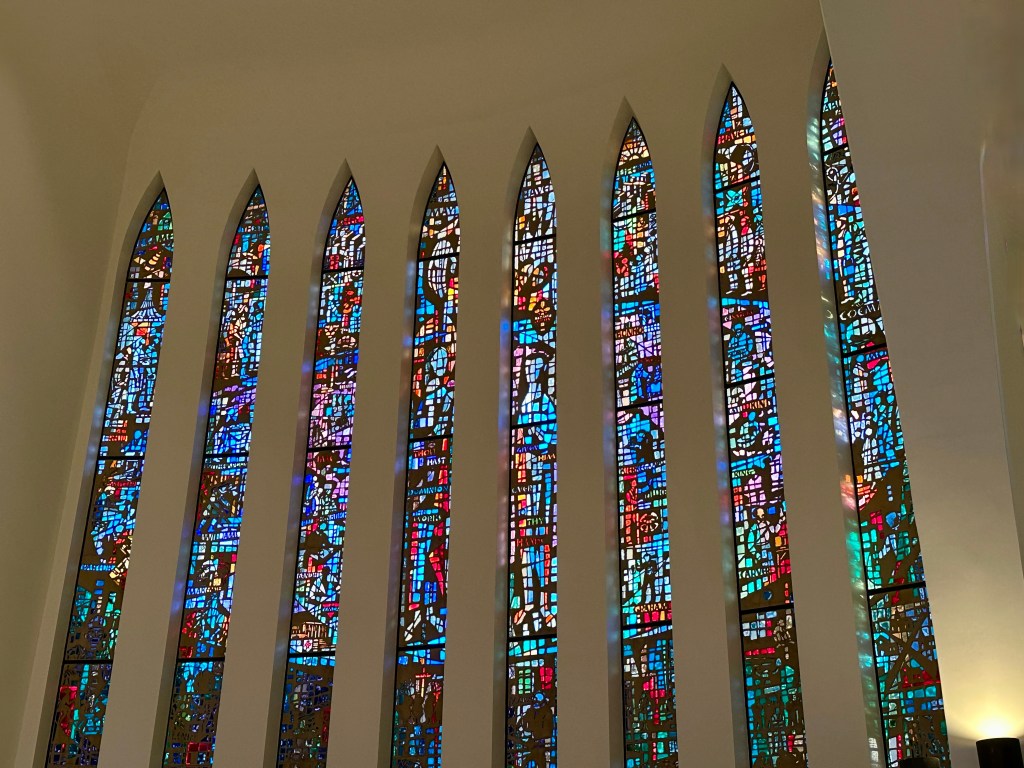
    Keep looking for beauty in both ordinary and extraordinary spaces!
  • The First Stirrings of Abstract Thought

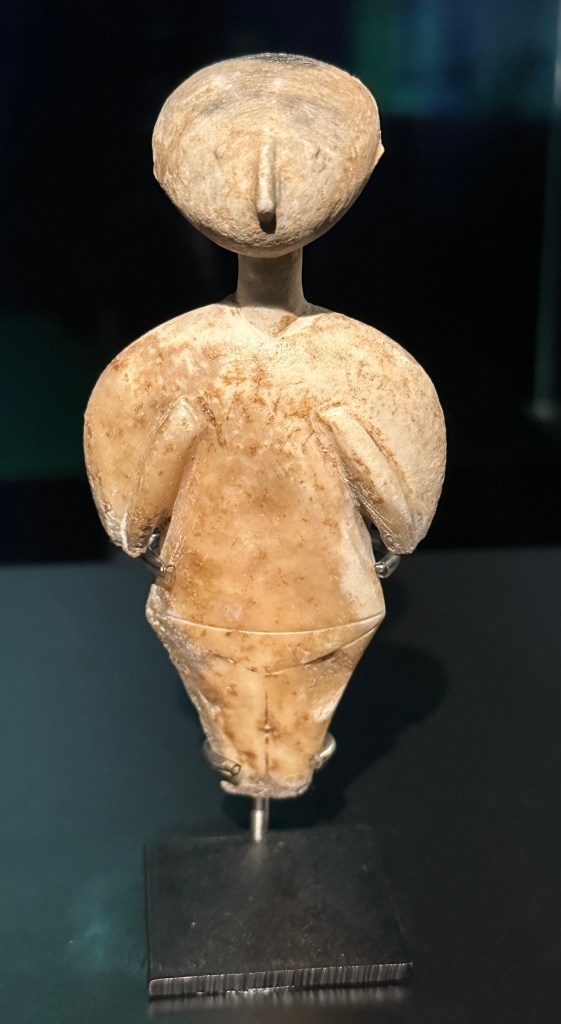
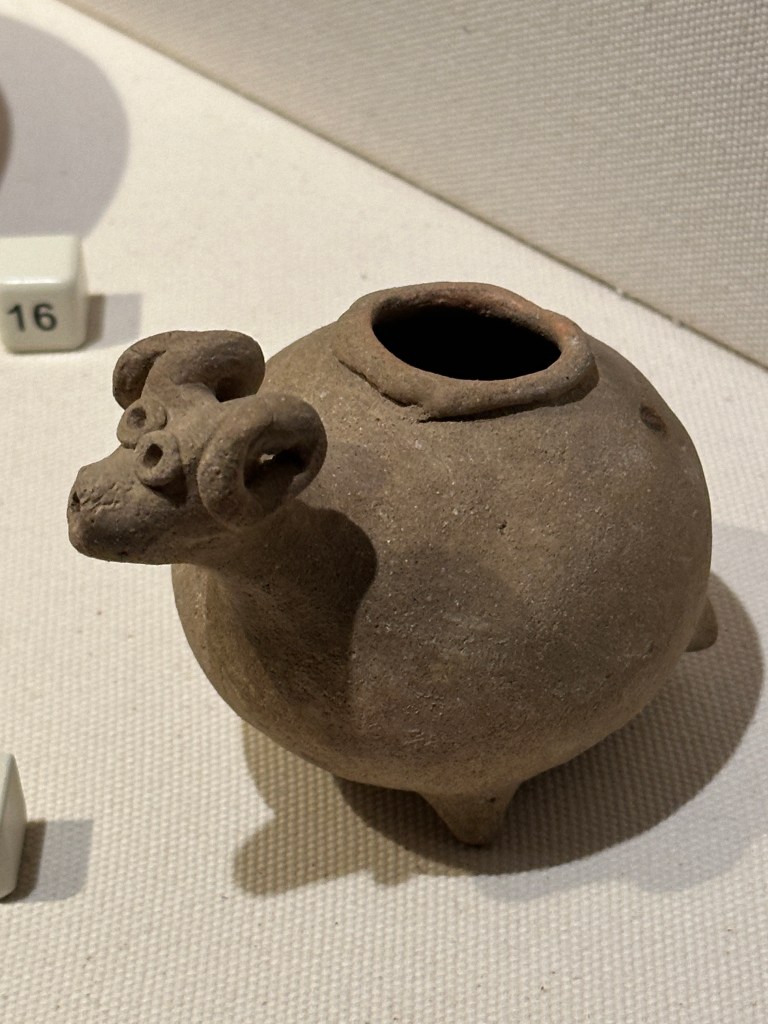
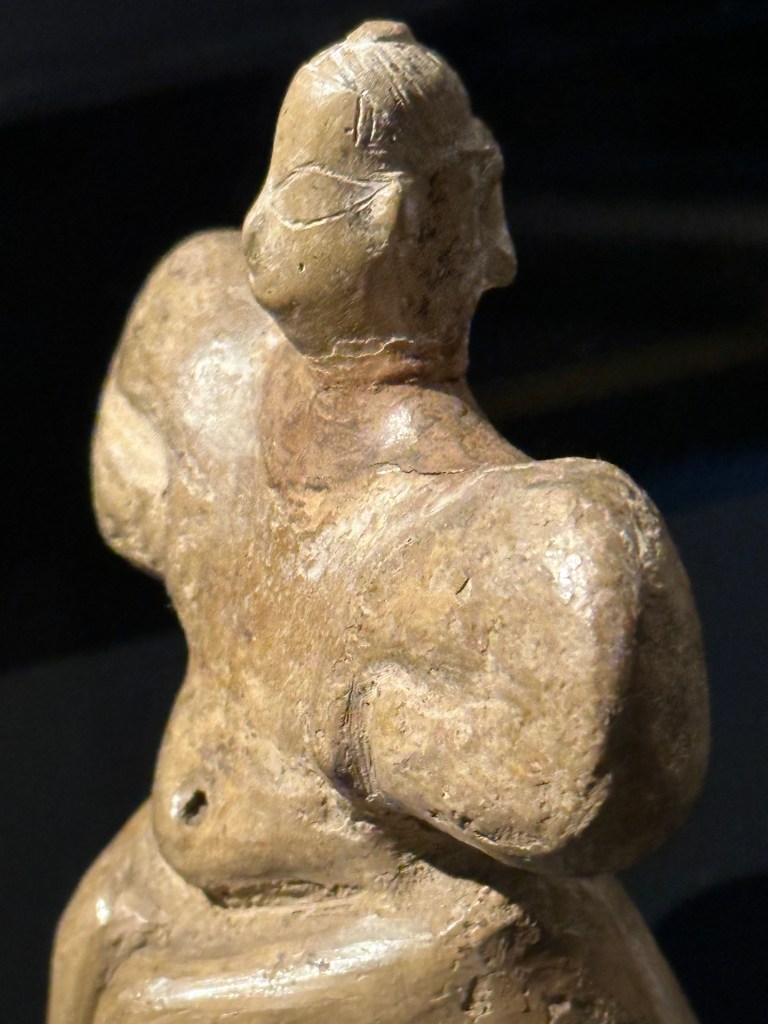
    I’m particularly fascinated by prehistoric cultures as well as cultures from the very, very early days of writing. I’m awed by how they first developed art and abstract thinking. Therefore I was quite excited to be able to see some of the following items at a private museum in Turkey.

    The first two are fertility goddess figures, the first from the late neolithic period about the sixth millennium BCE and the second from the early Iron Age about the third millennium BCE. I love how they capture the female form and how the rounded lushness of the carving portrays beauty and desirability. It’s especially thrilling to me to think about how old these pieces are and that I am looking at the same object that an artist saw in their mind’s eye thousands of years before my existence.

    The third photo just made me laugh, so I had to include this cute little guy. The museum has labeled it as a ram-shaped rhyton, which is a drinking horn or cup. It’s from the second millennium BCE.

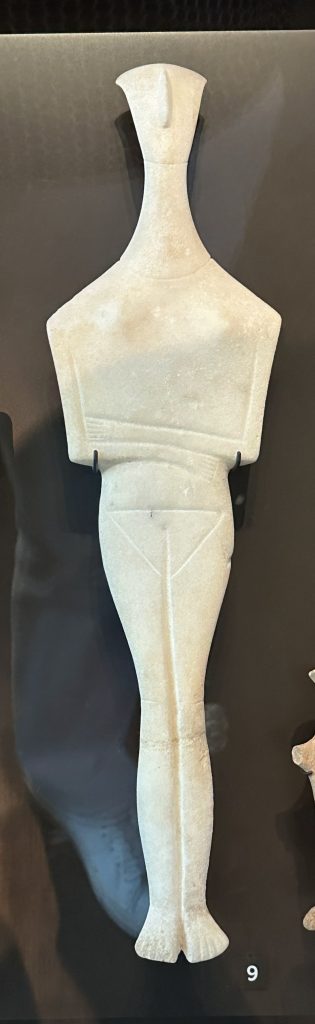
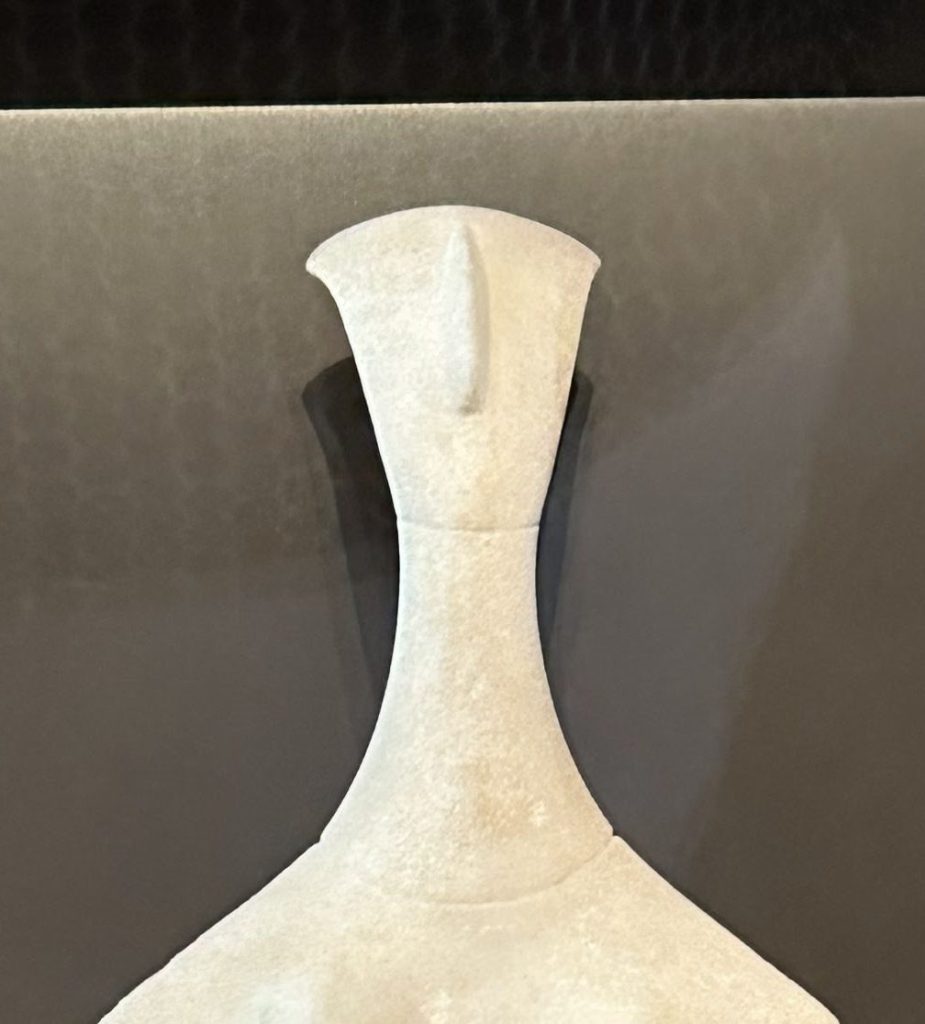
    Below I have some photos of a Cycladic idol from the Neues Museum, Berlin.

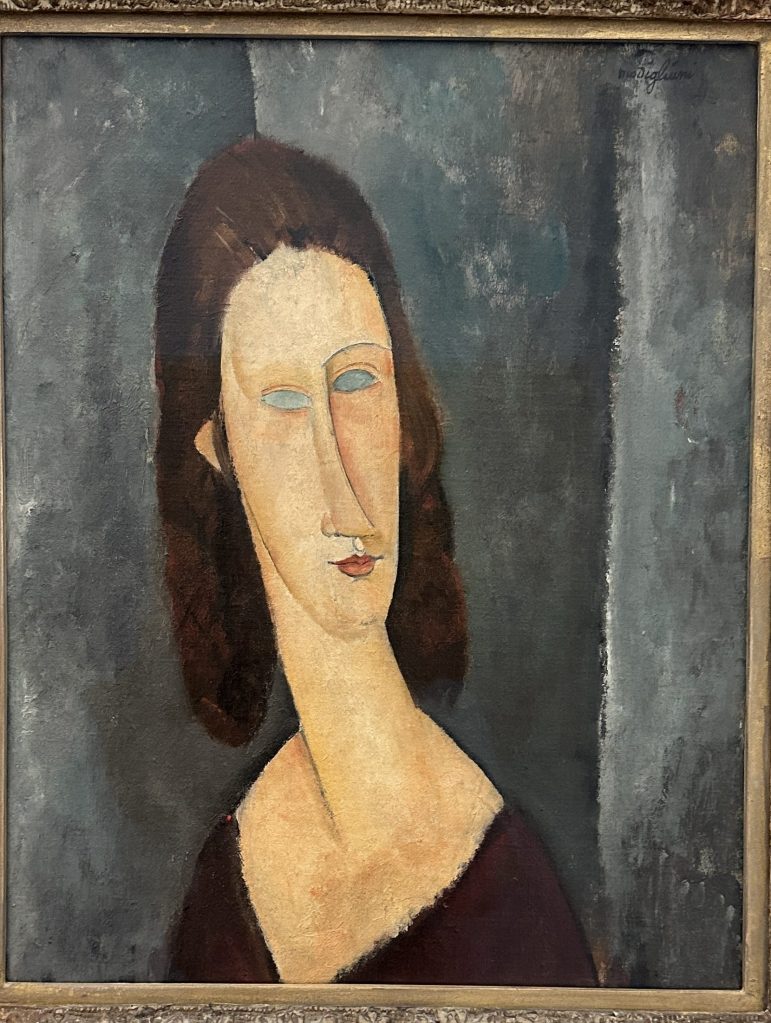
    This piece is from the Cycladic Islands some time between 2600 and 1100 BCE. I love the soaring elegant form of the figure, especially the face. It reminds me of Modigliani and I wonder if he was influenced by Cycladic art.

  • The Greatness of Mankind

    This morning in The Washington Post Robin Givhan wrote about the arts “At their best, the arts help people to think more deeply and more broadly. They help people grasp commonalities across expansive divides. Sometimes they highlight the greatness of man, but more often and more powerfully, they remind people of their fallibility.”

    In this blog I primarily want to talk about how the arts highlight the greatness of man because I want to celebrate what we humans can do that is superlative.

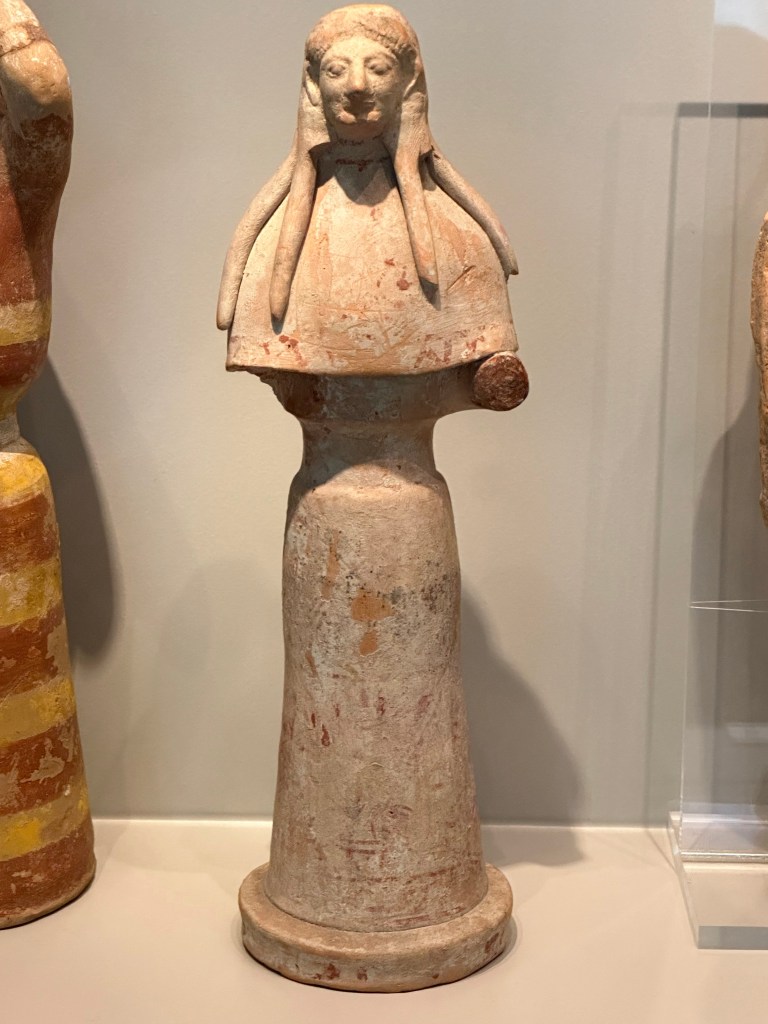
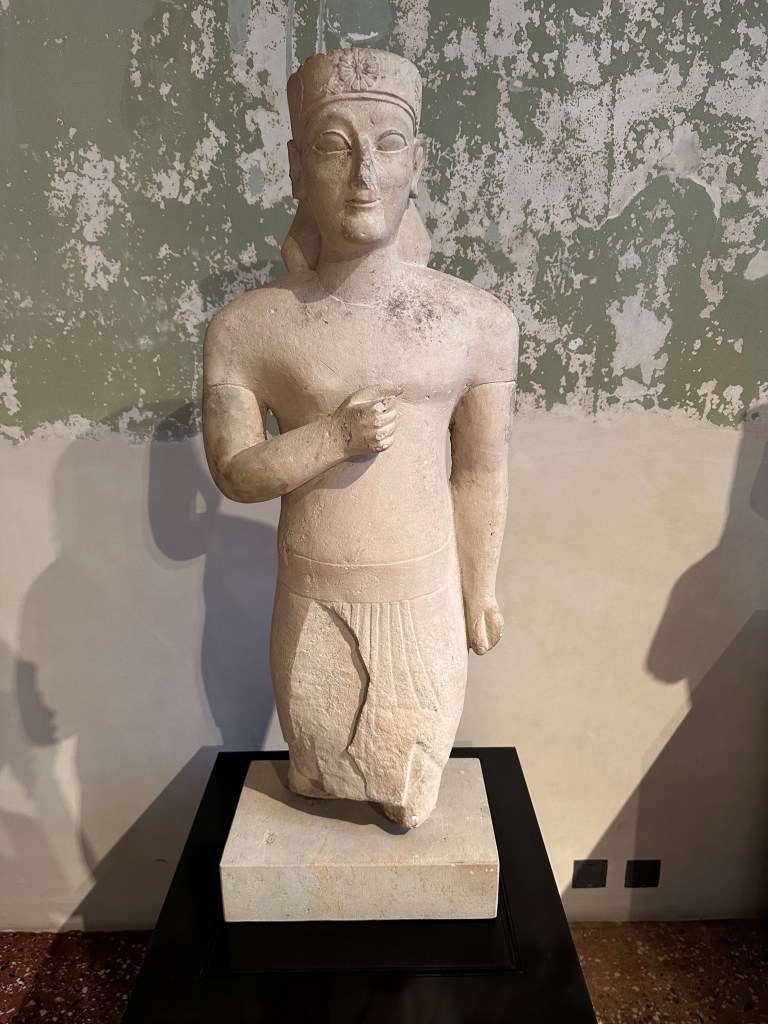
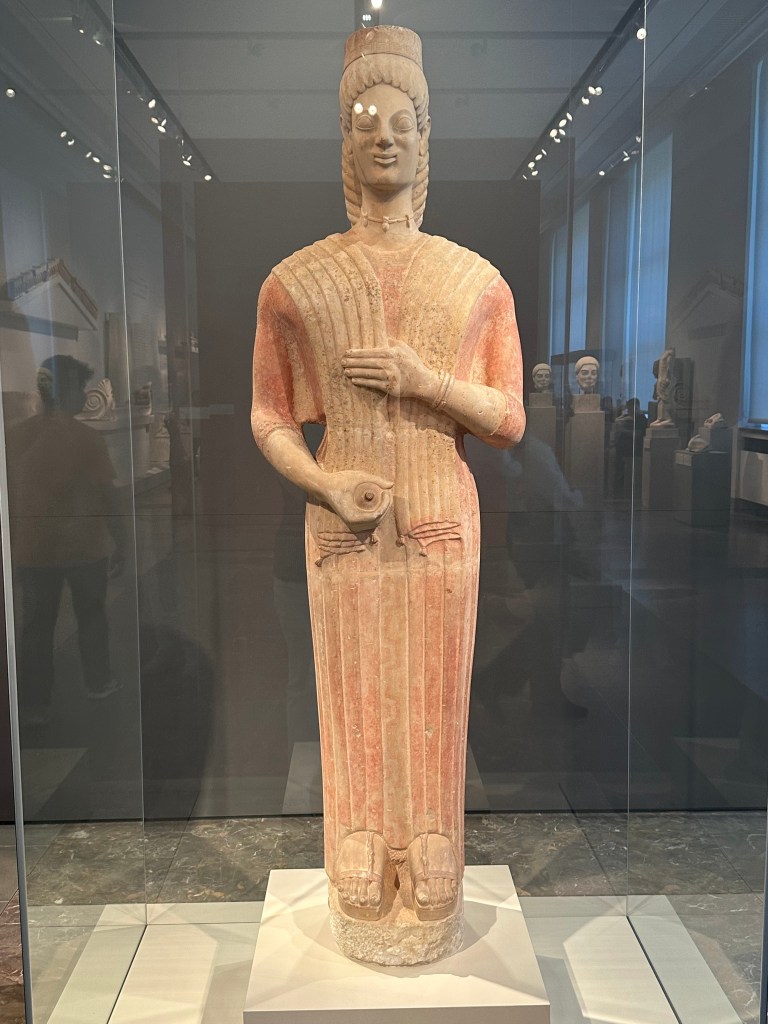
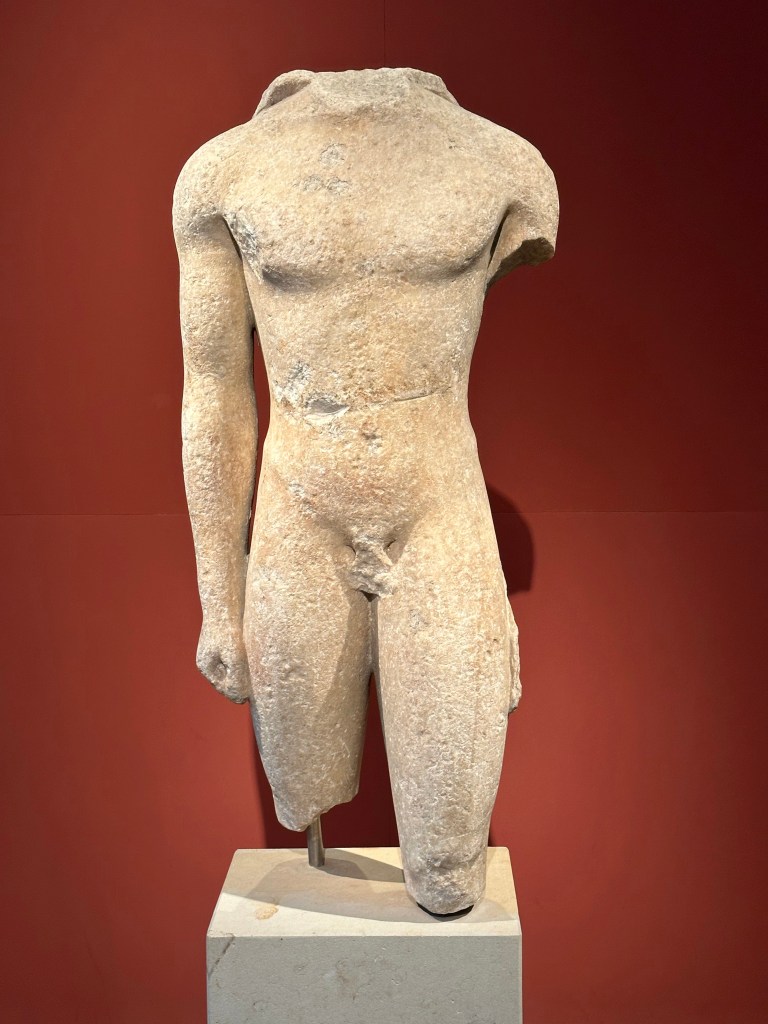
    Today I want to discuss Greek sculpture during the start of the great flowering of the arts in Greek antiquity. Early Greek sculpture, usually called the archaic style, was a highly realistic style that was, however, still rather stiff. Note the beauty of the rendering of the human figure, yet they are still not quite naturalistic. Arms are held stiffly at the side or otherwise close to the body. They nonetheless celebrate the human form.

    So to Ms. Givhan’s point, these help us to realize the commonalities humanity across an expansive divide of time and space.

    Tomorrow I’ll write about the succeeding period in Greek sculpture usually referred to as the classical style.