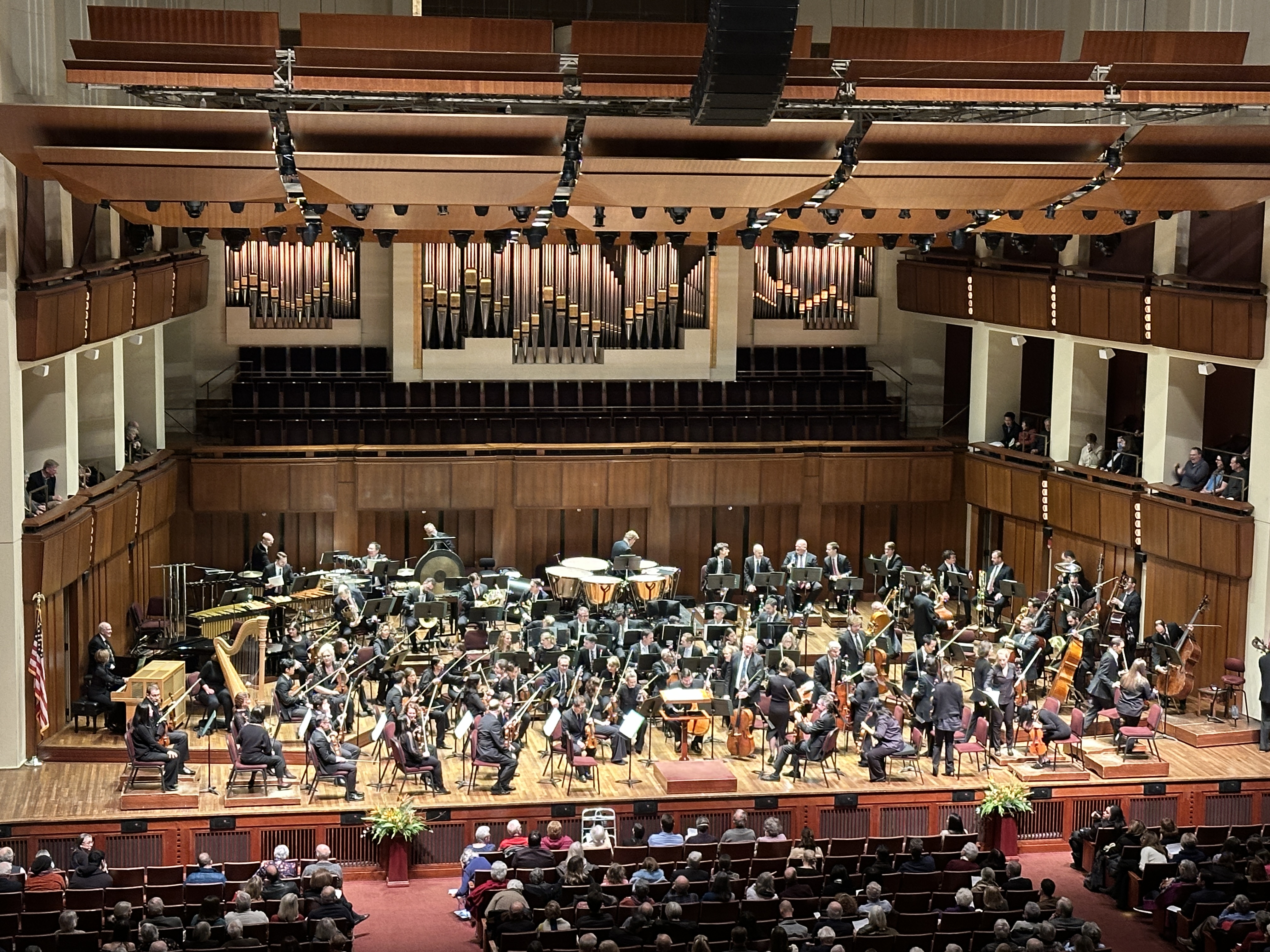
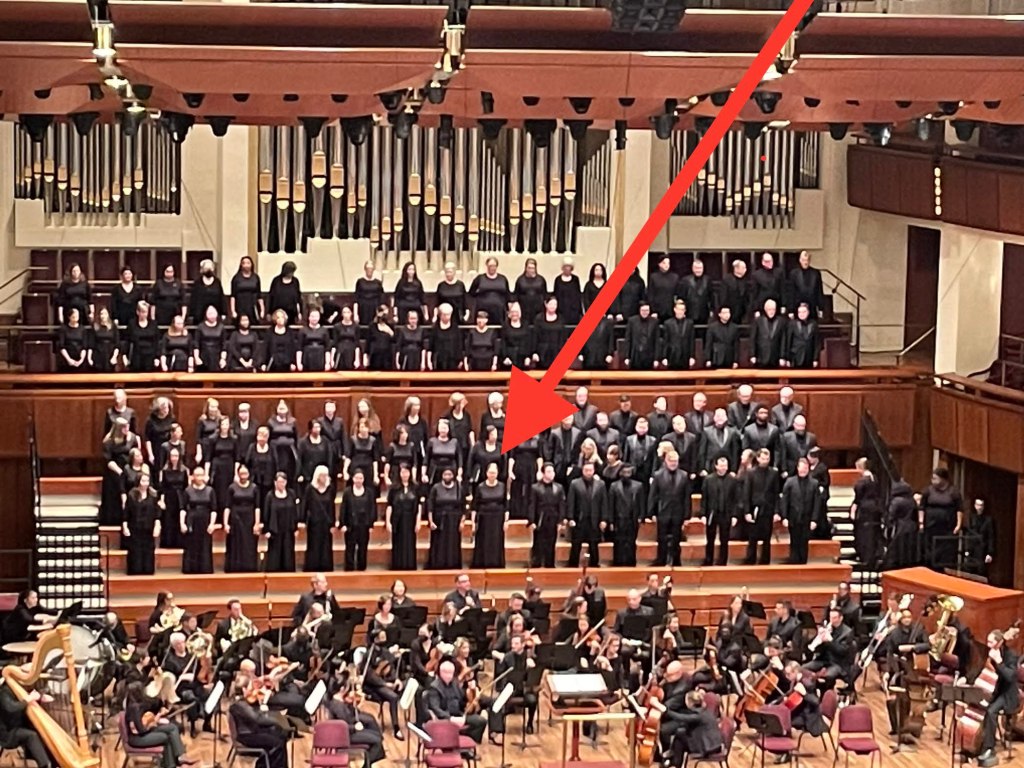
Saturday night I heard a beautiful concert at The Kennedy Center that was performed by the National Symphony Orchestra (NSO). I’ve said here before how much the NSO has changed with the arrival of Maestro Noseda, becoming one of the best orchestras in the country. I was rapt with the beauty of their playing on Saturday night.
Saint-Saens is probably best known for The Carnival of the Animals and Danse Macabre, but on Saturday we heard his cello concerto played by Edgar Moreau. As the program notes stated, the main theme on the cello spirals down two octaves, introducing melodic and rhythmic seeds that the composer then works out in the development sections. The searingly beautiful slow passages in a lyrical minor key really haunted my heart.
The Tchaikovsky piece was his “Manfred” symphony, which was based on the poem by Byron. The opening movement is painted in despairing colors using minor keys and yet contains elements of hope. The second and third movements have elfin sylphlike melodies that make the listener wistful. The powerful fourth movement is the dramatic heart of the piece. What I loved most of all was the fugue played in the string section. Starting in the violas, then second violins, followed by first violins it had gasping beauty when the lower strings (cellos and double basses) came in as the fourth voice. In a bit of fun, the organ comes in near the end with really dramatic chords, first as a solo then with the rest of the orchestra.
I wasn’t familiar with either piece before going to the concert; now I’m looking for some recordings so I can hear those pieces again in my pursuit of what is beautiful. I want to celebrate that mankind developed fugues, major and minor keys, exquisite compositions, and gifted performing artists.
 We must be soldiers for Art!