Tag: travel

  • The First Stirrings of Abstract Thought

    I’m particularly fascinated by prehistoric cultures as well as cultures from the very, very early days of writing. I’m awed by how they first developed art and abstract thinking. Therefore I was quite excited to be able to see some of the following items at a private museum in Turkey.
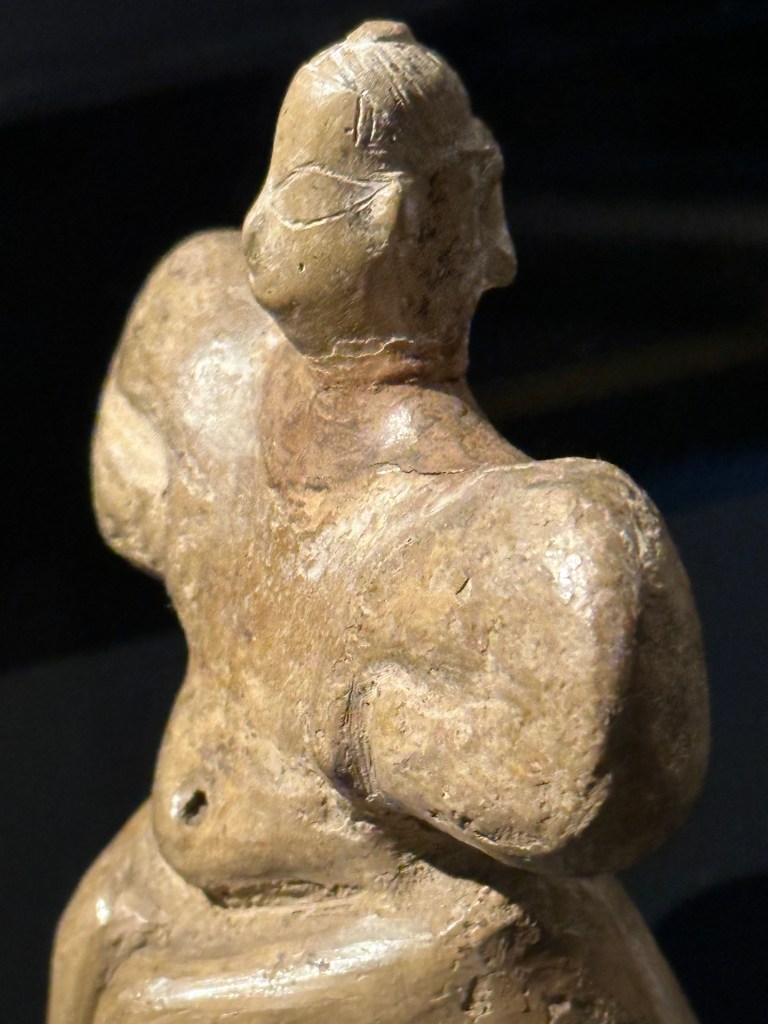
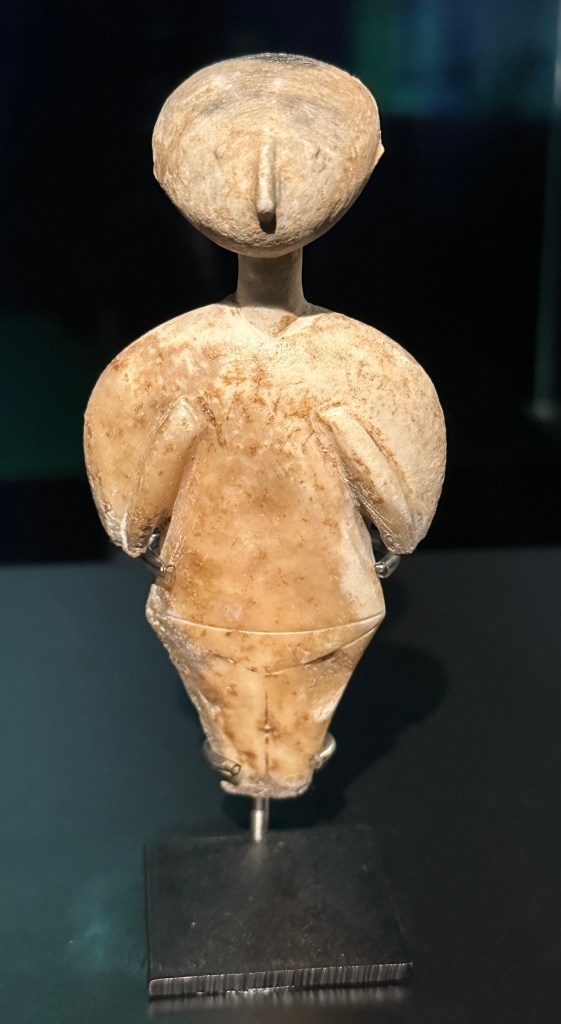
    The first two are fertility goddess figures, the first from the late neolithic period about the sixth millennium BCE and the second from the early Iron Age about the third millennium BCE. I love how they capture the female form and how the rounded lushness of the carving portrays beauty and desirability. It’s especially thrilling to me to think about how old these pieces are and that I am looking at the same object that an artist saw in their mind’s eye thousands of years before my existence.

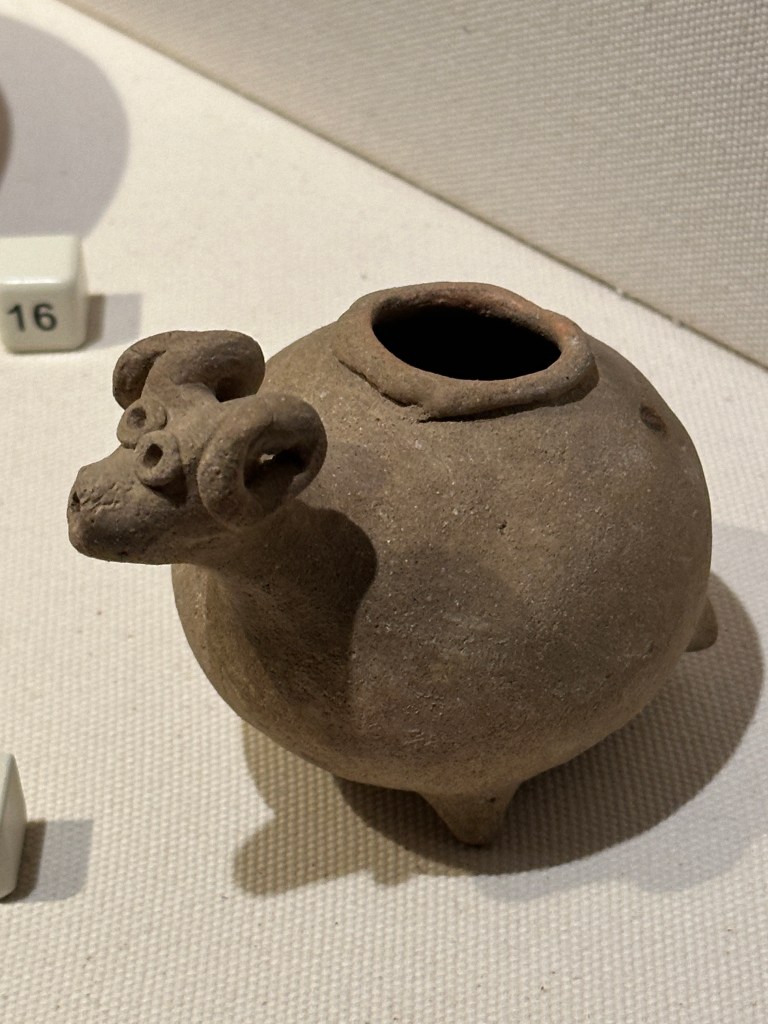
    The third photo just made me laugh, so I had to include this cute little guy. The museum has labeled it as a ram-shaped rhyton, which is a drinking horn or cup. It’s from the second millennium BCE.

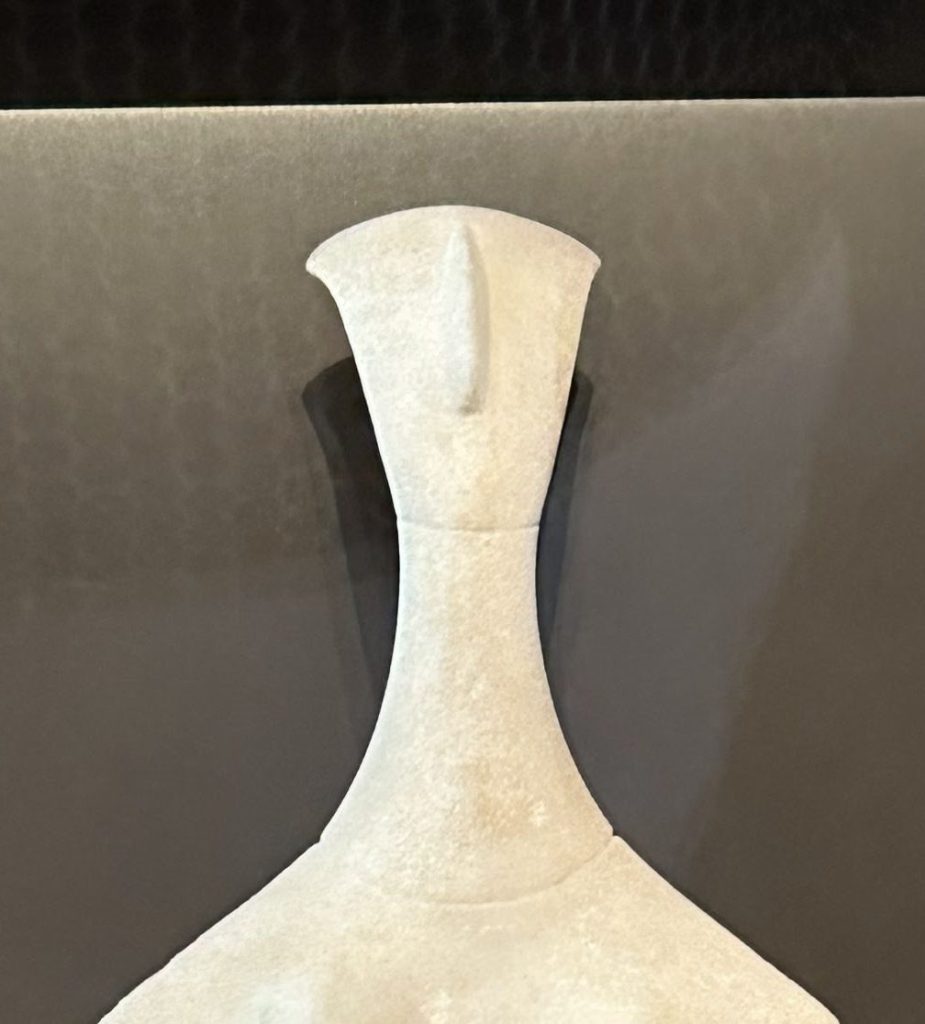
    Below I have some photos of a Cycladic idol from the Neues Museum, Berlin.
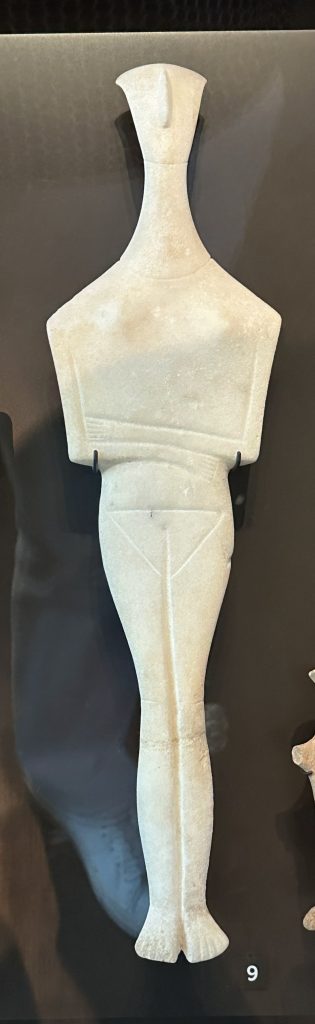
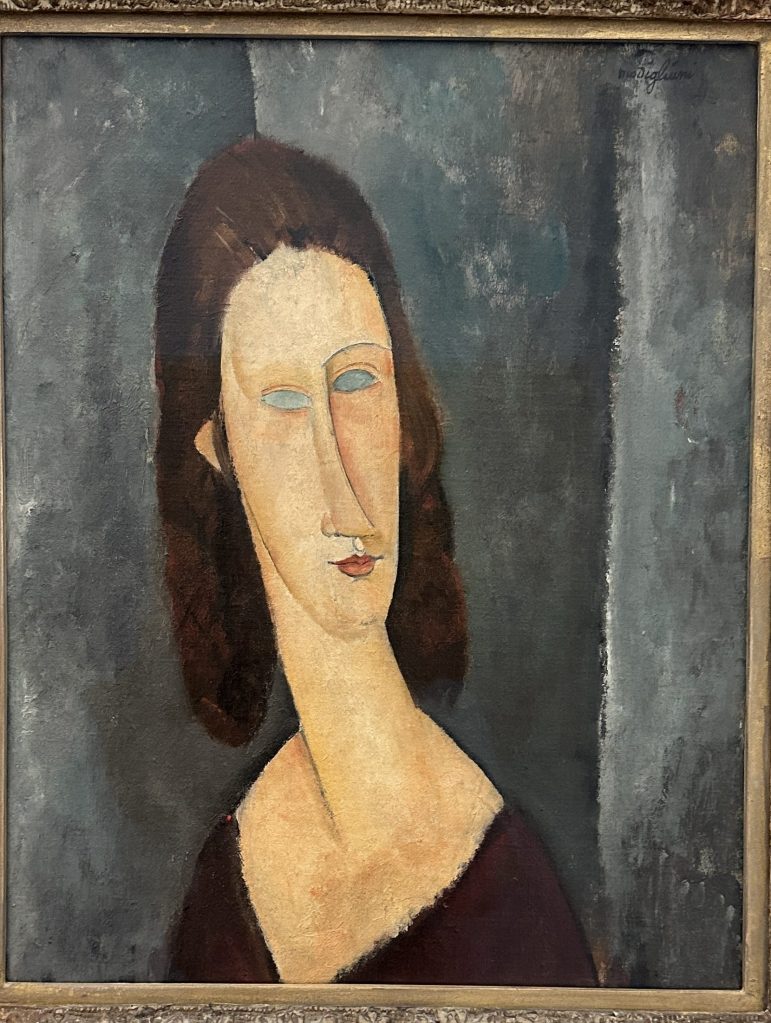
    This piece is from the Cycladic Islands some time between 2600 and 1100 BCE. I love the soaring elegant form of the figure, especially the face. It reminds me of Modigliani and I wonder if he was influenced by Cycladic art.
  • The Greatness of Mankind

    This morning in The Washington Post Robin Givhan wrote about the arts “At their best, the arts help people to think more deeply and more broadly. They help people grasp commonalities across expansive divides. Sometimes they highlight the greatness of man, but more often and more powerfully, they remind people of their fallibility.”

    In this blog I primarily want to talk about how the arts highlight the greatness of man because I want to celebrate what we humans can do that is superlative.

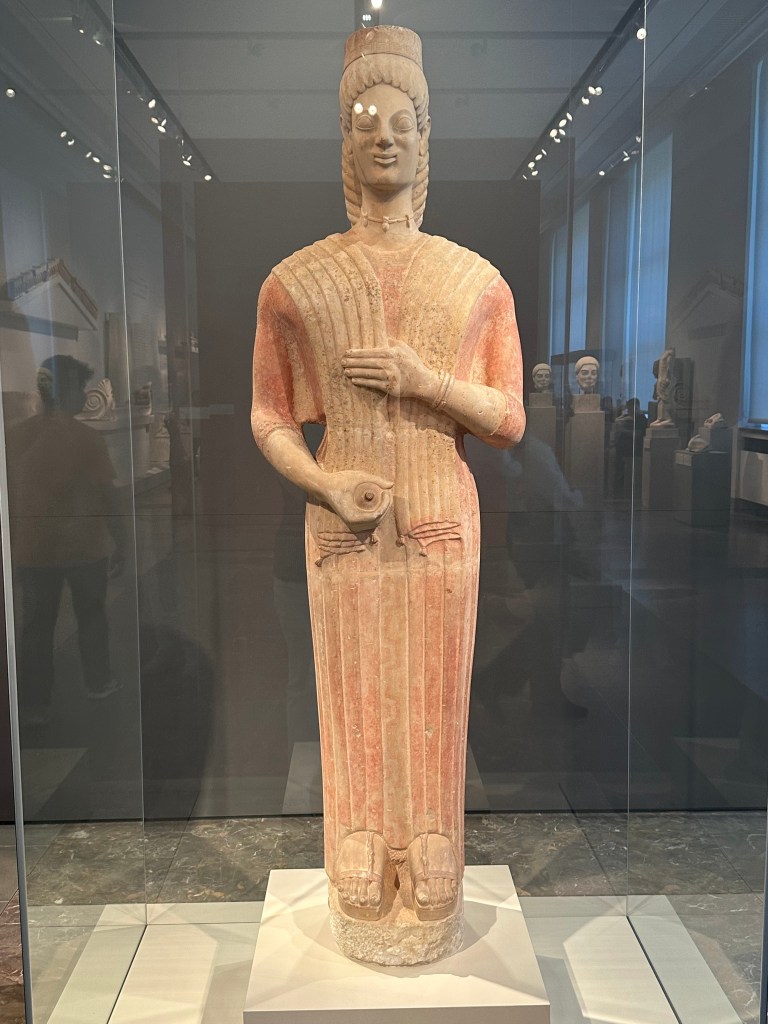
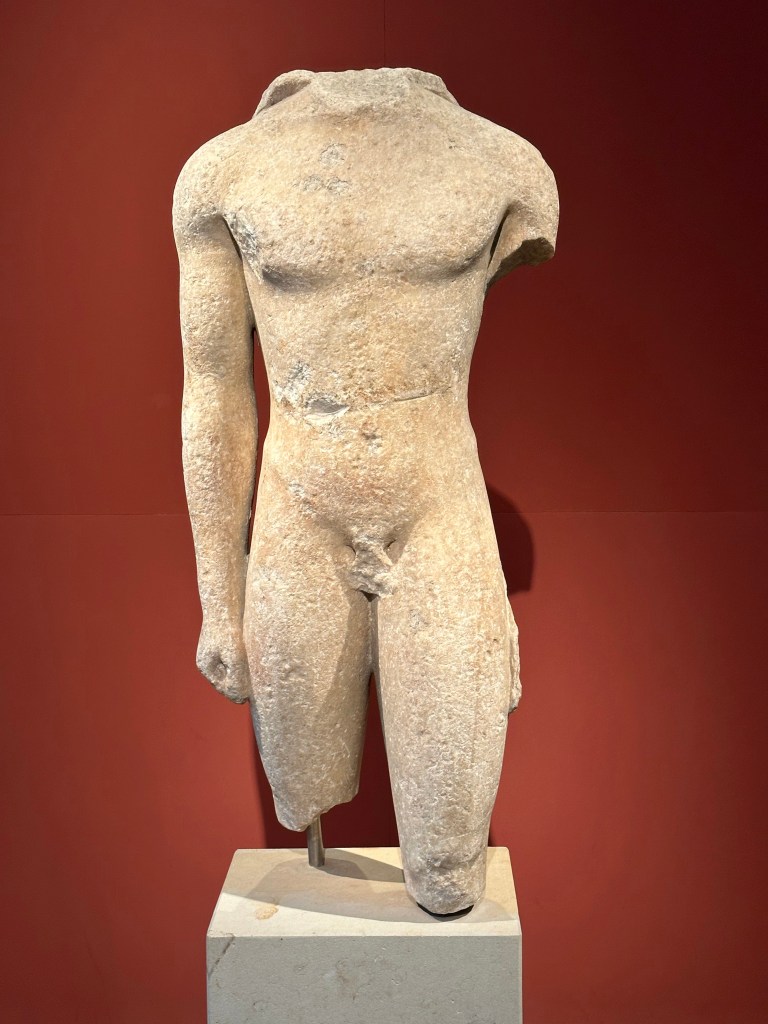
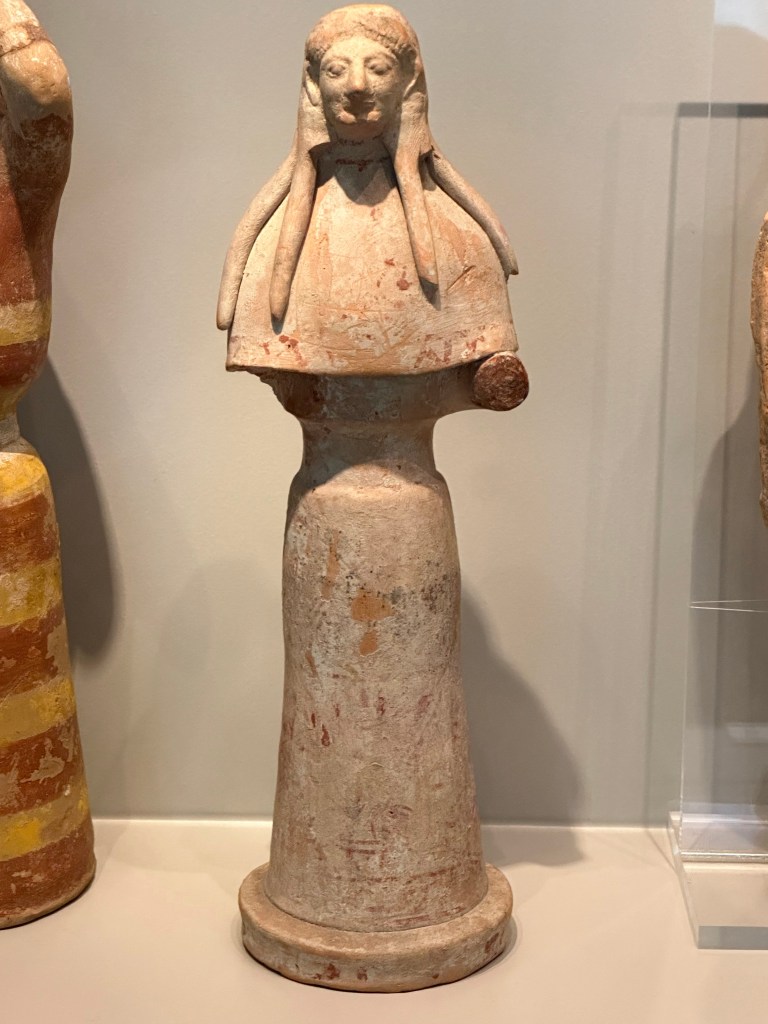
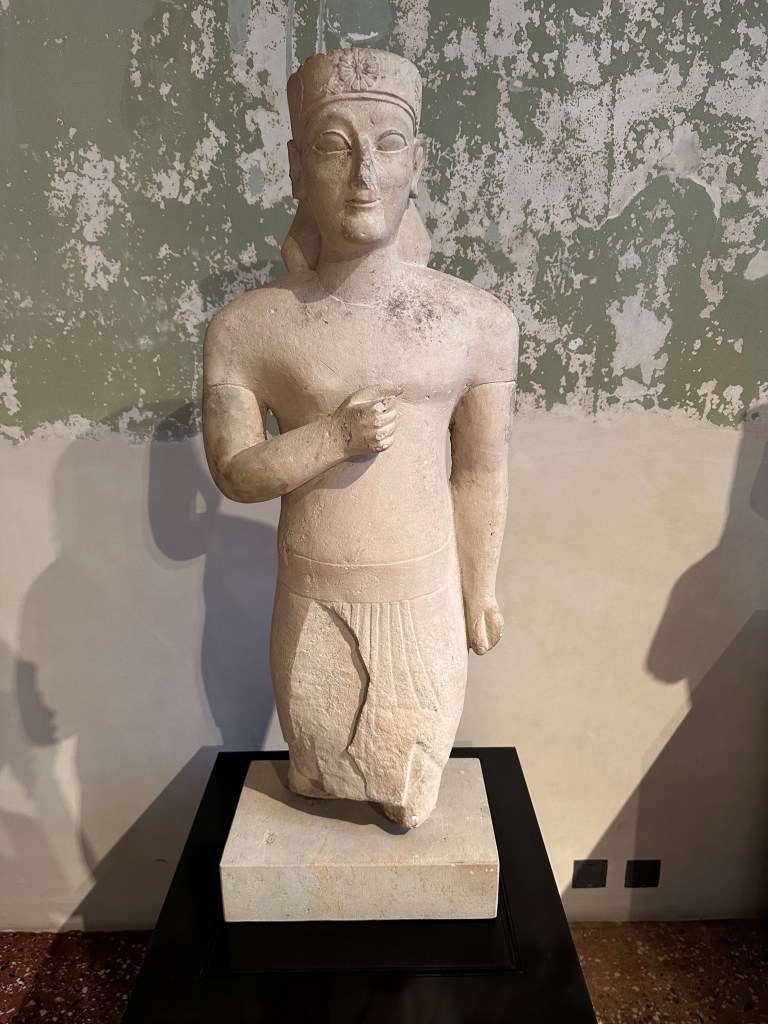
    Today I want to discuss Greek sculpture during the start of the great flowering of the arts in Greek antiquity. Early Greek sculpture, usually called the archaic style, was a highly realistic style that was, however, still rather stiff. Note the beauty of the rendering of the human figure, yet they are still not quite naturalistic. Arms are held stiffly at the side or otherwise close to the body. They nonetheless celebrate the human form.

    So to Ms. Givhan’s point, these help us to realize the commonalities humanity across an expansive divide of time and space.

    Tomorrow I’ll write about the succeeding period in Greek sculpture usually referred to as the classical style.

  • Medieval Saxons Rediscover Humanist Sculpture

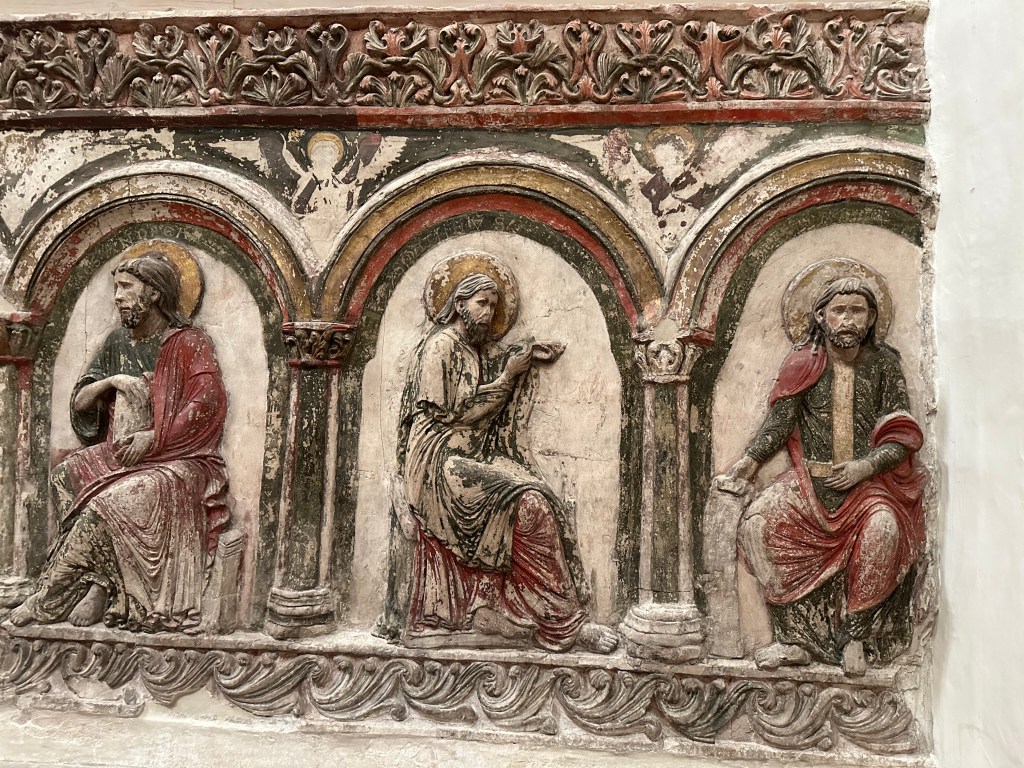
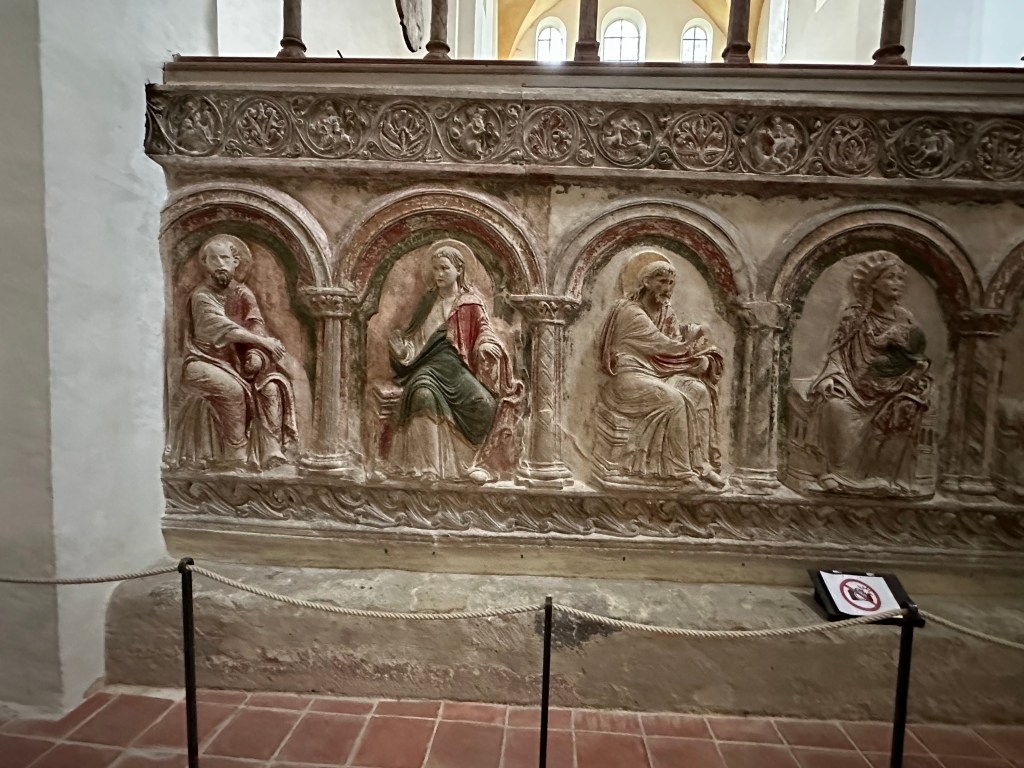
    In Halberstadt’s Liebfrauenkirche are some remarkable stone bas-relief carvings. These carvings, depicting Christ, the Virgin Mary, and the twelve apostles, are romanesque masterpieces that date from the early thirteenth century. They are the more remarkable because they arose after a period when the heights achieved by Greek sculpture had been long forgotten.

    The sculptures are notable for being full-figured, with a few even stepping outside of their frames. The faces are individual, they have meaningful glances, and the drapery folds are realistic. They were strongly influenced by the Byzantine Art encountered in Constantinople during the crusades.

    Outer choir bas-relief sculpture, Liebfrauenkirche, Halberstadt, Germany

    Originally they were highly painted.

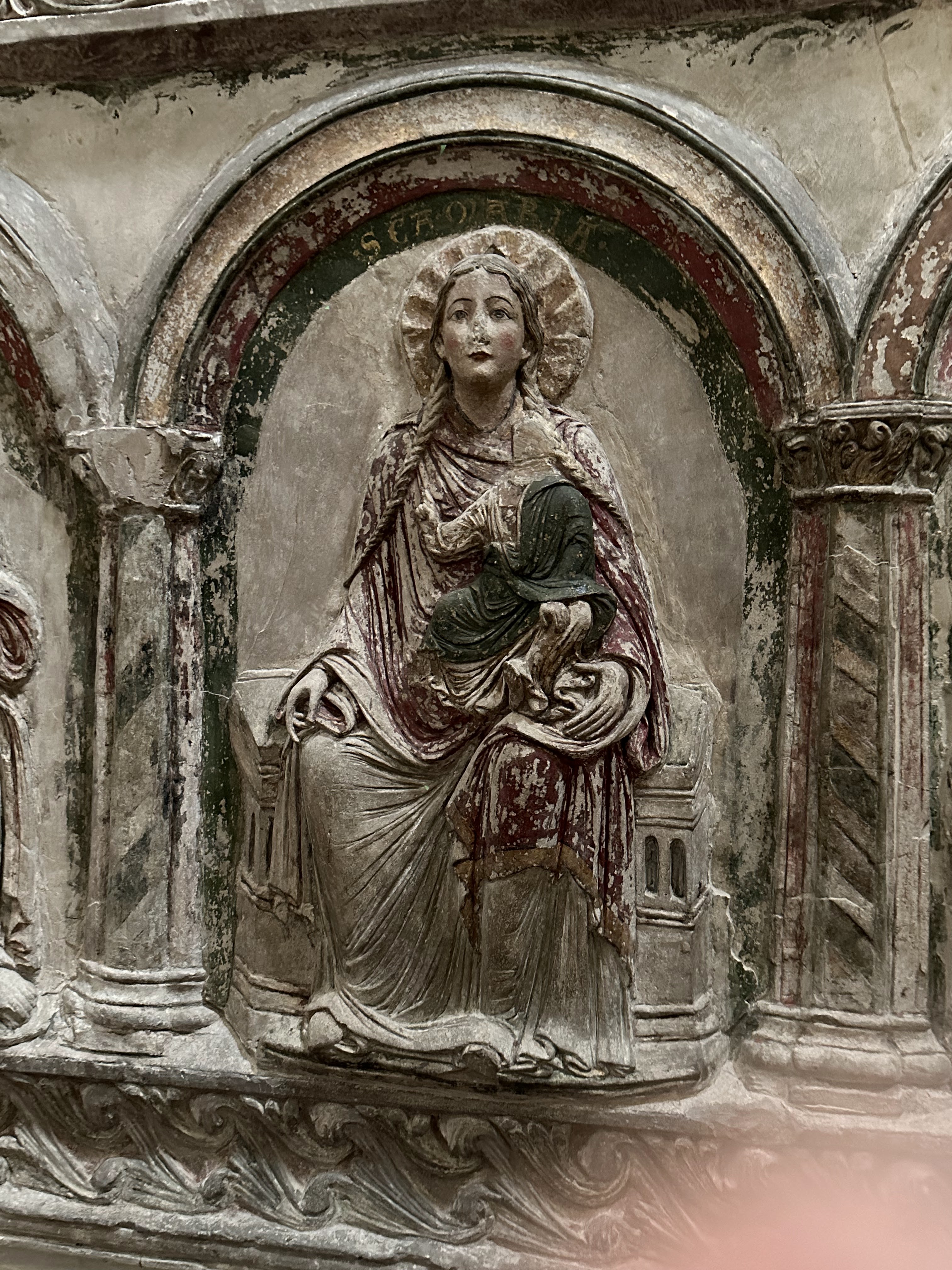
    The Virgin Mary here has beautiful hands and is depicted with the braids that were typical for the area.

    The Virgin Mary with the Christ child, Liebfrauenkirche, Halberstadt, Germany

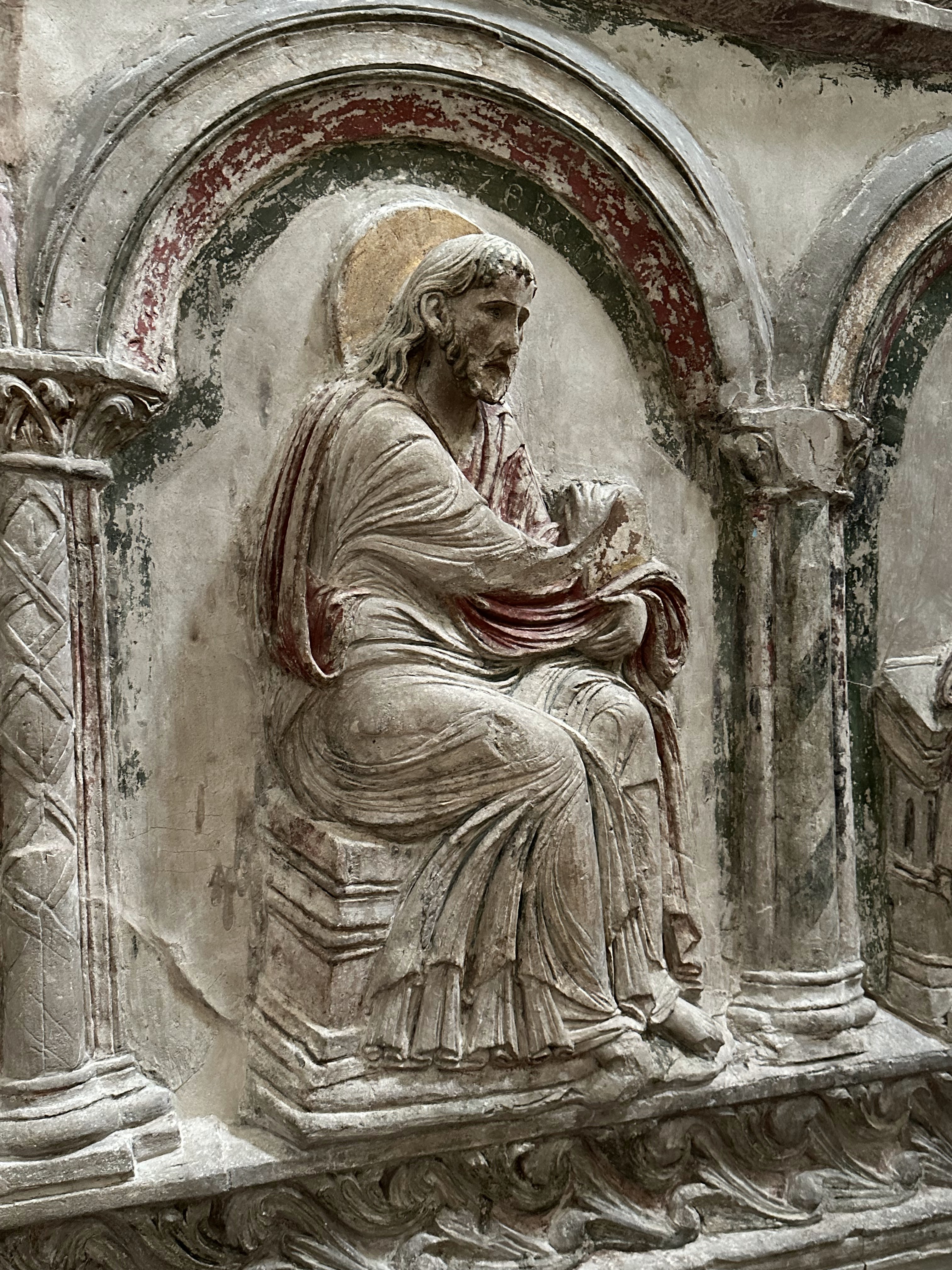
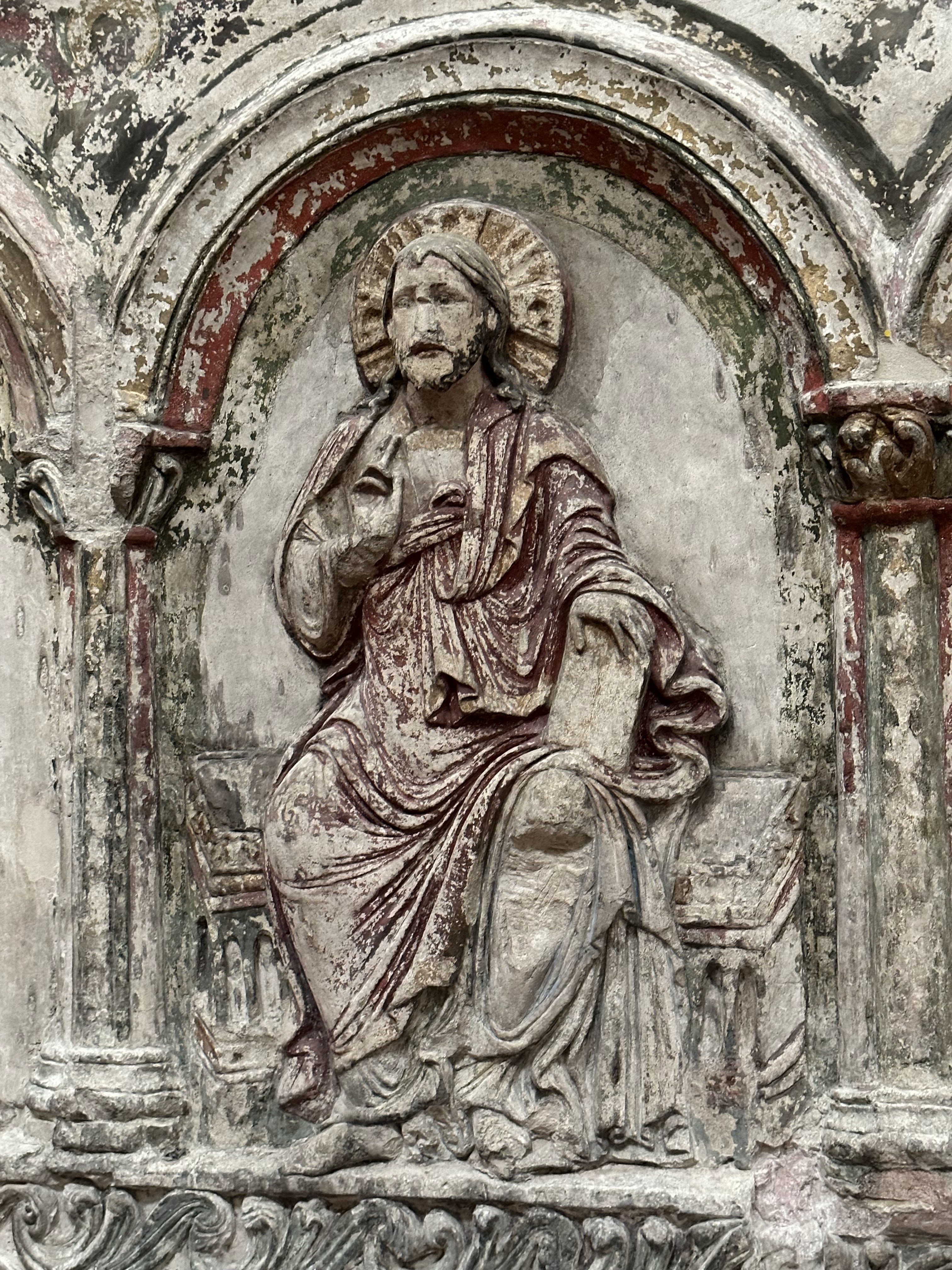
    The Christ sculpture here has been damaged over the years but is still sitting in majesty.

    Christ in Majesty, Liebfrauenkirche, Halberstadt, Germany

    I’m glad to know that these gorgeous works of art exist in the world. Arising when they did led to the continued development of western art, which has given so much to humanity. I celebrate the achievement of the human spirit they represent.

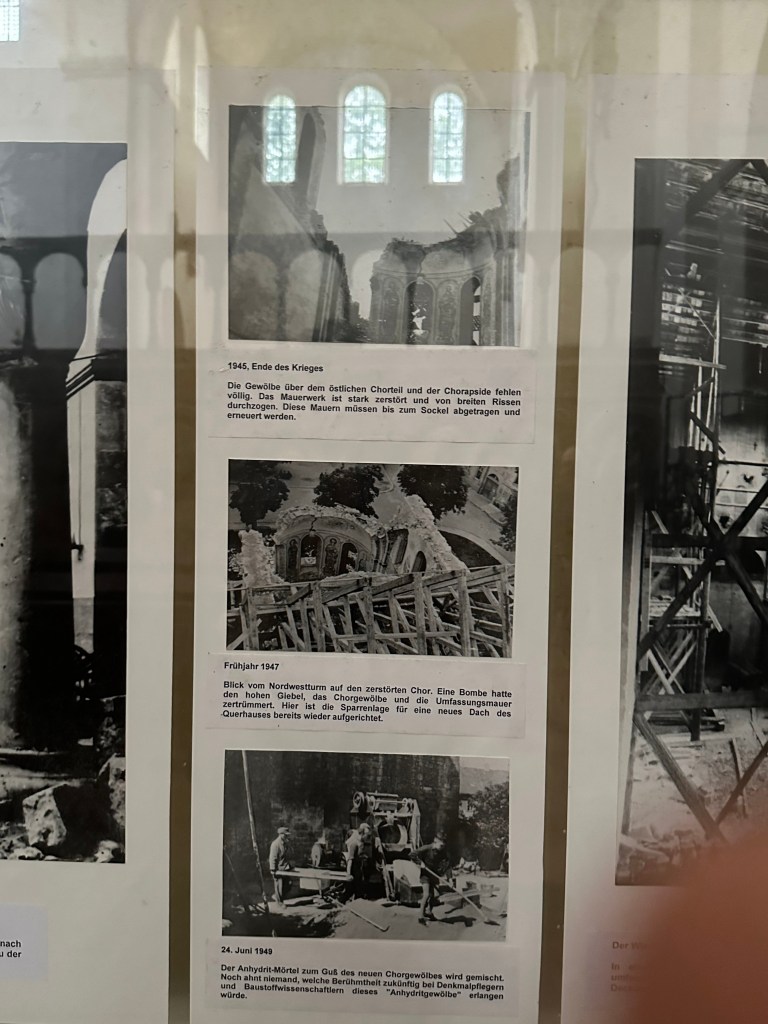
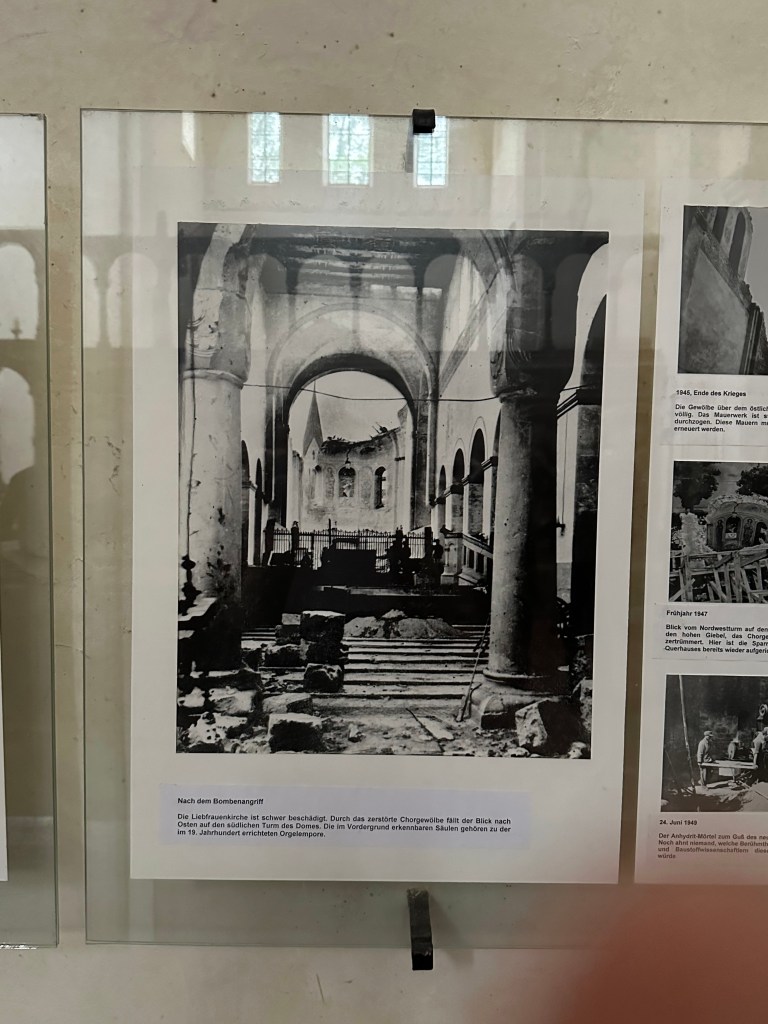
    The photos below show the extensive damage to the church from the bombings of World War Two. We are fortunate today that these sculptures somehow survived the destruction that was visited upon the rest of the church.

    I prayerfully beg you all to not forget how awful war is and how high the costs are in terms of human life and human achievements.

  • Picasso: Wait, what?

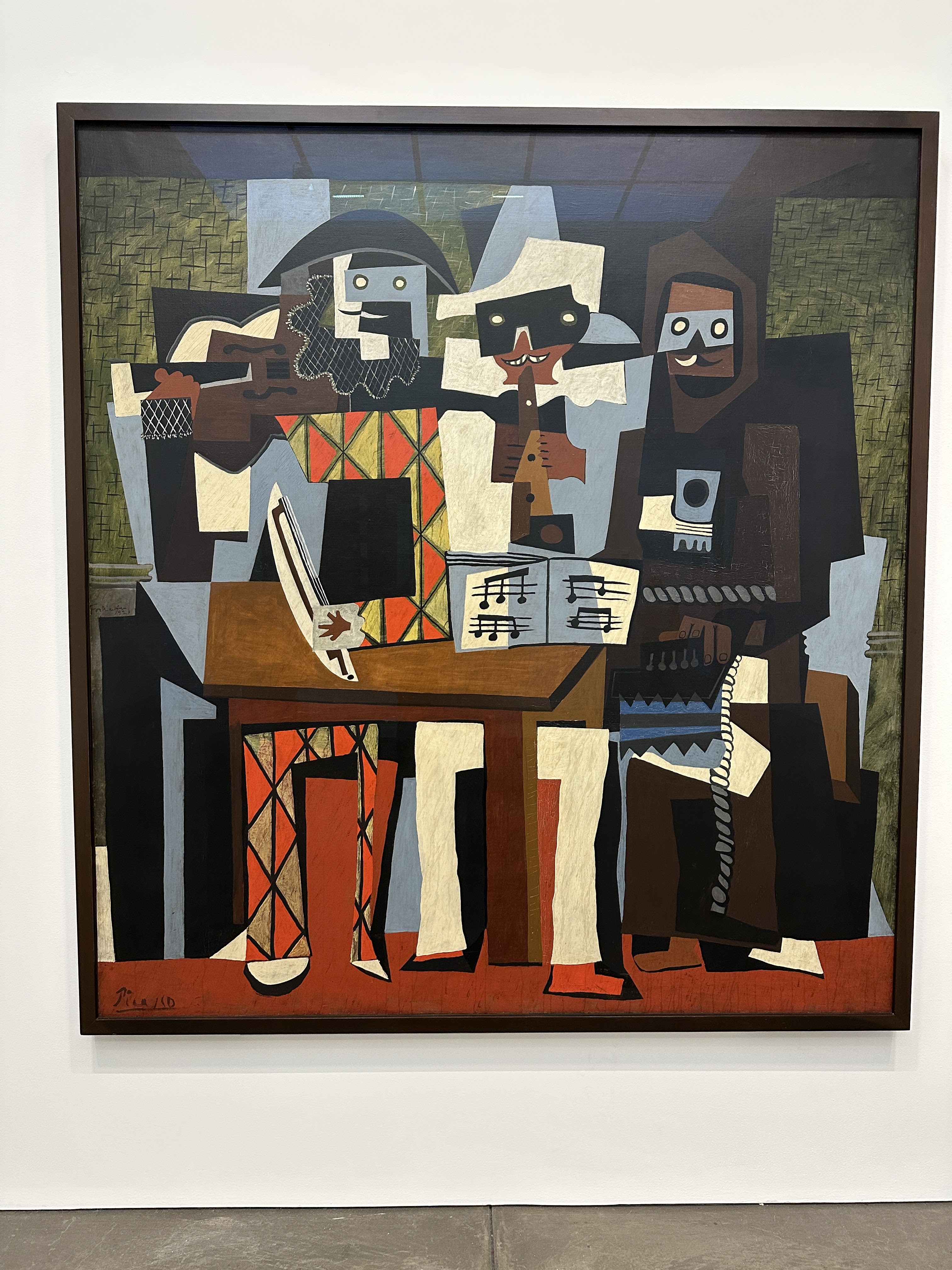
    I was thrilled, while at the Philadelphia Museum of Art, to turn and see one of Picasso’s most famous paintings! I thought “Gosh, I didn’t know it was HERE.”

    Well, it isn’t. It is most certainly a masterpiece, but it is slightly different than the famous painting of the same name and year.

    Three Musicians (1921) uses Synthetic Cubism, which is a “cut-paper style.”( You will know this style from Matisse.) Three masked musicians play various instruments. On the left is a harlequin playing the violin, in the middle is a sailor, maybe, or a clown playing the recorder, and on the right is a Dominican friar. I feel like Picasso is using a sense of humor in creating this. Strong vertical lines and gentle horizontal lines dominate the painting with the occasional diagonal line to introduce some tension. Beneath the whimsical portrayal is the more solid idea of three individuals performing as one entity. It is also a bit poignant; it was painted after the Second World War and has been interpreted as depicting lost prewar friendships.

    Three Musicians, 1921, Pablo Picasso. The Philadelphia Museum of Art

    If interested, you can check out the Museum of Modern Art in New York City to see the other Three Musicians painting from 1921.

  • Revolutionary Architecture

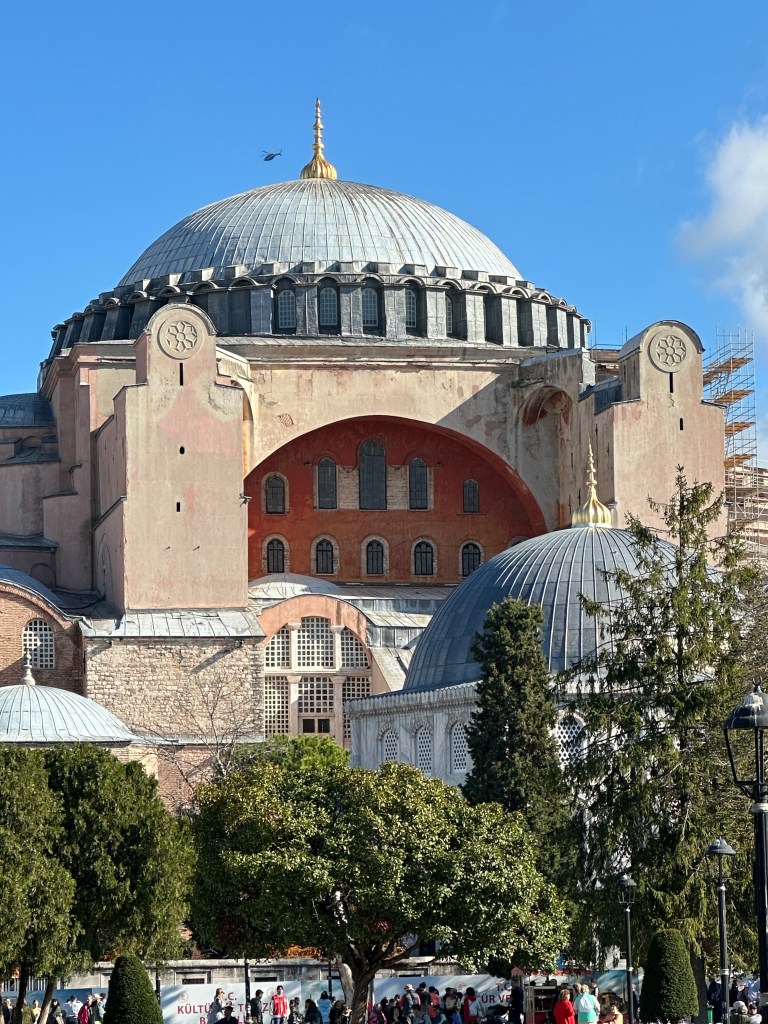
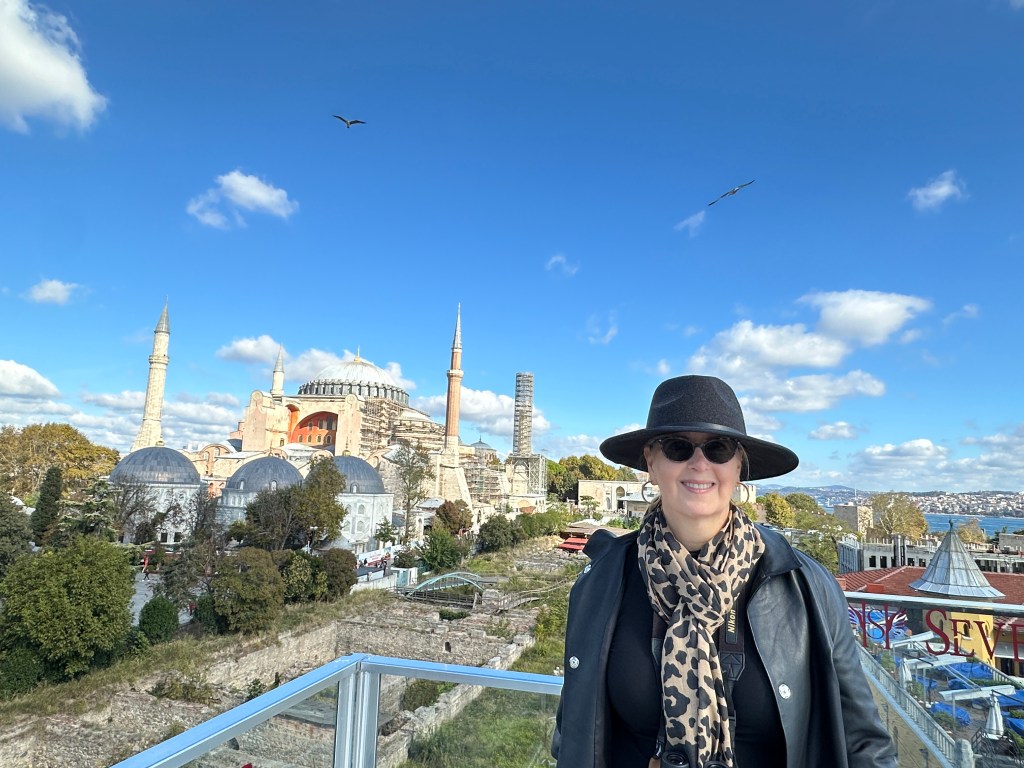
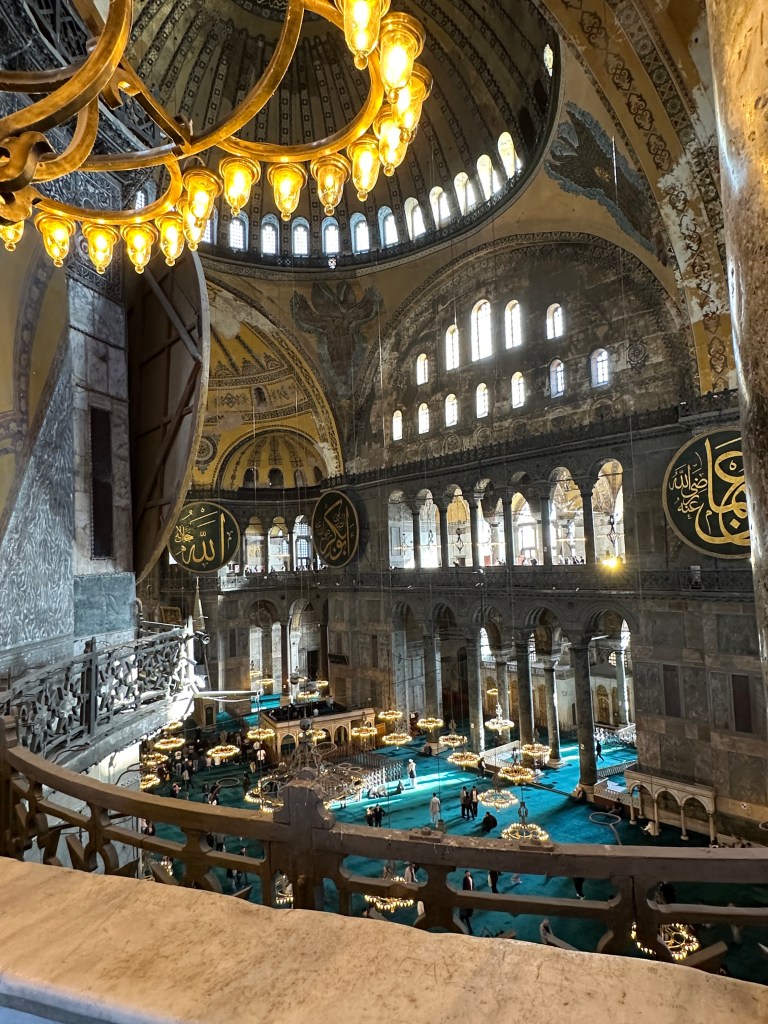
    I waited forty-five years to see the Hagia Sophia and was finally able to see it in October 2024. Some might wonder why I’m calling a church built in the reign of Justinian “revolutionary,” but it was! This building launched architecture in a whole new direction.

    Previously, large buildings were constructed in the basilica style, which is the style you still see in church architecture today. It’s a large rectangular-shaped building with rows of columns supporting the roof. Since the walls also had to support the roof to some extent, there were not many windows in the walls and those that were there were small.

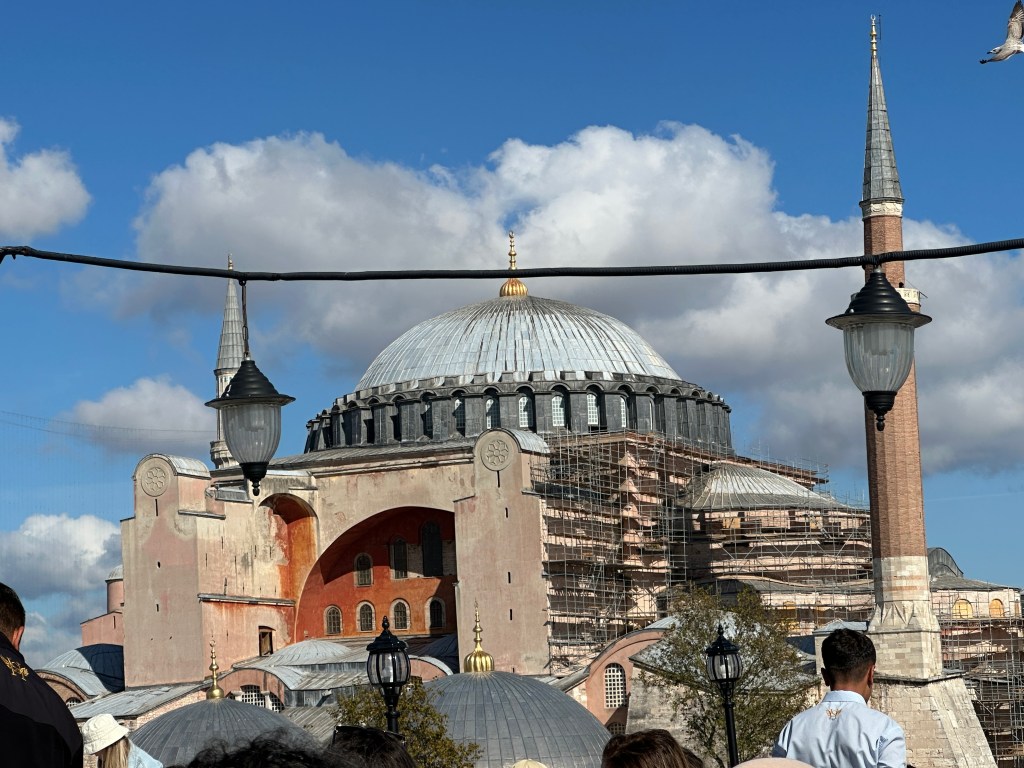
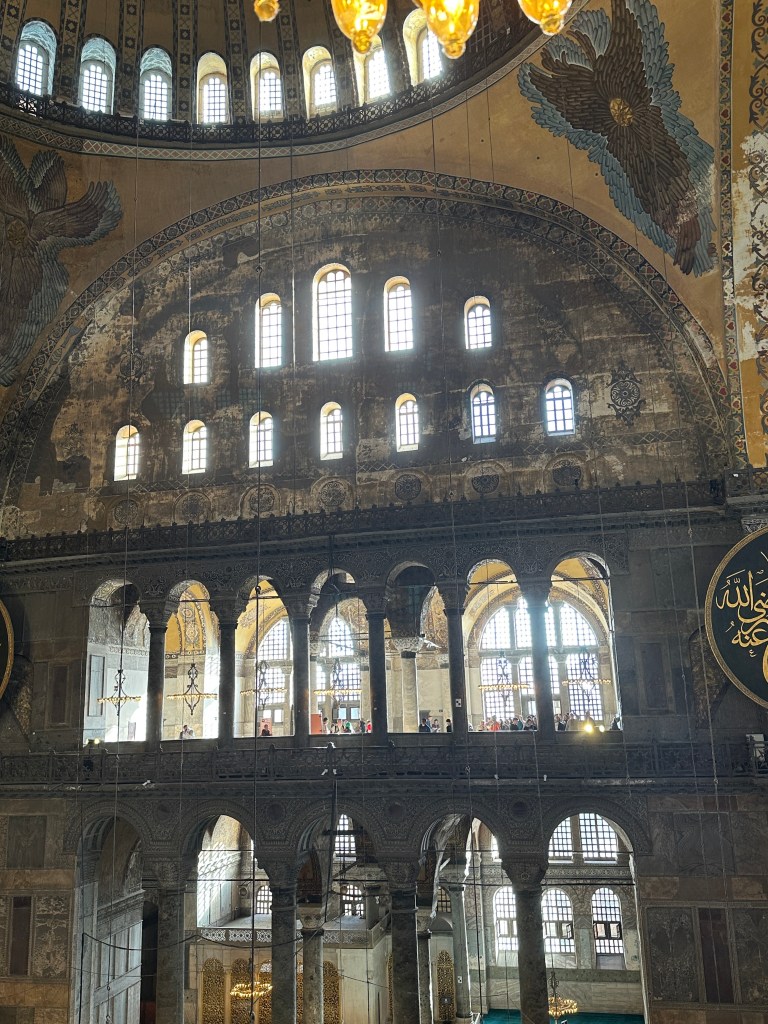
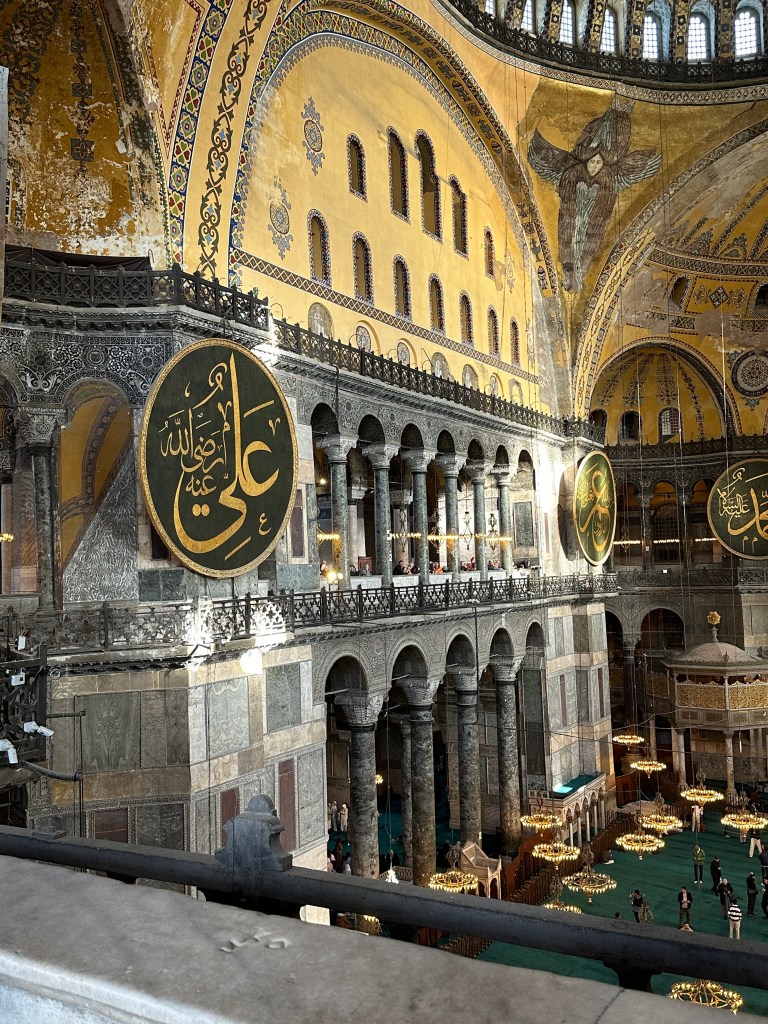
    The Hagia Sophia instead consists of a large square center with enormous piers at the corners, that spread out into triangular areas at their head, which are called pendentives. The pendentives and piers are strong enough to support a glorious dome. Although domes were already known, this dome’s size made it unique for the time. I’ve read some descriptions that say the dome appears to float atop the church (I agree.) Another consequence of having weight-bearing piers and pendentives is that they could put large windows in the walls and those in turn lent a beautiful light to the interior. The sense of soaring height and natural light must have been a wonderful spiritual experience at the time. Heck, it’s a wonderful experience today even after all the innovations we’ve seen in architecture.

    The church has suffered a much damage from earthquakes and war over the fifteen centuries since it was built and today it has a lot of external buttressing to keep it together. Exterior photos can therefore be very clunky-looking but I would argue that the dome is still spectacular!